
Assisted Stretching Certification Guide
How to Get Certified in Assisted Stretching.
To become certified in assisted stretching through ASA, a student completes required pre-class readiness education (six short online Fast Track modules and a knowledge assessment), a one-day hands-on certification training in ASA's signature 25-minute and 50-minute routines, and a practical competency requirement — and earns the ASA Certified Stretch Practitioner credential only after all of it is completed and reviewed.
Becoming professionally prepared for assisted stretching should involve more than watching a few videos and downloading a certificate. A serious program combines professional education, safety and scope boundaries, hands-on training, real assessment, and a demonstration that the student can actually perform the skill.
This guide explains what assisted stretching certification is, what a quality program should include, how to compare providers, and how ASA’s own pathway works — so a reader can make the decision on the facts.
Explore ASA Certification · See How Certification Works
- Professional education
- Safety and scope
- Hands-on training
- Knowledge assessments
- Practical competency
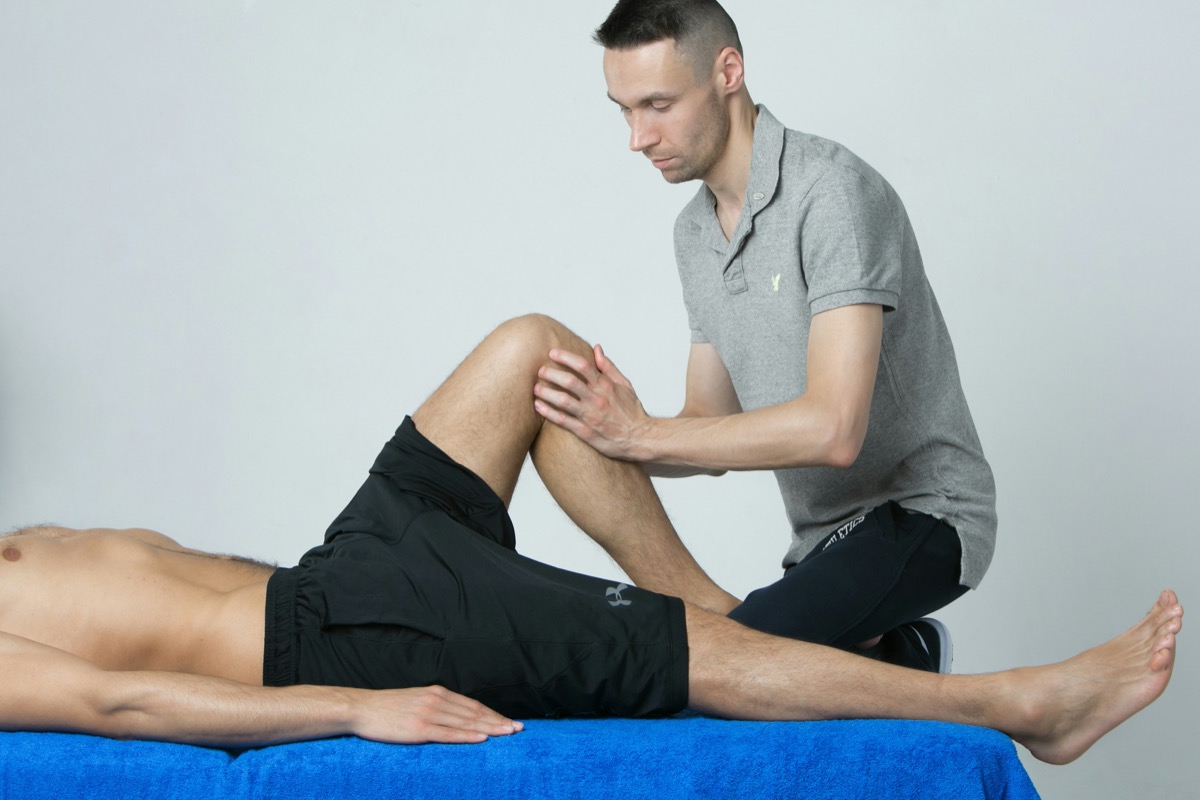
Competency before credential.
Education, hands-on training, then demonstrated skill.
The definition
What Is Assisted Stretching Certification?
Assisted stretching certification is a credential issued by an education provider to document that a student has completed a defined program of professional instruction and has demonstrated the competencies that program requires. It is a record of education and assessment, not a government licence.
The same subject is searched under several names — "assisted stretching certification", "stretch practitioner certification", "stretch therapist certification" and "stretch therapy certification" all describe roughly the same thing, and none of them is a protected or standardised title. ASA's credential has one name, and it is the ASA Certified Stretch Practitioner.
Those phrases are worth understanding rather than dismissing — what “stretch therapy” means covers where the terms come from, how they relate to assisted stretching, and why ASA credentials stretch practitioners.
What certification documents
That a named student completed a specific curriculum, met the assessment standard the provider set, and — in a program that requires it — demonstrated the physical skill in front of someone qualified to judge it.
Who issues it
The education provider, on its own standards. Different providers require very different amounts of work for the word "certified", which is why the requirements behind a credential matter more than the credential’s name.
What it does not do
It does not create a licence, a protected title or a healthcare qualification, and it does not by itself authorise anyone to perform a service that their jurisdiction regulates.
Certification does not establish legal scope of practice
Certification does not determine a practitioner’s legal scope of practice. Laws, professional licensing requirements, title restrictions, insurance conditions and facility policies vary by state, by country and by employer, and they apply to a certified practitioner exactly as they applied before. Anyone entering this field is responsible for confirming what they are permitted to do where they intend to work, and for consulting the appropriate licensing authority or their own professional adviser where that is unclear.
What a stretch practitioner’s scope of practice actually covers — what the role includes, what sits outside it, and what decides the rest.
The standard
What Should a Quality Assisted Stretching Certification Include?
A strong program covers ten things. This list is written to be carried to any provider and asked about — including this one, which is why each item also states where ASA addresses it.
Anatomy and movement foundations
- A practitioner has to know what is being lengthened, what is stabilising it, and what a joint is and is not built to do — before deciding how to move it.
- In ASAApplied anatomy, communication and consent, in its own Fast Track preparation module.
Professional scope and boundaries
- Where the work ends. What the practitioner does not assess, treat, diagnose or claim, and how to say so to a client who asks for more.
- In ASAA dedicated preparation module on the ASA professional standard — the practitioner's role, its limits and the client's rights — and a signed ASA Safety Commitment.
Client screening and communication
- Reading the person in front of you before you touch them: intake, history, readiness, consent, and the conversation that continues throughout the session.
- In ASAClient intake and readiness assessment, plus a module on communication and consent.
Safety principles and when to refer
- Contraindications, warning signs, and the discipline to stop and refer rather than continue. This is the part of the subject that carries real consequences.
- In ASASafety — when to stop, modify, postpone or refer — as its own preparation module, and a knowledge assessment that cannot be passed unless every safety question is answered correctly.
Practitioner body mechanics
- A technique that works only while the practitioner is fresh is not a professional technique. Stance, leverage, table height and the practitioner’s own longevity belong in the curriculum.
- In ASAA preparation module on practitioner body mechanics and the ASA technique rule, applied in person on the training day.
Systematic hands-on technique instruction
- Techniques taught as a structured library organised by region and by method — not as an unordered collection of movements to copy.
- In ASAASA's signature 25-minute and 50-minute routines, taught in person during hands-on training. The online modules teach the principles and safety rules behind them, not the techniques themselves.
Structured in-person practice
- Time actually spent performing the work, with instruction and correction available while the habits are still forming.
- In ASAA one-day hands-on certification training, followed by structured practical development.
Meaningful knowledge assessment
- Assessment that a student can fail. Students may review the material and retake the knowledge check as needed. The hands-on training provides the opportunity to practice and demonstrate the techniques.
- In ASAAn online knowledge assessment before class, requiring 80% with every safety question answered correctly.
Demonstrated practical competency
- Someone qualified watches the student perform the skill and decides whether it meets the standard. Without this step, a hands-on credential rests entirely on a written test.
- In ASAA practical competency requirement administered in person by an instructor, and reviewed by a person before any credential is issued.
Professional and client-experience standards
- How a session is structured, documented and delivered as a professional service — the difference between knowing techniques and running a practice.
- In ASAA preparation module on building and documenting a session, then the 25-minute and 50-minute session routines in person.
How ASA does it
The ASA Certification Pathway.
ASA’s pathway runs in a fixed order, and each stage exists because the one before it cannot do that stage’s job. Education does not verify skill; a written exam does not verify hands. The credential comes last, on purpose.
- Fast Track Essentials
- Knowledge Assessment
- Hands-On Training
- Practical Competency
- ASA Certified Stretch Practitioner
- 01
ASA Fast Track Essentials
- Required pre-class readiness education.
- The focused preparation that gets a student ready for a hands-on room: the professional role, safety, communication and technique-readiness concepts they need before class begins. It is currently six short online modules plus a short online assessment.
- Fast Track Essentials is preparation. It is not certification, and it does not by itself issue the ASA Certified Stretch Practitioner credential.
- 02
Knowledge Assessment
- Taken online, before class.
- A short online assessment requiring 80%, with every safety question answered correctly. Passing it means a student is ready for class; it does not issue the credential.
- 03
One-Day ASA Hands-On Certification Training
- One full day, in person, with instruction and practice.
- ASA's signature 25-minute and 50-minute routines: client setup and positioning, support, practitioner stance and body mechanics, leverage, communication, range and control, reading client feedback, transitions, and safe return to neutral. This is where the principles from the preparation modules become technique the student can actually perform.
- 04
Practical Competency
- Demonstrating the skill, not describing it.
- The student performs the required routines and professional standards in person, and the practical review is administered by an instructor.
- Every practical record is reviewed by a person. Certificates are not issued automatically on a passing score.
- 05
ASA Certified Stretch Practitioner
- The credential, after all of the above.
- Students who complete the applicable education, assessments, hands-on training and practical competency requirements, and whose record is approved on review, earn the ASA Certified Stretch Practitioner credential.
Working out where you would start? How to become a stretch practitioner walks through the whole path, including the parts no certification can complete for you.
The physical skill
Why Hands-On Training Matters.
Assisted stretching is a practitioner-to-client skill. One person moves, supports and controls another person’s limb while reading how that person is responding. Everything in that sentence is physical, and none of it can be verified by a test taken alone at a keyboard.
If you are still working out what the service itself involves, read what assisted stretching is — the components of a session, what it should feel like, and how it differs from stretching alone, from massage and from physical therapy.
- Support comes before movement. A limb is supported before it is moved, and stays supported through the whole range. It is a habit built by doing it under instruction, and the most common thing a self-taught practitioner gets wrong.
- Positioning is the technique. Where the practitioner stands, how the client is set up, and where the contact points sit decide whether a stretch is controlled or improvised. On video it is scenery; in a room it is the difference.
- Leverage is felt, not watched. How much of the practitioner’s body weight is in the movement, and where it comes from, cannot be read off a screen. It is calibrated by doing it and being corrected.
- Practitioner mechanics decide whether the work lasts. Stance, table height and posture are what let a practitioner deliver a full day of sessions without wearing themselves out. Nobody notices their own mechanics on their own.
- Communication runs in real time. Checking in, reading a response, adjusting mid-movement and stopping when something changes are conversational skills. They are practised with a real person or not at all.
- Appropriate intensity has no universal number. It depends on the client, the day and the movement, and it is learned by calibrating against feedback with someone experienced watching.
- The return is part of the stretch. Bringing a client back to neutral with the same control used to get there is half the technique. It is also the half most easily skipped when nobody is watching.
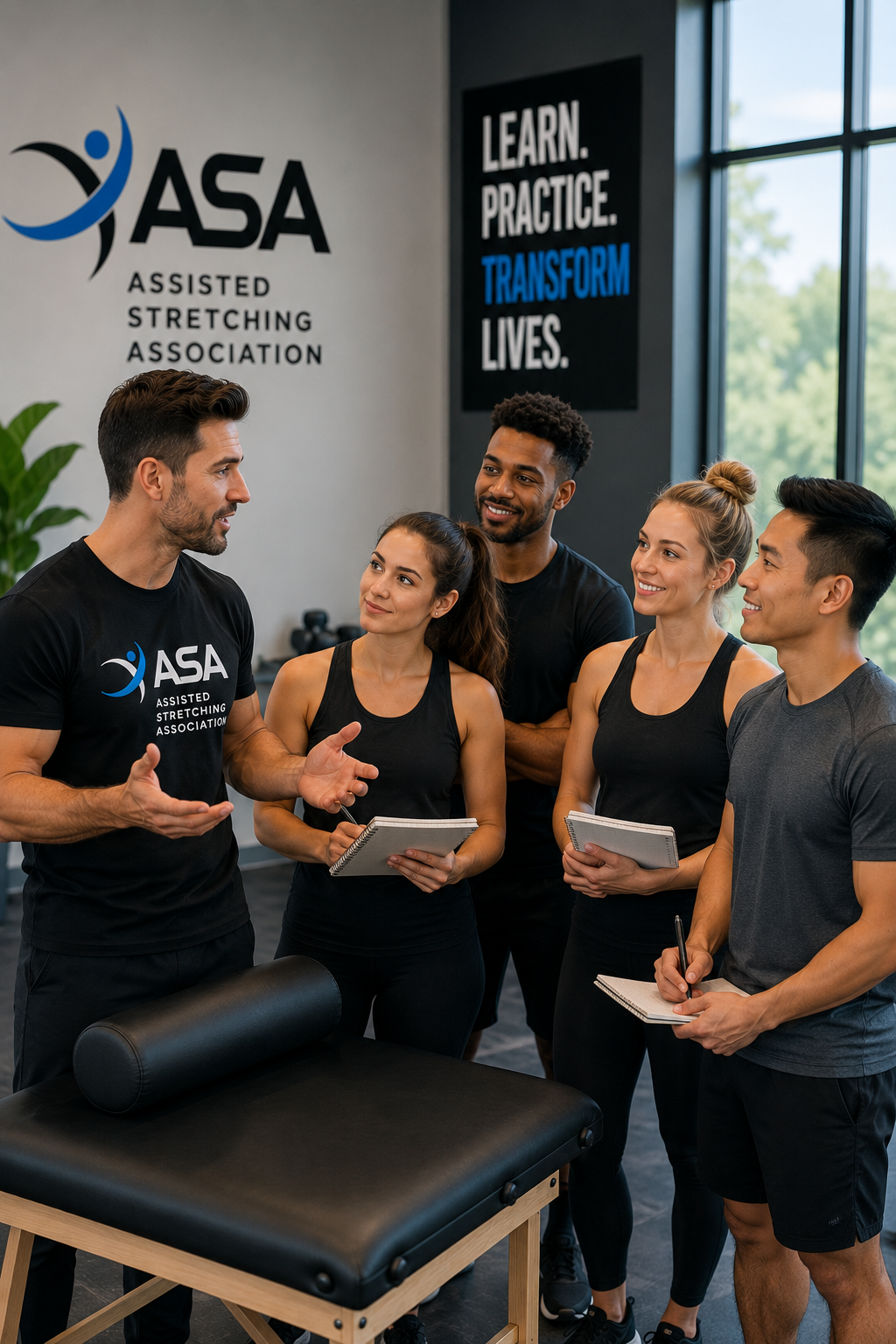
Watching technique and performing technique are not the same thing.
Comparing formats
Online Certification vs Hands-On Training.
This is usually framed as a contest, and it is not one. Online education and in-person training are good at different things, and a program that understands the difference uses both rather than choosing a side.
What online education does well
- Principles, models and terminology, at whatever pace the student needs
- Anatomy and movement education, with the option to review a section as often as it takes
- Safety knowledge, contraindications and referral reasoning
- Scope, ethics, consent and documentation standards
- Client communication frameworks and session structure
- Preparation, so in-person time is spent developing skill rather than covering theory
What hands-on training does well
- Client positioning and practitioner stance
- Support, control and calibrated leverage
- Real-time correction while a habit is still forming
- Reading and responding to a live client
- Transitions, pacing and safe return to neutral
- Demonstrated performance of the skill, watched by someone qualified to judge it
ASA uses both because each one solves a problem the other cannot. Online education builds the knowledge. In-person training builds the skill. The practical requirement confirms the skill is actually there.
Time to complete
How Long Does ASA Certification Take?
The preparation and the training day have known lengths; the review that follows does not. ASA publishes the ones it can state and says so plainly about the one it cannot — a single tidy number would be easier to read and would not be true.
Fast Track EssentialsShortSix online modules and a short online assessment, completed before the hands-on day.Hands-On Certification TrainingOne full dayIn person. Current class dates are listed on the ASA certification page.Practical competency and reviewVariesDepends on the practical review on the training day and the record review that follows.
The honest answer to "how long does assisted stretching certification take" is that the preparation is short, the in-person training is one day, and the review takes as long as it takes. A student who completes the preparation promptly and attends the next available hands-on training will finish considerably sooner than one who does not, and no provider can quote a single number that is true for both.
Completion also depends on when a student’s hands-on training is scheduled, and on the review that precedes issuance of the ASA Certified Stretch Practitionercredential.
The audience
Who Is Assisted Stretching Certification For?
Assisted stretching sits next to several existing professions rather than replacing any of them, so students arrive from a range of backgrounds.
Personal trainers
Already work with movement, already have a client relationship, and already understand programming — which makes assisted stretching a natural extension of an existing skill set.
Massage therapists
Where it is consistent with the licensing, title and scope requirements that apply to them. Assisted stretching is its own discipline, and a licensed therapist’s own board and insurer decide how it fits alongside their licensed practice.
Fitness and wellness professionals
Coaches, group instructors, studio staff and wellness practitioners looking to add a structured, one-to-one professional service to what they already do.
Recovery and performance staff
People working in recovery rooms, performance facilities and athletic settings who want the assisted-stretching component taught properly rather than picked up informally.
Professionals building a service or a practice
Anyone intending to offer assisted stretching as a service — inside an existing business or as one of their own — who wants the education and the competency behind it first.
People entering the field
Assisted stretching can be a first professional skill rather than an addition to one. What a newcomer is permitted to offer, and where, still depends on the rules that apply to them.
These are the people ASA educates. They are not a statement that everyone on this list is legally permitted to perform the same services in the same place — requirements differ by jurisdiction, by licence held, by employer and by insurer, and completing a certification does not change any of them.
Deciding this on behalf of a gym or fitness organization rather than for yourself? The operator’s guide is assisted stretching for gyms and fitness facilities, which covers practitioner training, competency, scope and service standards across a team.
Still working out what the work itself involves? Start with what a stretch practitioner does — the session responsibilities, the skills, the professional boundaries and where practitioners work.
For personal trainers
Can a Personal Trainer Learn Assisted Stretching?
Yes — a personal trainer can learn assisted stretching, and many of ASA’s students come from exactly that background. Professional education can expand what a trainer knows how to do well. What it cannot do is expand what they are permitted to do.
Trainers arrive with real advantages: they already understand movement, already work one-to-one, and already know how to coach a client through something unfamiliar. The parts that are genuinely new are the hands-on ones — supporting and positioning another person, calibrating leverage, and reading feedback through contact rather than through observation. That is the part a certification has to actually develop and verify.
What a certification does not change:
- State, provincial or national law, including any title or practice restriction
- The rules of any licensing board the reader is already regulated by
- Employer and facility policy, which is often stricter than the law
- Professional liability insurance, which has to actually cover the service being offered
A certification is education, not authorisation. It does not override state law, a licensing requirement, an employer’s rules, an insurance policy or the limits of a trainer’s own professional scope, and it does not permit anyone to assess, diagnose or treat a condition.
See the ASA Certification Program
Researching this as a personal trainer?Read the guide to assisted stretching for personal trainers
For massage therapists
Can Massage Therapists Learn Assisted Stretching?
Yes — massage therapists can study assisted stretching, and ASA educates them. Assisted stretching is a distinct discipline: it is not massage, ASA does not teach it as massage, and ASA does not describe it as massage therapy or as any form of treatment.
A licensed therapist typically arrives with strong anatomy knowledge, professional client handling and existing consent and documentation habits, which the education builds on rather than repeats. The mechanics of moving and supporting a client through a controlled stretch are still their own skill, developed in person.
What decides how it fits alongside a licence:
- State, provincial or national law, including any title or practice restriction
- The rules of any licensing board the reader is already regulated by
- Employer and facility policy, which is often stricter than the law
- Professional liability insurance, which has to actually cover the service being offered
How assisted stretching sits alongside a massage licence is decided by the therapist’s own licensing board, applicable state law, their employer and their insurer — not by ASA and not by this page. ASA makes no state-specific legal determination for any reader and does not advise on how a licence should be applied.
The distinction that matters
Certification vs Certificate of Completion.
These two words are used almost interchangeably in this industry, and they do not mean the same thing. ASA's credential is a practitioner certification, so it is worth being precise about which is which.
Certificate of completion
A certificate of completion
Education, often delivered online, and a certificate confirming it was completed.
What it is
- Education, often delivered online
- A certificate of completion for finishing it
- A genuine foundation for someone who wants the knowledge first
What it is not
- Practitioner certification
- A credential that required the skill to be demonstrated
- A hands-on or practical competency requirement
Practitioner certification
ASA Certified Stretch Practitioner
$797Standard tuition — $497 early tuition and $597 final-week tuition currently offered
The one-day certification, including the in-person and practical requirements.
What it is
- Six short online Fast Track preparation modules
- One-day hands-on certification training in ASA's signature 25-minute and 50-minute routines
- An online knowledge assessment
- A practical competency requirement, reviewed by a person
- The ASA Certified Stretch Practitioner credential on successful completion
- ASA's included digital training resources
What it is not
- A licence, or any form of healthcare qualification
- A determination of what a practitioner may legally do
- Automatic on a passing score — issuance requires review
A certificate of completion says a student finished the material. A practitioner certification says a student finished the material and then demonstrated the skill. Both are legitimate; they are simply not the same purchase, and a reader comparing programs anywhere should check which one they are being sold. ASA is not currently offering an online-only program to the public.
For the longer answer on price — what drives certification costs generally, what separates online education from a full pathway, and what to ask any provider before paying — read the assisted stretching certification cost guide.
Buyer guidance
How to Choose an Assisted Stretching Certification.
Eight questions worth asking any provider, in any order, including this one. The answers are more useful than the marketing on either side of them.
Is hands-on competency actually evaluated?
- Not "is there a video module" — is there a point at which someone qualified watches the student perform the work and decides whether it meets a standard. This is the question that separates programs most sharply.
Does the curriculum cover scope and safety as its own subject?
- Contraindications, red flags, referral, consent and boundaries should be taught as subjects in their own right, not mentioned in passing before the technique content starts.
Are the assessments meaningful?
- A student should be able to find out that they are not ready yet. Ask what the pass mark is, how the questions are drawn, and what happens when someone does not meet it.
Are techniques taught systematically?
- A structured progression — by region, by method, and assembled into a repeatable session — is a curriculum. A library of unordered clips is a collection.
Does the program distinguish education from credentialing?
- A provider that is clear about which purchases are education and which one is the credential is a provider that has thought about the difference. One that blurs them may be selling a certificate as a certification.
Is there ongoing access to the material and to support?
- Ask what a student keeps, for how long, and where they go with a question six months after the class. Ask the provider to state it rather than inferring it.
Are business resources presented as resources, not as outcomes?
- Templates, pricing frameworks and launch plans are useful. A program that presents them as a guarantee of clients, income or a filled schedule is promising something no education provider can deliver.
Does the credential actually require competency?
- Read what has to be true before the certificate is issued. If everything on that list can be completed alone on a laptop, the credential is documenting knowledge — which is worth having, and is not the same as documenting skill.
The curriculum, at a glance
What Does ASA Teach?
Eight areas, introduced in the six Fast Track preparation modules and developed in the hands-on training. The current program is described on the certification page — this is the shape of it.
Professional foundations
What assisted stretching is, what the practitioner’s role is, and the applied anatomy and movement knowledge the rest of the program is built on.
Safety, scope and boundaries
Contraindications, red flags, referral, consent, ethics and professional boundaries — taught throughout the program rather than as a single lesson.
Client screening and communication
Intake, readiness assessment, and the communication that establishes consent and confidence before and during a session.
Practitioner mechanics and positioning
Stance, body mechanics, table safety and the positioning decisions that make a technique controlled and repeatable.
Assisted-stretch technique
ASA's signature 25-minute and 50-minute routines, taught and practised in person during hands-on training.
Session structure and client experience
Building a professional session, adapting it to the individual client, documenting it properly, and delivering it as a premium service.
Professional practice
Documentation, factual session notes and the standards that make the work a profession rather than a set of movements.
Business development resources
How assisted stretching operates as a service — inside an existing business or as an independent one — through ASA's digital Student Success Resources: the First 10 Clients Playbook, Sales & Membership Scripts, Marketing, Referral & Retention, and Client Forms & Professional Templates. These are resources and frameworks, not projections, and no business or earnings outcome is promised.
The six preparation modules and the training day:See the ASA certification page
What comes next
After Certification.
A credential is a starting point rather than a destination. These are the directions certified practitioners take — what any individual is able to offer, and where, depends on the requirements that apply to them.
Add it to what you already do
Bring assisted stretching into an existing fitness, wellness or recovery service, where that is consistent with the rules that apply to you and to your workplace.
Practise in a professional setting
Deliver assisted stretching in a suitable professional environment — a studio, a wellness facility, a recovery room or a performance setting.
Work with gyms and wellness businesses
Facilities looking to add assisted stretching need practitioners who have been properly educated and whose competency has been checked.
Build an independent practice
Some practitioners build their own client base and operate independently. What that takes, and how long it takes, varies entirely by market and by practitioner.
The developing business pathway
ASA is developing the STRRRETCH – Maximum Performance Facility Partner Studio Pathway: a model for qualified practitioners to build an assisted-stretching business from one professional room inside an existing gym, wellness or chiropractic facility, rather than from a full retail storefront. It is in development, nothing about it is offered for sale, and it begins with the ASA Certified Stretch Practitioner credential — certification and business participation are separate.
Explore the Business PathwayProgram in Development
These are possibilities, not outcomes. ASA educates and certifies; it does not provide employment, clients, referrals or income, and nothing on this page should be read as a projection of business results. What any individual practitioner is able to offer, and where, depends on the requirements that apply to them.
Questions
Assisted Stretching Certification FAQ.
What is assisted stretching certification?
Assisted stretching certification is a credential issued by an education provider to document that a student completed a defined program of professional instruction and met the competency requirements that program sets. It records education and demonstrated skill. It is not a government licence and it does not by itself grant any right to practise.
How do I become certified in assisted stretching?
Through ASA, a student completes ASA Fast Track Essentials (six short online modules of required pre-class readiness education), the online knowledge assessment, a one-day ASA hands-on certification training in ASA's signature 25-minute and 50-minute routines, and a practical competency requirement. When all of those are complete and the record has been reviewed and approved, the student earns the ASA Certified Stretch Practitioner credential.
What credential does ASA issue?
ASA issues one practitioner credential: the ASA Certified Stretch Practitioner. Phrases such as "stretch therapist certification" and "stretch therapy certification" are common search terms for this subject, but they are not the name of ASA's credential.
Is ASA Fast Track Essentials the certification?
No. ASA Fast Track Essentials is required pre-class readiness education — currently six short online modules plus a short online assessment. It prepares a student for the hands-on training environment and it does not by itself issue the ASA Certified Stretch Practitioner credential.
Can I complete ASA certification entirely online?
No. ASA's preparation is delivered online, but the certification pathway also requires a one-day in-person hands-on training and a practical competency requirement. Assisted stretching is a physical, practitioner-to-client skill, and ASA does not certify it on written work alone.
Does ASA include hands-on training?
Yes. The pathway includes a one-day ASA hands-on certification training covering client positioning and setup, support, practitioner stance and body mechanics, leverage, communication, range and control, transitions, and safe return to neutral — followed by a practical competency requirement administered by an instructor.
How long does assisted stretching certification take with ASA?
ASA Fast Track Essentials is six short online modules and a short assessment, completed before class, and the hands-on certification training is one full day. The 24-module ASA Academy is a separate online program, currently on hold as a public offering, and is not required. Total time also depends on the class date a student chooses and on when the practical requirement is completed and reviewed.
What does ASA certification cost?
Standard tuition for ASA's one-day certification is $797. ASA currently offers $497 early tuition to students who enroll by the early-enrollment date shown for their class, and $597 final-week tuition during the seven days before class. Current class dates, pricing and enrolment details are on the ASA certification page.
What is the difference between a certificate of completion and ASA certification?
A certificate of completion documents finished education and is not practitioner certification. The ASA Certified Stretch Practitioner credential also requires the hands-on training, the assessment and the practical competency requirement. ASA is not currently offering an online-only program to the public. A certificate of completion says a student finished the material. A practitioner certification says a student finished the material and then demonstrated the skill. Both are legitimate; they are simply not the same purchase, and a reader comparing programs anywhere should check which one they are being sold.
Do personal trainers need additional education to offer assisted stretching?
A personal trainer certification is not assisted-stretching education, so a trainer who wants to offer it as a professional service generally does need dedicated instruction — particularly in the hands-on components, which are the part that cannot be learned from a screen. Whether a trainer is permitted to offer it at all depends on applicable law, any licence they hold, their employer’s policy and their insurance, none of which a certification changes.
Can massage therapists learn assisted stretching?
Yes. Massage therapists study assisted stretching with ASA, and many arrive with strong anatomy knowledge and established client-handling habits. Assisted stretching is a distinct discipline and ASA does not teach it or describe it as massage. How it fits alongside a massage licence is determined by the therapist’s licensing board, applicable law, their employer and their insurer — ASA makes no state-specific legal determination.
Does certification determine legal scope of practice?
Certification does not determine a practitioner’s legal scope of practice. Laws, professional licensing requirements, title restrictions, insurance conditions and facility policies vary by state, by country and by employer, and they apply to a certified practitioner exactly as they applied before. Anyone entering this field is responsible for confirming what they are permitted to do where they intend to work, and for consulting the appropriate licensing authority or their own professional adviser where that is unclear.
What should I look for in an assisted stretching certification?
Look for whether hands-on competency is actually evaluated by a qualified person; whether scope, safety, contraindications and referral are taught as subjects in their own right; whether the assessments can genuinely be failed; whether techniques are taught as a structured progression rather than a collection of clips; whether the provider is clear about which purchases are education and which one is the credential; and whether business material is offered as resources rather than as a promise of results.
Is practical competency required by ASA?
Yes. Demonstrated practical competency is a requirement of the ASA certification pathway. It is administered in person by an instructor, and every practical record is reviewed by a person — certificates are not issued automatically on a passing score.
What happens after I become certified?
Certified practitioners may add assisted stretching to an existing fitness or wellness service where that is appropriate, deliver it in a suitable professional setting, work with gyms and wellness businesses, or build an independent practice. ASA also has a business pathway in development, the STRRRETCH Partner Studio Pathway, for qualified practitioners. ASA does not provide employment, clients or income, and business results vary.
The point of all of it
Ready to Build the Skill — Not Just Collect a Certificate?
- Education builds the foundation.
- Hands-on training develops the skill.
- Competency earns the credential.
Explore ASA Certification · Explore the Business Pathway
More ASA guides: what assisted stretching is, how certification works, what it costs.