
For gyms & fitness facilities
Assisted Stretching for Gyms & Fitness Facilities.
Gyms and fitness facilities can evaluate assisted stretching as a practitioner-guided wellness or fitness service, but a responsible program takes more than adding stretches to a service menu. Practitioner education, demonstrated hands-on competency, professional scope, client consent, insurance, facility policy and a consistent operating standard all decide whether the service can be delivered the same way twice — and who may provide it at all depends on applicable law, staff credentials, insurance and the facility’s own rules rather than on any certification.
A responsible gym-based assisted-stretching program requires both practitioner competency and operational consistency.
This guide is written for the people who decide: gym owners and independent operators, fitness-club general managers, fitness and personal-training directors, wellness and training leaders, and the regional and multi-location teams who have to make one service work in more than one building.
Operators ask two different questions about this subject and they get mixed together constantly. The first is can we offer it, and the answer depends on things this page can name but cannot settle. The second is how would we run it properly, and that one is an education, competency and standards question before it is a scheduling or pricing question.
This guide separates them. It covers what the service actually is inside a facility, why it is not personal training, what changes when more than one person delivers it, what scope, consent and insurance decide, the operating models facilities choose between, and the fourteen questions worth answering before the first appointment is booked.
Explore ASA Certification · Understand Assisted Stretching
This page provides general professional and operational education, not legal, licensing, insurance or employment advice. Requirements vary by jurisdiction, credential, insurer and organization, and ASA makes no determination for any facility, employer or practitioner.
- Practitioner education
- Hands-on competency
- Scope and boundaries
- Consent and communication
- Operating consistency
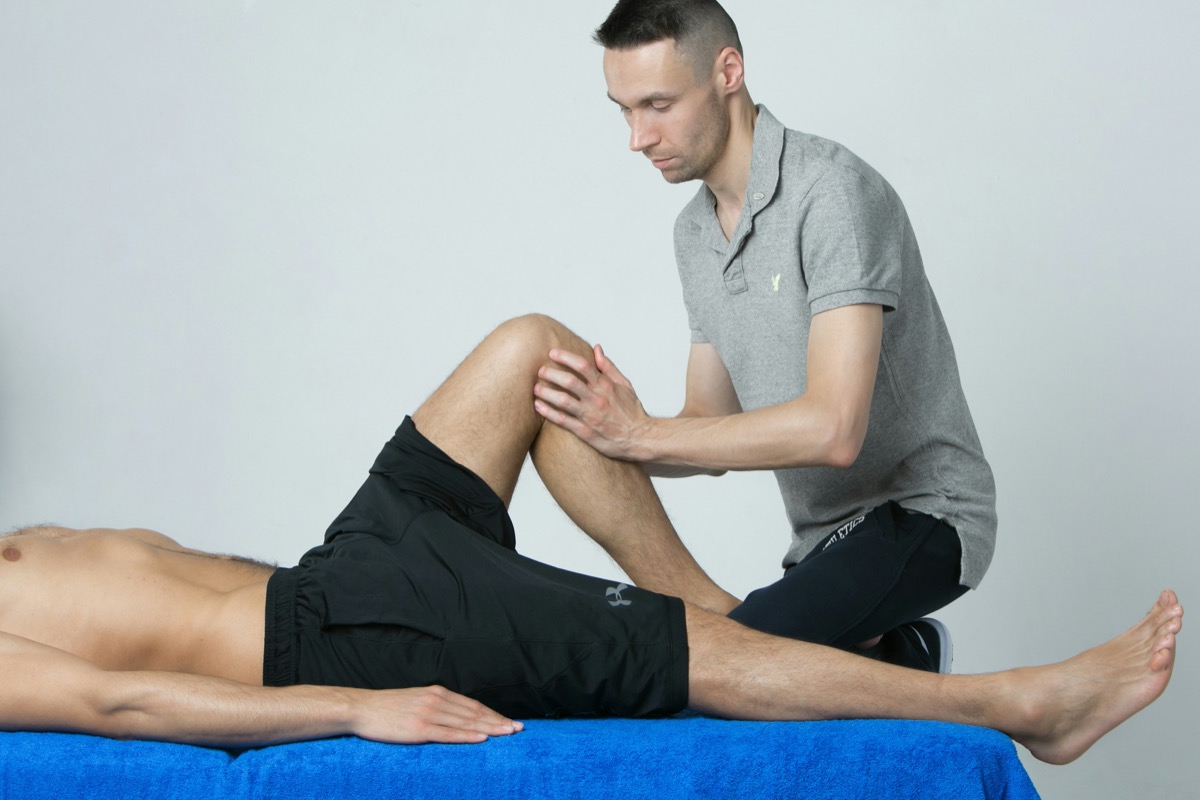
One service, delivered the same way twice.
That is a standards problem before it is a scheduling problem.
The motivation
Why Gyms Are Interested in Assisted Stretching.
Facilities come to this subject for operational reasons, and they are worth stating plainly rather than dressed up as a market opportunity.
Members encounter the service elsewhere and ask about it
Assisted stretching, stretch therapy and guided stretching are terms members now meet outside the club and bring back into it. Knowing what the service actually is — and being able to say precisely what the facility does and does not offer — is useful whether or not the answer ends up being yes.
A one-to-one service that is not another training session
Facilities looking at additional one-on-one offerings tend to be looking for something that is genuinely different from what the training floor already provides, rather than a variation on it. Assisted stretching is delivered differently, and the difference is the point.
Skill development inside a personal-training department
Training departments look for structured skills their staff can develop deliberately. Assisted stretching is its own discipline with its own method, which makes it something a department can teach and evaluate rather than something individuals pick up.
A practitioner-guided option, delivered to a standard
Operators who have watched an informal stretch offering appear on the floor generally want the opposite of that: a defined service, delivered by defined people, in a defined way. That is an education and standards question before it is a scheduling one.
One offering that reads the same across a team
A service delivered by four staff members is four services unless something makes it one. Clubs asking this question are usually asking about consistency rather than about stretching.
Repeatable education across locations
Multi-location organizations need staff in different buildings to learn the same thing in the same order, and to be evaluated the same way. That requirement grows faster than headcount does.
Those are operational reasons, and they are the only kind this page states. ASA publishes no market-size figure, no growth statistic and no member-demand data, promises no revenue, utilization or retention, and makes no claim about what adding a service does for any organization’s business.
The service, at operator altitude
What Assisted Stretching Looks Like in a Fitness Facility.
At the level an operator plans at, an assisted stretching appointment has a recognisable shape. The full description of what a session involves — what happens, what it should feel like, and what responsible practice depends on — lives on the assisted stretching guide; what follows is the service flow a facility would actually be designing around.
- 01
Consultation and appropriateness screening
- The practitioner establishes what the client is looking for and whether the service is appropriate for them today, within the facility’s own intake requirements. Screening for service appropriateness is not a clinical assessment and produces no clinical opinion.
- 02
Explaining the service
- What assisted stretching is, what the practitioner will be doing, what the client is expected to do, and what the client can ask for at any point. A member who does not know what is about to happen cannot meaningfully agree to it.
- 03
Positioning
- The client is placed and supported rather than instructed, with the position explained before it is taken and permission obtained in words rather than assumed from the booking.
- 04
Practitioner support
- The practitioner carries the weight and provides the stability, so the client can stay relaxed rather than hold themselves up. This is the part of the service that most clearly is not coaching.
- 05
Controlled guided movement
- Direction, range and speed are decisions the practitioner makes deliberately, at a pace they set rather than discover.
- 06
Communication throughout
- The conversation runs during the movement rather than before it. What the practitioner asks, when they ask it and how they phrase it are part of the technique rather than customer service laid over the top of it.
- 07
Range and intensity adjustment
- Feedback that changes mid-stretch changes the stretch. Reducing range, easing intensity or repositioning is the correct response, and it is trained as a reflex rather than left to judgement in the moment.
- 08
A controlled return to neutral
- A technique is not finished when the stretch is finished. Coming out of a position is supported and deliberate, exactly like going into it.
- 09
Professional close and documentation
- What happened, what the client reported, what comes next, and whatever record the facility’s own policy requires. Documentation standards belong to the organization; ASA does not set them and does not hold them.
Nothing in that flow is clinical, and nothing in it is a treatment plan. Assisted stretching as ASA teaches it is a non-medical service, and a session that starts producing opinions about why something hurts has left the service the facility thought it was offering.
The canonical explanation of the service — the components of a session, what it should feel like, and where it sits alongside other work — is on what assisted stretching is. It is worth reading before a facility decides anything, because the decision is about that.
Where a facility also offers yoga, the distinction members ask about at the front desk is covered on assisted stretching vs yoga — who is guiding the movement, where hands-on support fits, and why two services on one timetable still need to be defined separately.
The classification that costs the most to get wrong
Assisted Stretching Is Not the Same as Personal Training.
They are related and they are not the same service. Personal training is largely delivered through instruction and program design; assisted stretching is delivered through hands-on positioning, physical support and practitioner-controlled movement. A facility that treats the second as a variation of the first will staff, describe, supervise and insure it as something it is not.
Personal training may involve
- Exercise instruction, with the client performing the movement.
- Program design within the trainer’s own scope and credential.
- Strength and conditioning work toward a stated goal.
- Movement coaching, cueing and correction.
- Progression managed across weeks rather than within a session.
Assisted stretching involves
- Practitioner-guided positioning, with the client placed and supported.
- Physical support, so the client stays relaxed rather than working.
- Controlled range, with direction and depth set by the practitioner.
- Practitioner leverage, used to control rather than to push.
- Continuous client feedback, treated as part of the technique.
- Direct hands-on contact for the length of the technique.
Assisted stretching is a distinct service. Treating it as an extension of personal training is an operational decision with legal, insurance and staffing consequences attached to it.
Where the boundary between the two falls for a particular staff member in a particular place is not decided by this comparison. Exact scope depends on the credentials the individual holds, the jurisdiction, the insurer and the facility’s own policy — and this page does not settle any of them for anybody.
The longer answer for the staff themselves — what a trainer would have to learn, and what actually decides whether an individual may offer the service — is on assisted stretching for personal trainers.
The full comparison — assisted stretching vs personal training — covers what happens in each kind of session, where hands-on contact fits, why one employee holding two roles does not merge them, and why a service should be named for what it actually delivers.
Where a service becomes a program
What Makes a Gym Program Different From One Practitioner.
A single practitioner can rely on their own habits. Their positioning, their language, their sense of when to stop and their idea of what the service includes are all the same person’s, session after session. That is not a standard — it is one person being consistent with themselves, and it stops working the moment there are two of them.
A multi-practitioner program has to make the same decisions once, out loud, and hold them as people join and leave. None of the items below is exotic; every one of them is something a facility either decides deliberately or discovers by accident.
- Common terminology. What the service is called, and what the words inside it mean. Two practitioners using the same word for different things is where most service drift begins.
- Consistent technique standards. The method the team works from, so a member’s second appointment resembles their first even with a different practitioner.
- Common safety expectations. What every practitioner reduces, repositions or stops for, decided in advance rather than in the moment with somebody on the table.
- Common client communication. How the service is explained, how intensity is discussed, and how a concern is handled when it is raised mid-session.
- Consent expectations. What permission is obtained, when, in what words, and what happens when a client declines or asks for less.
- Escalation and referral boundaries. What sits outside the practitioner role, what the practitioner does when a request crosses it, and who inside the organization hears about it.
- Practitioner competency. How the organization knows a given person can actually do the work, rather than knows that they attended something.
- Documentation expectations. What gets recorded, by whom, where it lives, and how long it stays there — all of which belong to the organization rather than to any education provider.
- Service quality. What "good" means for this service specifically, expressed in a way somebody could observe rather than in adjectives.
- Onboarding new practitioners. The path a new hire takes from arrival to their first appointment, including the parts that are the organization’s rather than the certification’s.
- Holding the standard as staff change. Turnover is the ordinary case rather than the exception, and a standard that only lives in the heads of the people who launched the service leaves when they do.
Standardization matters more as the team grows.
A standard makes a service repeatable. It does not make it identical, and nothing here guarantees perfect consistency across practitioners, shifts or locations — people vary, and the point of a standard is to narrow the variation rather than to pretend it away.
The ASA certification philosophy
Training Is Not the Same as Competency.
Completing a course proves that somebody completed a course. Watching video and reading material builds real knowledge — the anatomy, the safety expectations, the boundaries, the vocabulary — and none of that is in question. What a screen cannot do is watch somebody support another person’s body weight and tell you whether they did it well.
What online education can build
- Movement and anatomy foundations.
- Safety expectations, and what they exist for.
- Professional scope and boundaries.
- Consent, communication and client-facing language.
- Session structure and the shape of the service.
- A shared vocabulary the whole team works from.
What has to be demonstrated in person
- Positioning another person, and repositioning without breaking the session.
- Leverage — controlling a stretch without force.
- Practitioner body mechanics, stance and a base that holds.
- Physical support, so the client can stay relaxed.
- Communicating while intensity is changing.
- Controlling range from what the client reports.
- Returning to neutral under control.
- Knowledge can be taught online.
- Hands-on competency must be demonstrated.
That is ASA’s certification philosophy rather than a statement about every profession or about what any law requires. ASA requires demonstrated hands-on competency before it issues the credential, and an organization evaluating any provider — ASA included — is entitled to ask how that provider verifies the physical part of the work.
Competency before credential.
What a serious program contains, why the hands-on part cannot be skipped, and what to ask any provider — ASA as readily as anyone else — is on the assisted stretching certification guide.
A question ASA does not answer for you
Who Should Provide the Service?
ASA does not tell facilities which profession should deliver this service, and any page that does is making a determination about credentials it did not issue and jurisdictions it has not read. What can be said is which backgrounds facilities commonly consider, and what none of them settles.
Backgrounds facilities commonly consider:
- Personal training staff, where that is appropriate for the individual and the facility.
- Massage professionals, subject to the requirements attached to that credential.
- Coaching and movement backgrounds.
- Fitness and wellness staff already working one-to-one.
- Appropriately trained and appropriately selected employees.
- Separately credentialed professionals, operating within their own profession’s rules.
- Prior professional experience may support learning.
- It does not replace technique-specific competency.
A credential earned elsewhere demonstrates what it demonstrates. It does not automatically create assisted-stretching competency, and it does not by itself create permission — whether any individual may provide the service is decided by applicable law, the rules of any body that already regulates them, the facility’s own policy and the insurer, rather than by the certificates already on the wall.
The two professions operators ask about most have guides of their own: assisted stretching for personal trainers and assisted stretching for massage therapists. Neither grants anybody permission either.
The boundary, stated as a boundary
Scope of Practice for a Gym Program.
ASA certification does not determine legal scope of practice, and neither does a facility policy. An organization decides what services it offers, who it employs and what it permits inside its own building — real authority, and genuinely the organization’s to exercise. What it cannot do is widen what applicable law, a licensing body or an insurance policy allows.
What a certification does not change:
- State, provincial or national law, including any title or practice restriction
- The rules of any licensing board the reader is already regulated by
- Employer and facility policy, which is often stricter than the law
- Professional liability insurance, which has to actually cover the service being offered
What a facility should establish before it decides
Each of these has an authoritative source, and none of them is this page. Take them to the party who can actually answer them, and get the answer on record.
What does applicable law say where this location operates?
The authoritative source is the jurisdiction itself, and the answer can differ between two locations of the same organization. ASA names no jurisdiction and grades none.
What professional licensing requirements apply to the people delivering it?
Some staff are already regulated by a body that set their scope, their title rules and their practice limits. Those requirements travel with the person into your building.
What credentials do the intended practitioners actually hold?
Confirmed rather than assumed, and confirmed against the service as it will actually be delivered rather than against the job title.
What do the facility’s own rules require?
Approval processes, service menus, documentation standards and supervision expectations are the organization’s, and they are frequently stricter than the law requires — usually for the organization’s own insurance reasons.
What does the professional liability coverage actually cover?
Coverage follows the policy, not the certificate. The insurer is the only party who can confirm whether a specific service, delivered by a specific person, is covered.
What does the business insurance cover?
The organization’s own coverage is a separate question from any individual practitioner’s, and both have to be answered before a first appointment rather than after an incident.
How is the service described?
On the menu, in the booking, in the marketing and out loud. A service described as something it is not creates a problem no technique can solve.
What do the organization’s employment policies say?
Role definitions, supervision, incident handling and the approval to add a service at all are internal questions with internal owners.
A facility policy cannot authorize a practitioner to operate outside applicable professional or legal requirements.
That is general professional guidance rather than jurisdiction-specific legal advice. Nothing on this page is legal advice, no jurisdiction is named or assessed anywhere on it, and the appropriate sources are the applicable licensing authority, the organization’s insurer and its own legal and HR advisers.
Certification does not determine legal scope of practice
Certification does not determine a practitioner’s legal scope of practice. Laws, professional licensing requirements, title restrictions, insurance conditions and facility policies vary by state, by country and by employer, and they apply to a certified practitioner exactly as they applied before. Anyone entering this field is responsible for confirming what they are permitted to do where they intend to work, and for consulting the appropriate licensing authority or their own professional adviser where that is unclear.
The full ASA answer — what the practitioner role includes, what sits outside it, and what decides the difference — is on the stretch practitioner scope of practice guide, which also covers employer and facility policy directly.
What a credential is not
What the ASA Credential Does Not Authorize.
Under the ASA Certified Stretch Practitioner credential — on its own, and independent of anything else an individual holds — a practitioner is not authorized to:
- Diagnose an injury.
- Diagnose a medical condition.
- Provide medical treatment of any kind.
- Prescribe or deliver rehabilitation.
- Represent assisted stretching as physical therapy.
- Claim to cure pain.
- Claim to heal an injury.
- Perform services reserved to licensed professions.
- Operate outside employer or facility policy.
- Operate outside applicable law or insurance conditions.
That list describes the ASA credential and nothing else. Where an individual separately holds another valid professional licence, the activities they carry out under that licence remain governed by that profession, by its regulating body and by its rules — not by this page, not by ASA, and not by a facility’s service menu.
Part of the service, not paperwork attached to it
Client Consent in a Fitness Facility.
Assisted stretching involves hands-on positioning and physical support, which makes consent part of the service rather than paperwork attached to it. Standardizing a service makes most things easier and makes this one harder: an explanation delivered identically forty times a week starts sounding like a formality, and a formality is not consent.
- The service is explained before it begins, in language a member actually understands.
- Permission is obtained in words before hands-on positioning, not assumed from the booking.
- The client is told they may ask for less intensity at any point.
- The client is told they may decline any technique, without explaining why.
- The client is told they may stop the session at any time.
- Feedback is invited during the movement rather than only afterwards.
- A position is explained before it is taken, not while it is being taken.
- Consent is treated as something that can change mid-session, because it can.
- Professional touch has a clear technique purpose, and the practitioner can state it.
Consent is ongoing, even inside a standardized service.
Consent law differs by jurisdiction and this page states none of it. What is described above is professional practice — the expectations ASA teaches — and an organization’s own consent, intake and documentation requirements sit on top of it rather than underneath it.
Consent, boundaries and professional touch are covered in full on the stretch practitioner scope of practice guide, which treats them as scope questions rather than as etiquette.
The part of the standard that matters most
When to Modify, Stop or Refer.
A service standard is not only a description of what happens. The part that matters most is the part that says when not to continue — and it has to be the same for every practitioner, decided in advance rather than in the moment with a member on the table.
Reduce range, reposition, return to neutral or stop if the client reports any of the following.
- Sharp pain.
- Shooting or electrical sensations.
- Numbness.
- Tingling.
- Joint pain.
- Dizziness.
- Instability, or a feeling of not being supported.
- Unusual distress of any kind.
- Anything the client describes as feeling unsafe.
This page deliberately supplies no interpretation of what any of those reports mean. Determining a cause is diagnosis, the ASA credential does not authorize it, and a list that explained what a sensation indicates would be teaching practitioners to do exactly what the rest of this page says sits outside the role.
Referral, and what happens afterwards
Referral belongs in the same standard. Where a member is asking for a diagnosis, for treatment, for rehabilitation, for medical clearance or for anything else outside the practitioner’s role, the appropriate response is to say so and point them toward a qualified professional. Referral is not a diagnosis and does not require one — it is a practitioner recognising the edge of their own role, which is the opposite of stepping over it.
What happens next — who is told, what is recorded, and how an incident is handled — runs through the organization’s existing procedures. ASA does not supply an incident policy and does not replace one.
A standard should include when not to continue.
From hire to first appointment
Practitioner Onboarding.
Certification is one input into a practitioner being ready to work in your building. A practitioner onboarding system generally has to account for the rest of it, and most of the rest of it is yours.
- Role expectations — what this person is responsible for, and what they are not.
- Technique education, so the whole team works from one method.
- Hands-on evaluation, so competency is observed rather than assumed.
- Consent standards, stated in the organization’s own words.
- Scope education, including what sits outside the role and why.
- Communication expectations, from greeting to close.
- Client experience expectations specific to the facility.
- Escalation and referral procedures, with named internal owners.
- Documentation requirements, and where records live.
- A recertification or continuing-competency approach, if the organization chooses one.
ASA provides education, assessment and a hands-on competency requirement. It does not supply an employee handbook, an incident policy, a scheduling system, a supervision structure or a documentation standard, and it does not operate any part of an employer’s onboarding. Those components belong to the organization, and an operator planning a launch should assume they are building them rather than buying them.
For the practitioner-side description of the same work — session responsibilities, skills, boundaries and what the credential does not authorize — see what a stretch practitioner does.
Two different jobs
Certification vs Employer Onboarding.
These get treated as one step by organizations launching a service for the first time, and they are not one step. They answer different questions and neither can answer the other’s.
ASA certification documents
- Completion of ASA’s professional education.
- Knowledge assessed against a defined standard.
- Demonstrated hands-on competency, evaluated in person.
- A signed professional commitment covering safety and conduct.
- That the individual met ASA’s requirements at the point the credential was issued.
Facility onboarding may cover
- Brand standards and how the service is presented.
- Scheduling, booking and appointment structure.
- Uniform and presentation expectations.
- Documentation and record-keeping requirements.
- The service menu, and exactly what is on it.
- The sales and member-communication process.
- Internal policies, supervision and approval routes.
- Emergency and incident procedures.
- Management expectations and performance review.
- Certification prepares the practitioner.
- Onboarding prepares them for your organization.
Certification does not remove the need for employer onboarding, and no credential from any provider does. A certified practitioner arrives knowing the discipline; they do not arrive knowing your policies, your escalation routes, your documentation or your members.
The pathway
How ASA Certification Works.
A short overview, because an operator evaluating a provider needs to know what the credential actually required. The full explanation — what a quality program contains, how to compare providers, and what to ask ASA as readily as anyone else — is on the assisted stretching certification guide.
- 01
ASA Fast Track preparation
- Six short online modules, completed before class: the professional standard, safety, intake and client readiness, applied anatomy with communication and consent, body mechanics, and building a session. It exists so a student arrives at the hands-on training already holding the vocabulary, the safety expectations and the professional standard of the room. It is preparation, and completing it issues no credential.
- 02
Knowledge assessments
- An online assessment before class, requiring 80% with every safety question answered correctly. Passing it means a student is ready for class; it issues no credential.
- 03
One-day ASA hands-on certification training
- One full day in person, learning ASA's signature 25-minute and 50-minute routines. The part that cannot be delivered through a screen: positioning, support, practitioner stance and body mechanics, leverage, controlled movement, and communication under the conditions the technique is actually performed in.
- 04
Practical competency
- A live evaluation of the work itself. A written exam verifies knowledge and cannot verify hands, which is why this stage exists and why it sits before the credential rather than after it.
- 05
The ASA Safety Commitment
- A signed professional commitment covering safety and conduct, signed by the student themselves and recorded in ASA’s certification system. Certification is not issued without it.
- 06
ASA Certified Stretch Practitioner
- Issued once every requirement above has been satisfied, and reviewed rather than granted automatically on a passing score.
- Fast Track gets you ready for class.
- Hands-on training develops the skill.
- Practical competency earns the credential.
Competency before credential.
Current pricing, and an explanation of what drives it, is on the assisted stretching certification cost guide.
The same service, a different problem
Single-Location vs Multi-Location Programs.
The service is the same in both cases. The problem is not: one location is a service launch, and several locations are a service launch plus everything required to keep it recognisable in buildings the person who designed it is not standing in.
A single location may focus on
- Selecting the right practitioner or practitioners.
- Local management and day-to-day oversight.
- Scheduling, space and appointment structure.
- Launching the service and describing it accurately.
- The local client experience, observed directly.
Multiple locations additionally face
- Training consistency, so the same thing is taught in the same order everywhere.
- Regional oversight, and who owns it.
- Staff turnover, which arrives location by location.
- Onboarding at scale, repeated rather than reinvented.
- Quality assurance, when nobody can observe every session.
- Permissions and roles — who may do what, and who may see what.
- Reporting, and what an organization actually needs to know.
- Holding one standard across buildings that differ from each other.
Scale increases the importance of standardization; it does not by itself supply it. ASA is an education and certification organization: it can standardize what practitioners are taught and what they must demonstrate. Operational management — oversight structures, reporting, scheduling and quality assurance inside a company — remains the organization’s own, and nothing on this page claims ASA operates it.
Described, not recommended
Possible Operating Models.
Facilities structure this work in different ways, and the four below are the arrangements an operator is most likely to be choosing between. They are described here so the choice can be made deliberately. Which of them is lawful, appropriate or insurable for a particular organization in a particular place is a determination for that organization and its advisers, and ASA makes none of them.
- A
Existing staff model
- Appropriately selected existing employees are trained to deliver the service alongside their current role. Familiar people, existing employment arrangements, and a training and competency question that has to be answered honestly rather than assumed from the fact that somebody already works there.
- B
Dedicated practitioner model
- One or more staff are hired or designated with assisted stretching as their primary responsibility. Concentrates the skill and makes the standard easier to hold, and makes the role, the schedule and the utilisation question explicit rather than incidental.
- C
Independent or contractor model
- Independent professionals deliver the service within or alongside the facility, where that is legally and operationally appropriate. Worker classification, supervision, insurance and who is responsible for what are substantive questions here rather than administrative ones, and they are answered by employment and tax law rather than by preference.
- D
Third-party or partnership model
- An external service partner operates within or alongside the facility. Shifts some of the operational load and adds a second set of standards, policies and insurance arrangements that have to be reconciled with the facility’s own.
ASA does not tell operators which model to use, does not state which is legally appropriate, and publishes no commercial terms for any of them. Employment classification, contracting, insurance and revenue arrangements are decisions for the organization, its insurer and its own legal advisers.
Before the first appointment
What a Gym Should Decide Before Launch.
Fourteen questions an operator should be able to answer before the first appointment is booked. They are deliberately unanswered here — every one of them has an authoritative source, and none of those sources is an education provider.
What exactly is the service?
- Written down, in the words that will appear on the menu, in the booking and in the member’s ear. Vagueness here becomes inconsistency everywhere else.
Who is permitted to provide it?
- Answered against applicable law, the rules of any body regulating those staff, the insurer and the organization’s own policy — not against who is available on Tuesdays.
What education and competency are required?
- The standard the organization sets for its own people, stated before hiring rather than reverse-engineered from whoever is hired.
How will hands-on competency be verified?
- By whom, against what, and how often. A certificate on file answers a different question from an evaluation of the work.
What does our insurance actually cover?
- Confirmed with the insurer, against the actual policy, for the actual service and the actual people delivering it. Both the organization’s coverage and any individual practitioner’s.
What client consent process will we use?
- What is explained, when, by whom, in what words, and what is recorded — consistent across every practitioner rather than left to each one.
What are our professional boundaries?
- What the role includes and what sits outside it, stated in the organization’s own language so a new practitioner meets one version of it.
When should a practitioner stop or refer?
- Decided in advance, written down, and the same for everybody — so the decision is not being made for the first time with a member on the table.
How will sessions be documented?
- What is recorded, where it lives, who can see it, and how long it is kept. An organizational decision with privacy and record-keeping consequences.
How will practitioners be onboarded?
- The path from hire to first appointment, including the parts a certification does not cover and nobody else is going to build.
How will service quality be reviewed?
- Observation, coaching, member feedback and refresher training — planned rather than triggered by a complaint.
How will new locations and new staff learn the same standard?
- The question that separates a service from a program, and the one that gets harder every time the organization grows.
How will complaints and incidents be handled?
- Through the company’s existing procedures, with named owners, rather than through a new process invented under pressure.
Who owns operational oversight?
- One named role. A standard that belongs to everybody belongs to nobody by the second quarter.
- Do not start with the service menu.
- Start with the standard.
None of this is legal, insurance or employment advice, and every one of those questions is answered by somebody other than an education provider — the applicable licensing authority, the organization’s insurer, its own advisers and its own leadership.
What a member actually notices
Service Experience and Consistency.
Consistency is what a member actually experiences. They do not see the training system, the competency evaluation or the documentation standard; they see whether the second appointment resembles the first, and whether the person in front of them seems to be working from something.
- How the service is explained, in words a member who has never had one would understand.
- How practitioners introduce themselves, and what they say they do.
- How consent is obtained, and how obviously it is genuine rather than recited.
- How intensity is discussed, and how a member is invited to ask for less.
- How positioning is explained before it happens.
- How a concern raised mid-session is handled.
- How the session ends, and how the return to neutral is described.
- What the member is told about next steps, without it becoming a sales conversation.
None of that is a script, and a page of required phrases would produce the opposite of what it is aiming at. It is professionalism made specific enough that a manager can observe it and a new practitioner can learn it.
Considerations, not projections
Business Considerations.
Operators searching for this generally want to know whether it makes money. That is a fair question and it is not one an education provider can answer, because the answer is not a property of the service — it is a property of a particular organization’s pricing, staffing, space and execution.
Ways facilities position the service:
- A paid service, booked and charged individually.
- Packaged with other services.
- Included as a member benefit at some tier.
- Positioned as a wellness or recovery service.
- Delivered through a personal-training or wellness department.
What viability actually depends on
Every one of these belongs to the organization rather than to the service, and none of them has a default value an education provider could supply.
- Pricing.
- Staffing cost.
- Utilization.
- Space, and what it displaces.
- Scheduling.
- The local market.
- The sales and communication process.
- Member interest.
- Service quality.
- Retention.
- Insurance.
- Operational execution.
ASA guarantees no revenue, no margin, no return on investment, no utilization, no member demand and no retention, publishes no earnings figure anywhere, and makes no claim that assisted stretching is profitable or high-margin for any organization. Those outcomes depend on the organization’s pricing, staffing, execution and market rather than on the service itself or on any certification.
Program in Development Separately, and for practitioners rather than for facilities, ASA is developing the STRRRETCH Partner Studio Pathway. Structure, availability, requirements and terms are still being developed, and certification and business participation are separate. ASA provides no clients, no referrals, no employment and no income, publishes no earnings figure anywhere, and guarantees no business outcome to any facility.
Where the service happens
Space and Equipment.
Where the service happens shapes what it feels like. Depending on how the service is designed, operators generally end up considering the following — none of which is an ASA requirement, because ASA publishes no facility or equipment standard.
- Private or semi-private space appropriate to a hands-on service.
- A suitable stretching table or equivalent equipment.
- Cleaning and hygiene practice consistent with the facility’s standards.
- Accessibility, for members and for practitioners.
- Client privacy, including what can be seen and overheard.
- Room flow — arriving, changing, waiting and leaving.
- Practitioner ergonomics, since this is physical work performed repeatedly.
- Storage for equipment and supplies.
- Whatever facility safety requirements already apply to the building.
ASA specifies no brand, model or dimension of equipment and publishes no facility standard, so nothing above should be read as a requirement. A stretching space is not a clinical or medical facility and should not be presented to members as one.
Somebody has to watch the work
Staffing and Quality Control.
Quality control for a hands-on service is somebody watching the work. Everything below is the organization’s to do, and the last line of this section is the honest limit of what any education provider contributes to it.
- Selecting practitioners deliberately rather than by availability.
- Confirming credential status, and confirming it is current.
- Verifying hands-on competency before a first member appointment.
- Observation and review of real sessions, on a schedule.
- Coaching, delivered as development rather than as correction after a complaint.
- Collecting and reading member feedback about the service specifically.
- Escalating incidents through the company’s existing procedures.
- Refresher training, at whatever interval the organization sets.
- Documentation, kept to the organization’s own standard.
ASA does not observe sessions, monitor practitioners in the field, supervise employees or operate quality control inside any organization. It provides education, assessment and a hands-on competency requirement, and public credential verification so an employer can confirm what somebody holds. Everything else in this section is the employer’s.
Two different responsibilities
How ASA Fits Into a Gym’s Training System.
ASA is the practitioner education and certification layer. It can standardize what practitioners are taught, what they are assessed on and what they must demonstrate with their hands before a credential is issued. It does not become part of your organization, and it does not take on any part of your responsibility for it.
What ASA provides
- A structured curriculum, taught in the same order to everyone.
- Knowledge assessment against a defined standard.
- In-person hands-on training.
- A practical competency evaluation before the credential is issued.
- A signed professional commitment covering safety and conduct.
- Public credential verification, so an employer can confirm what somebody holds.
What remains the organization’s
- Employment decisions, including who is hired and who delivers the service.
- Legal and regulatory compliance for its own operations.
- Operating procedures, supervision and approval routes.
- Insurance, for the business and for the service.
- Facility rules, including access, hygiene and safety.
- HR policies, incident handling and complaint procedures.
- Brand standards and how the service is presented to members.
- Management structure, reporting and operational oversight.
- ASA can standardize the educational foundation.
- The organization still owns its operations.
ASA assumes no employer obligation and no employer liability, does not become a party to any employment relationship, and certification does not override law, insurance conditions or facility policy for the organization any more than it does for the individual.
At organizational scale
Corporate and Multi-Location Considerations.
Organizations evaluating assisted stretching across multiple locations should consider both practitioner competency and operational consistency. The needs below are the ones that show up conceptually at that size, regardless of who supplies them.
- Repeatable training. The same education, in the same order, for a practitioner starting in month one and a practitioner starting in month thirty.
- Practitioner credential visibility. Knowing who holds what, and being able to confirm it rather than take it on file.
- Location-level adoption. Because a program launched centrally is adopted locally, and the gap between those two things is where standards are usually lost.
- Role clarity. Who delivers the service, who supervises it, who approves an exception and who answers for it.
- Consistent standards. One version of the method, the consent expectations and the stop-or-refer boundary, across buildings that otherwise differ from each other.
- Central oversight. Somebody whose job includes this service specifically, rather than it being everybody’s secondary responsibility.
- Scalable onboarding. A path a new practitioner follows in any location without a member of the launch team being present.
- Performance and quality review. Observation and feedback that continue after launch, rather than stopping when the service goes live.
- Documentation. Consistent records, held to the organization’s own standard and its own retention rules.
That is a description of what organizations at this size generally need, not a description of a product. ASA names no current client and claims no organization-wide deployment; the education and certification are what ASA provides, and how any company meets the operational items above is that company’s decision.
Questions
Assisted Stretching for Gyms: FAQ.
Can gyms offer assisted stretching?
Gyms and fitness facilities can evaluate adding assisted stretching, and many do. Whether any particular facility may offer it, and who may provide it, depends on applicable law, the credentials and professional scope of the people delivering it, professional liability and business insurance, and the facility’s own policies. ASA makes no jurisdiction-specific legal determination, and nothing here is legal advice.
What is assisted stretching in a gym?
It is a practitioner-guided, one-to-one service: a trained practitioner positions and supports the client, moves them through a controlled range, communicates continuously and adjusts from the client’s feedback. In a fitness facility it is usually delivered as its own appointment type rather than folded into a training session. It is a non-medical service — it does not diagnose, treat or rehabilitate anything.
Is assisted stretching the same as personal training?
No. Personal training is largely delivered through instruction and program design, with the client performing the movement. Assisted stretching is delivered through hands-on positioning, physical support and practitioner-controlled movement, with the client staying relaxed. They are related services and they are not interchangeable, which matters because a facility that treats one as a variation of the other will staff, describe, supervise and insure it as something it is not.
Can personal trainers provide assisted stretching?
There is no single universal answer. Trainers can study assisted stretching as an additional professional skill, and many ASA students come from exactly that background. Whether any individual trainer may provide it as a service depends on applicable law, any licensing rules that already apply to them, employer and facility policy, insurance and the exact service being offered. A personal training certification does not automatically include assisted stretching, and ASA certification does not by itself create permission.
Do gym employees need assisted stretching certification?
Whether a credential is legally required is decided by the jurisdiction rather than by an education provider, and it differs between places. What is true everywhere is that assisted stretching is a hands-on skill that general fitness education does not automatically include, so an employee who is going to deliver it competently generally needs dedicated instruction — particularly in the hands-on components, which cannot be learned from a screen. Most organizations also set their own internal requirement, which is separate from anything the law requires.
What certification does ASA award?
ASA awards the ASA Certified Stretch Practitioner credential. It is issued after ASA’s education, knowledge assessments, in-person hands-on training, a practical competency evaluation and a signed ASA Safety Commitment have all been completed. ASA is not currently offering an online-only program to the public. A certificate of completion from an online-only course is not the practitioner credential and is not a substitute for it.
Does ASA certification determine legal scope of practice?
Certification does not determine a practitioner’s legal scope of practice. Laws, professional licensing requirements, title restrictions, insurance conditions and facility policies vary by state, by country and by employer, and they apply to a certified practitioner exactly as they applied before. Anyone entering this field is responsible for confirming what they are permitted to do where they intend to work, and for consulting the appropriate licensing authority or their own professional adviser where that is unclear.
Can a gym decide who is legally allowed to provide assisted stretching?
No. A facility decides what services it offers, who it employs and what it permits inside its own building — real authority, and genuinely the organization’s to exercise. What a facility policy cannot do is authorize a practitioner to operate outside applicable professional or legal requirements. Where the law, a licensing body or an insurer restricts something, that restriction applies inside the building as well, and an internal approval does not widen it.
Does ASA certification replace a professional license?
No. The ASA Certified Stretch Practitioner credential is a private professional certification. It is not a licence, not healthcare licensure and not a substitute for either. Where a jurisdiction requires a licence to provide a service, that requirement applies to a certified practitioner exactly as it applied before. Equally, ASA certification does not reduce or redefine authority somebody independently holds through another valid licence — that profession continues to be governed by its own rules.
Can massage therapists provide assisted stretching in a gym?
There is no single universal answer, and it is a more involved question than it looks because massage is a regulated profession in many places. Whether a massage professional may deliver assisted stretching, and whether they may do so inside a fitness facility, depends on applicable law, the rules of the board that issued their licence, their insurance, and the facility’s own policy. ASA publishes a separate guide for massage professionals that covers this at length.
Can assisted stretch practitioners diagnose injuries?
Not under the ASA credential. The ASA Certified Stretch Practitioner credential does not authorize anyone to diagnose an injury or a medical condition, to provide medical treatment, or to prescribe or deliver rehabilitation. Where a client’s request moves into any of those, the appropriate response is to say so and refer them to a qualified professional. If an individual separately holds a healthcare licence, what they do under that licence is governed by that profession rather than by this credential.
Can assisted stretching be used to treat pain?
Treating pain is outside what the ASA credential authorizes. Assisted stretching as ASA teaches it is a non-medical service: it does not treat pain, does not claim to cure or heal anything, and makes no therapeutic claim. Practitioners are taught to reduce range, reposition, return to neutral or stop when a client reports pain, and to refer rather than interpret. Anyone experiencing pain should consult a qualified healthcare professional.
Is assisted stretching physical therapy?
No. Physical therapy is a licensed healthcare profession with its own education, regulation and legal scope. Assisted stretching as ASA teaches it is a non-medical service, and the ASA credential does not authorize anyone to represent it as physical therapy or to provide services reserved to licensed professions. A facility should describe the service as assisted stretching, in its marketing as well as in the room.
What should happen if a client feels sharp pain during a session?
The practitioner reduces range, repositions, returns to neutral or stops. That is the response to sharp pain, shooting or electrical sensations, numbness, tingling, joint pain, dizziness, instability, unusual distress, or anything the client describes as feeling unsafe. Practitioners are not taught to interpret what any of those reports mean, because determining a cause is diagnosis. Where the situation calls for it, the practitioner refers the client to a qualified professional and the facility’s own incident procedures apply.
Is client consent required for assisted stretching?
Consent is part of the service rather than paperwork attached to it. The service should be explained before it begins, permission obtained in words before hands-on positioning, and the client told they may ask for less intensity, decline any technique or stop at any point. Consent can change during a session and the practitioner is expected to keep up with it. Specific consent, intake and documentation requirements are set by the jurisdiction and the organization, and ASA states neither.
How should gyms train assisted stretch practitioners?
The pattern that holds up is education first, then in-person hands-on training, then a competency evaluation before anyone delivers the service to a member — followed by the organization’s own onboarding, which covers policies, documentation, escalation and brand standards that no certification can cover. What matters most is that the hands-on part is actually observed by somebody qualified to judge it, rather than inferred from a completed course.
Is online training enough for assisted stretching?
Online education builds real knowledge — anatomy and movement foundations, safety, scope, consent, communication and session structure — and ASA delivers its pre-class preparation that way, in six short online modules. What a screen cannot do is verify that somebody can position, support and move another person safely. That is why ASA requires in-person hands-on training and a practical competency evaluation before issuing the credential.
Why does hands-on competency matter for a gym program?
Because the service is physical and it is delivered to members. Positioning, leverage, body mechanics, physical support, controlling range from what a client reports and returning safely to neutral are all things a person either does well or does not, and a written exam cannot tell the difference. For an organization, verified competency is also the only honest basis for saying the service is delivered to a standard rather than hoping that it is.
How can a gym standardize assisted stretching across multiple staff members?
By deciding the shared parts once and holding them: common terminology, one technique standard, common safety expectations, a consistent consent process, one set of escalation and referral boundaries, verified practitioner competency, documentation requirements and a defined onboarding path for new practitioners. Standardization matters more as the team grows, and a standard that lives only in the heads of the people who launched the service leaves when they do.
How can a multi-location fitness company standardize assisted stretching?
The same way a single site does, plus everything required to keep it recognisable in buildings nobody from the launch team is standing in: repeatable training delivered in the same order everywhere, credential visibility, location-level adoption, clear roles, central oversight, scalable onboarding, quality review and consistent documentation. A common education and certification standard addresses the practitioner half; the operational half remains the organization’s own.
What should a gym consider before launching assisted stretching?
What exactly the service is; who is permitted to provide it; what education and competency are required; how hands-on competency will be verified; what the insurance covers; what consent process will be used; what the professional boundaries are; when a practitioner should stop or refer; how sessions will be documented; how practitioners will be onboarded; how quality will be reviewed; how new locations and staff will learn the same standard; how complaints and incidents will be handled; and who owns operational oversight. Start with the standard rather than with the service menu.
Does a gym need insurance for assisted stretching?
Insurance requirements are set by the insurer, the jurisdiction and the organization’s own risk decisions, and ASA cannot answer them for anybody. What can be said is that coverage follows the policy rather than the certificate: a facility should confirm with its insurer whether the specific service, delivered by the specific people, is covered under both the business policy and any professional liability coverage — before the first appointment rather than after an incident.
Can assisted stretching generate revenue for a gym?
Assisted stretching can be structured as a paid or included service, but ASA does not guarantee revenue, utilization, profitability or member demand. Those outcomes depend on the organization’s pricing, staffing, execution and market. ASA publishes no earnings figure, no margin estimate and no return-on-investment projection, and makes no claim that the service is profitable for any facility.
What operating models can gyms use for assisted stretching?
Four arrangements come up most often: training appropriately selected existing staff; hiring or designating dedicated practitioners; working with independent professionals where that is legally and operationally appropriate; and partnering with an external service provider operating within or alongside the facility. ASA describes these rather than recommending one, and makes no determination about which is lawful, appropriate or insurable for any organization — worker classification, contracting and insurance are questions for the operator and its advisers.
Can assisted stretching be offered as a member benefit?
A facility can structure the service in several ways, including as a paid appointment, packaged with other services, or included at some membership tier. How it is structured does not change what the service is or who may deliver it: the same scope, credential, insurance and consent questions apply whether the member pays separately or not. ASA makes no claim about what any structure does for retention, utilization or revenue.
How does ASA certification work?
ASA Fast Track preparation (six short online modules) and an online knowledge assessment, then a one-day ASA hands-on certification training in ASA's signature 25-minute and 50-minute routines, a practical competency evaluation and a signed ASA Safety Commitment. The ASA Certified Stretch Practitioner credential is issued once every requirement has been satisfied, and it is reviewed rather than granted automatically on a passing score. Competency before credential.
Does ASA provide enterprise training for fitness organizations?
ASA is an education and certification organization, and the certification pathway is the same one regardless of how many practitioners an organization trains. ASA does not operate any organization’s program, supervise its employees, monitor session quality in the field or take on employer responsibilities. Organizations considering assisted stretching across several locations should contact ASA to discuss practitioner education and confirm what is currently available.
What is the difference between ASA certification and gym onboarding?
ASA certification documents completed ASA education, assessed knowledge and demonstrated hands-on competency. Facility onboarding covers what belongs to the organization: brand standards, scheduling, uniforms, documentation, the service menu, the sales process, internal policies, emergency procedures and management expectations. Certification prepares the practitioner; onboarding prepares them for your organization, and neither removes the need for the other.
Can a franchise system use one assisted-stretching standard?
Any multi-unit organization can adopt a single education and competency standard — requiring the same certification, the same technique method, the same consent and safety expectations and the same onboarding path at every location. That is a standardization decision. How a particular business relationship is structured, what any operator may require of another, and what commercial terms apply are legal and commercial questions for that organization and its counsel; ASA does not characterise them, advise on them or publish terms for them.
Where can gym operators learn more about assisted stretching?
ASA publishes free long-form guides covering what assisted stretching is, what a stretch practitioner’s scope of practice includes and excludes, how certification works and what it costs, and what the subject means for personal trainers and for massage professionals specifically. They are indexed at the ASA learning hub, and the scope-of-practice guide is the one most worth reading before a facility decides anything.
The point of all of it
Build the Service Around a Standard.
Whether you operate one gym or many locations, practitioner competency, professional boundaries and service consistency are what separate a service that can be delivered twice from one that cannot. ASA provides a structured pathway from foundational education through hands-on training to demonstrated competency; the standard around it is yours to build, and it is worth building before the first appointment rather than after the first complaint.
- Decide what the service is.
- Decide who may provide it.
- Verify competency, not attendance.
- Then launch.
Explore ASA Certification · Review Scope of Practice
Learn what assisted stretching is
More ASA guides: what assisted stretching is, how certification works, what it costs.