
Becoming a practitioner
How to Become a Stretch Practitioner
To become an assisted stretch practitioner, a person should learn the foundations of assisted stretching, develop technique-specific hands-on skill, understand professional boundaries and consent, demonstrate practical competency, and confirm that the services they intend to provide are permitted under the professional, legal, insurance and workplace requirements that apply to them.
ASA’s certification pathway combines online education, in-person hands-on training, knowledge assessment and demonstrated practical competency before the ASA Certified Stretch Practitioner credential is awarded.
Certification documents education and competency. It does not determine legal scope of practice.
This guide is written for the person who has decided they are interested and wants to know what actually happens next: somebody considering assisted stretching as a career, a personal trainer or massage professional weighing it as an addition to what they already do, or anyone who has had a session and wondered how a person ends up on that side of the table.
It covers the eight steps from curiosity to credential, what the ASA pathway contains stage by stage, what the credential does and does not mean, the licensing question and why it has no universal answer, what prior experience does and does not replace, how long it takes, what it costs, where the work happens, and the fifteen questions worth answering before working with a client.
Explore ASA Certification · What Does a Stretch Practitioner Do?
This guide is educational. It is not legal advice, it is not a licensing determination, and it is not medical advice. ASA does not guarantee employment, clients, income or any business outcome to anybody, operates no job-placement service, and publishes no earnings figures. What any individual is permitted to offer is decided by the law where they work, any licensing body that already regulates them, their insurer and their employer — never by a certificate.
- Education
- Hands-on training
- Knowledge assessment
- Practical competency
- Professional boundaries
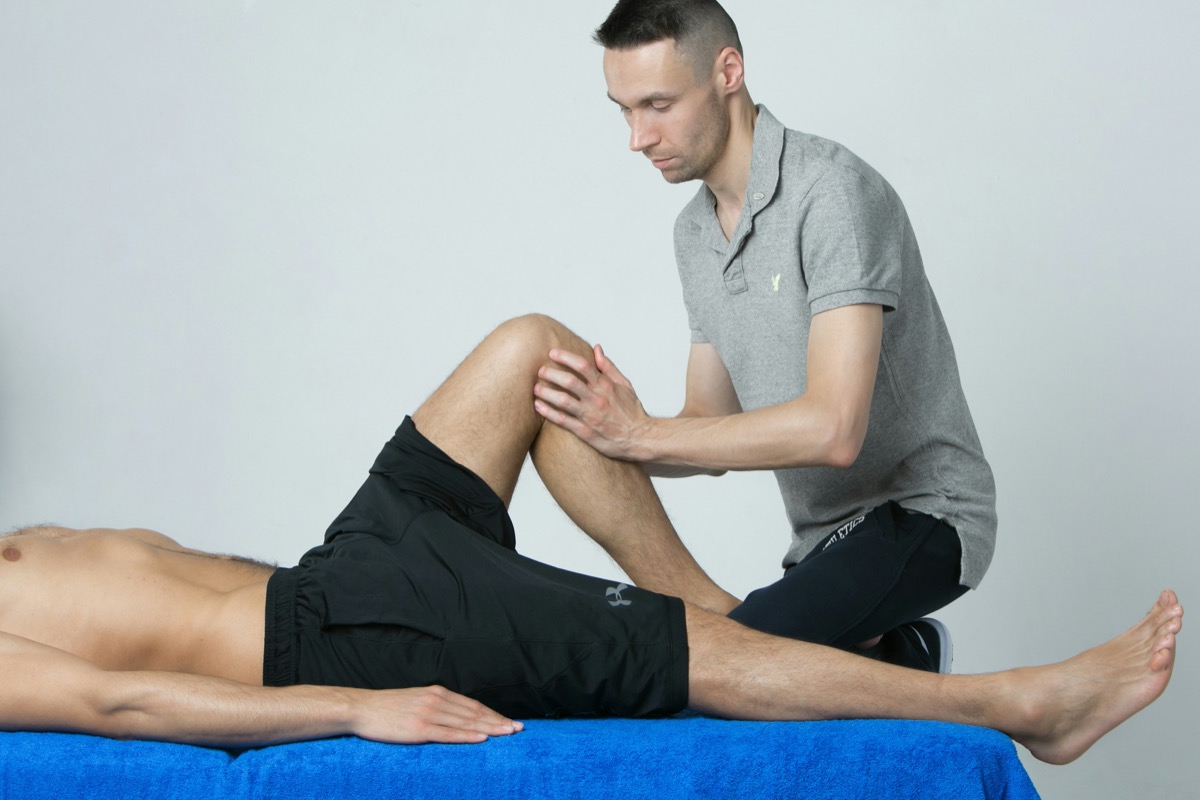
This is the part you have to be able to do.
Everything else on the pathway exists to get somebody here, and to check they arrived.
First
Start With the Role, Not the Credential.
Before choosing a credential, it is worth being clear about the work the credential is for. An assisted stretch practitioner delivers practitioner-guided stretching as its own service — one client at a time, hands-on, with the practitioner doing the positioning and the moving while the client stays relatively relaxed.
- Position the client for each technique.
- Support the body while it is being moved.
- Guide controlled movement, in both directions.
- Communicate throughout the technique rather than only between techniques.
- Manage range and intensity from the client’s own feedback.
- Respond immediately when a client reports something.
- Maintain professional boundaries and ongoing consent.
- Know when to modify, when to stop and when to refer.
- Return the client safely to neutral at the end of every technique.
Before you choose the credential, understand the work.
That list is the job, not a summary of a course. Somebody who reads it and thinks “this is the part I would enjoy” is in a very different position from somebody who has only pictured the title, and the difference shows up on the first day of hands-on training rather than before it. The full guide to what a stretch practitioner does walks through a session in the order it happens.
If you are not yet sure what the title itself means — what a stretch practitioner is — defines the professional role, explains why ASA uses the title Stretch Practitioner, and states plainly what the credential does and does not mean. That is the page to read before this one, if you have not.
Step 1
Learn What Assisted Stretching Is.
The first step costs nothing and most people skip it: understand the service itself before deciding to train in it. Assisted stretching is a distinct professional service rather than a technique bolted onto something else, and the concepts below are what it actually consists of.
Practitioner-guided stretching
The practitioner produces the movement rather than coaching the client through it. That single difference is what separates this from teaching somebody to stretch themselves.
Positioning
Where the client is placed, and how, decides what a technique can safely do before the technique starts. It is a skill in its own right rather than a preliminary.
Physical support
A limb that is being moved is carried, not merely held at the end. Support is what makes a client able to relax, and a client who is not relaxed is not receiving the service.
Controlled movement
Speed, direction and depth stay under the practitioner’s control throughout — including on the way out of a position, which is where control is most often lost.
Client communication
The client reports what they feel while it is happening, and the practitioner adjusts from that. It is the instrument the work is calibrated with.
Range management
How far a technique goes is a decision made continuously from what the client reports, rather than a target set in advance.
Consent
Permission to work with a person’s body, given before contact and available to be withdrawn at any moment without a reason.
Professional boundaries
What the role covers, where it ends, and what a practitioner does when a client’s needs move past it.
A person who understands those eight things can evaluate any training programme, including ASA’s, and can tell the difference between a course that teaches a service and a course that teaches a routine. The canonical explanation is ASA’s guide to what assisted stretching is.
Step 2
Understand the Professional Boundaries.
This is the second step rather than the last one, and the position is deliberate. The limits of the role are part of the skill rather than a disclaimer attached to it, and a practitioner who learns them late has spent the intervening time building habits around a role they had not yet understood.
The ASA credential does not authorize diagnosis, medical treatment or rehabilitation. An ASA Certified Stretch Practitioner delivers a non-medical professional service, and the education is built around that fact rather than around an exception to it.
- What the professional role covers, and where it ends.
- Consent, treated as ongoing rather than as a form signed at the desk.
- Professional touch, and what makes contact appropriate.
- When to modify a technique.
- When to stop.
- When referral to a qualified professional may be appropriate.
- What sits outside the role entirely, however confidently a client asks for it.
- The employer, facility and insurance requirements that apply where the work happens.
Learning what not to do is part of learning the profession.
None of that is theoretical. The pressure to step outside the role does not usually arrive as a request to diagnose something — it arrives as a client describing a problem and looking expectantly at the person with their hands on them. Recognising that moment is trained, not improvised. All of it is covered properly in the stretch practitioner scope-of-practice guide.
Step 3
Build the Knowledge Foundation.
Hands-on training is more useful to somebody who already knows what they are looking at. The knowledge foundation is what turns an in-person day from a demonstration into practice: a student who arrives understanding the method spends the day developing skill rather than learning vocabulary.
The professional role
What the work is, what it is not, and how it sits alongside other professions.
Safety principles
What a practitioner does when something is reported, and why the response is the same whether or not anybody knows the cause.
Communication
How to ask questions that get usable answers, and how to keep a client talking while they are being moved.
Practitioner body mechanics
How a practitioner stands, kneels and loads their own body — which decides how long a career lasts as much as it decides how a technique feels.
Positioning concepts
Why a position is chosen, what it makes possible, and what it rules out.
Boundaries and consent
The professional half of the role, taught rather than assumed.
Client experience
What a session should feel like from the other side of it, from arrival to the conversation afterwards.
Technique principles
The reasoning underneath the individual techniques, so a practitioner can adapt rather than only repeat.
Recognising the edge of the role
The situations that call for modifying, stopping or referring, learned before they are met.
Knowledge prepares you to practice.It does not prove hands-on competency.
Both halves of that are true at once, and programmes tend to get one of them wrong. A programme with no education leaves a practitioner copying positions without knowing why; a programme that is only education leaves them certain and unpractised. ASA’s answer is to require both and to assess them separately.
Step 4
Develop the Hands-On Skill.
Assisted stretching is a physical skill performed on another person. Reading about it builds understanding, and understanding is genuinely useful — but the things below are performed, and a person only finds out whether they can perform them by performing them with somebody in front of them.
Positioning
Placing a client so a technique is possible, comfortable and reversible before anything moves.
Hand placement
Where contact is made, and what it is for. The same technique feels completely different depending on it.
Support
Carrying the weight of what is being moved so the client can stop holding it themselves.
Leverage
Using position and body weight rather than arm strength, which is what makes a technique controllable and repeatable.
Body mechanics
The practitioner’s own stance and load. It decides whether the tenth session of the day is delivered as well as the first.
Movement control
Speed and direction under command throughout — into a position and back out of it.
Range management
Deciding how far to go, continuously, from what the client is reporting.
Communication during movement
Talking and working at the same time, which is harder than either and is part of the technique rather than an accompaniment to it.
Adjusting from feedback
Changing what is happening while it is happening, without making the change feel like an alarm.
Returning to neutral
Bringing a client out under control and under support. The technique is not finished until this is done.
Support before movement.Control before depth.Know the exit before the entry.Communication is part of the technique.
Those four lines are ASA’s teaching philosophy, and they are the reason the hands-on day exists in the form it does. Every one of them is a habit rather than a fact: a student can agree with all four in the morning and still reach for depth before control in the afternoon, which is precisely what an instructor standing beside them is for.
Step 5
Demonstrate Competency, Not Just Completion.
Completion and competency are different claims about a person, and only one of them is about what they can do. A programme that issues a credential for completion alone has verified attendance; a programme that assesses competency has verified skill. The difference matters most to the client who will be lying on the table.
Completion
- Records that somebody finished the material.
- Can be satisfied on a screen, alone.
- Shows that information was seen.
- Says nothing about hands on another person.
Competency
- Records that somebody demonstrated the skill.
- Has to be performed, with a person present.
- Shows that technique, communication and judgement work together.
- Is what ASA requires before the credential is issued.
Competency before credential.
ASA’s practical assessment is designed to verify that a student can apply the required skills with a real person rather than recognise the right answer on a screen. What that looks like in practice is technique, communication and professional judgement observed together, because separating them tests something a session never asks for.
Step 6
Understand Consent and Professional Touch.
Assisted stretching is delivered hands-on, which puts consent and professional conduct at the centre of the work rather than at the edge of it. Both are learnable, both are assessed, and neither is a matter of instinct or good intentions.
Consent is ongoing, not a one-time form.
Informed participation
The client should understand what the service is and what a session involves before it starts, in ordinary language rather than in professional shorthand.
Permission before contact
Contact is explained before it happens, not narrated afterwards. A practitioner says what they are about to do and where, and gives the client the moment in which to say no.
The client may stop anything, at any point
Stopping is always available, always immediate, and never something a client has to argue for. A practitioner who makes stopping mildly awkward has effectively removed it.
The client may decline a stretch outright
Declining one position is not declining the session, and it is not a problem to be solved. The practitioner works with what is left rather than negotiating.
The client may ask for less
Reducing intensity or range on request is an ordinary adjustment, made without comment and without implying that less is a lesser session.
Positioning is explained before it is used
A client who is about to be moved into an unfamiliar position should hear what it is first. Nobody consents meaningfully to something they cannot picture.
Consent can change mid-session
What was fine ten minutes ago may not be fine now, and the practitioner keeps checking rather than assuming the earlier answer still holds.
What professional touch means in this work
- Contact has a clear purpose connected to the technique being performed.
- Positioning is explained before it is used.
- Conduct stays professional, and the relationship stays a working one.
- Unnecessary contact is avoided rather than justified.
- Client preferences are respected without requiring an explanation.
- Draping and clothing expectations appropriate to the setting are maintained.
- Facility policy is followed, including where it is stricter than a practitioner’s own habit.
- The session stops if the client is uncomfortable — with the position, the contact or anything else.
Consent continues throughout the session.
A practitioner who is unsure whether a particular contact is appropriate already has the answer: explain it first, offer an alternative, or leave it out. The expectations above are ASA’s professional standard rather than a summary of any jurisdiction’s rules about contact, which exist, differ between places and are not ASA’s to state. The scope-of-practice guide covers both subjects in full.
Step 7
Know When to Modify, Stop or Refer.
Reduce range, reposition, return the client to neutral, or stop the stretch or the session, when a client reports or shows any of the following. The response is the same whether or not anybody knows why it is happening — and working out why is not part of this role.
- Sharp pain.
- Shooting or electrical sensations.
- Numbness.
- Tingling.
- Pain in a joint.
- Dizziness or light-headedness.
- A feeling of instability or of not being supported.
- Unusual distress, or a change in how they are breathing or speaking.
- Anything that feels unsafe to the client.
- Anything that feels unsafe to the practitioner.
This page does not explain what any of those sensations means, and a practitioner should not explain it to a client either. The list is a list of responses rather than a list of conditions, and a client who wants to know what a sensation means should ask a qualified healthcare professional.
When referral may be appropriate
Referral is not an admission of inadequacy. It is what a professional does when the person in front of them needs something this role does not provide. Every trigger below is about the boundary of the role rather than about a client’s condition, which is the only kind of referral rule a non-medical practitioner should be working from.
- The client’s concern is outside what this professional role covers.
- The client is asking for a medical evaluation, an opinion or a determination.
- Symptoms have come up that concern the client or the practitioner.
- The practitioner is not confident the service is appropriate for this person today.
- What the client needs is something this role does not provide — diagnosis, treatment or rehabilitation.
- A policy that applies — an employer’s, a facility’s or an insurer’s — requires referral or clearance first.
Stopping is a professional skill.
Stopping well is itself technique: coming out of a position under control and under support rather than releasing it, saying what is happening while it happens, settling the client, and handling the moment without turning it into an event that frightens them. A practitioner who cannot stop cleanly does not really have the entry either.
Step 8
Earn the ASA Credential.
Everything above is what becoming a practitioner consists of, whoever teaches it. This is how ASA structures it. The credential is the last stage rather than the first, and each stage exists because the one before it cannot substitute for it.
- 1
Fast Track preparation
- Six short online modules, completed before class, that prepare a student for the hands-on day rather than teaching the technique.
- 2
Knowledge assessments
- An online assessment before class, requiring 80% with every safety question answered correctly.
- 3
One-day ASA hands-on certification training
- One full day in person, with real bodies, learning ASA's signature 25-minute and 50-minute routines. Positioning, support, leverage, control and the exits — the part of this work that cannot be learned by reading about it.
- 4
Practical competency
- Demonstrated hands-on, in front of an evaluator, where technique, communication and judgement are assessed together rather than separately.
- 5
The ASA Safety Commitment
- A signed professional commitment to the safety and boundary standards the education teaches. It is a condition of the credential rather than a formality attached to it.
- 6
The ASA Certified Stretch Practitioner credential
- Issued on review once every requirement above is satisfied — never automatically on a passing score.
- 7
Confirm what applies where you work
- The step that is the practitioner’s own and that no programme can complete for them: professional requirements, insurance and workplace policy, confirmed before the first paid session.
- Fast Track gets you ready for class.
- Hands-on training develops the skill.
- Practical competency earns the credential.
Competency before credential.
Nothing in that sequence is a guarantee. Enrolling does not make somebody a practitioner, attending does not make somebody competent, and paying does not issue a credential — the requirements are requirements, and they are assessed. How each stage works in detail, what a quality programme contains and how to compare providers is covered in the assisted stretching certification guide.
Preparation
What Is the ASA Fast Track?
ASA Fast Track is preparation. It is six short online modules and a short online assessment that get a student ready for the classroom, completed before the hands-on day.
- It is readiness work, completed before the hands-on training.
- It is six short online modules, followed by an online knowledge assessment.
- It orients a student to the profession and to the way the material is taught.
- It is one stage of the pathway rather than the pathway.
Fast Track gets you ready for class.It does not earn the practitioner credential by itself.
That distinction is worth being blunt about, because “fast track” is the kind of phrase a reader completes on their own. It is a preparation block. Everything else the credential requires — the hands-on day, the practical competency and the Safety Commitment — still follows it.
Education
The Online Preparation Modules.
ASA's current certification uses six short online Fast Track preparation modules. The 24-module ASA Academy is a separate online educational program. It is currently on hold as a public offering, and it is not part of, or required for, the one-day certification. The preparation modules' job is not to make somebody able to perform a technique — that is what the hands-on day is for — but to make them able to understand one, and to understand the role it is being performed inside.
Knowledge
Applied anatomy and movement, the method behind the techniques, and the reasoning that lets a practitioner adapt rather than only repeat.
Professional concepts
The role itself: what it is, how it relates to neighbouring professions, and what a professional relationship with a client consists of.
Safety and scope foundation
Consent, boundaries, the situations that call for modifying or stopping, and when referral may be appropriate.
Structured education
A sequence rather than a library. Six modules in a fixed order, each building on the one before it, completed before the hands-on day.
The preparation modules build the foundation.Hands-on training builds application.
The current program is described on the certification page for anyone who wants to see exactly what is covered before paying for it. See the program on the ASA certification page.
In person
The One-Day Hands-On Certification Training.
ASA certification includes an in-person, one-day hands-on certification training, built around ASA's signature 25-minute and 50-minute routines. It is the part of the pathway where the education becomes a skill, and it is the part a person cannot complete alone.
- Technique instruction, taught and then practised rather than demonstrated and moved on from.
- Practitioner positioning — where you stand, kneel and load your own body.
- Support: carrying what is being moved so the client can stop holding it.
- Leverage, so a technique is controlled by position rather than by strength.
- Communication while working, which is trained by doing it under observation.
- Guided practice with feedback, on real bodies rather than on a diagram.
- Application of the online education to the person actually in front of you.
Attending the training is a requirement rather than an outcome. The day is where skill is developed and where it begins to be observed; it is not a formality that converts attendance into a credential, and ASA does not promise that anybody passes by being present.
Upcoming training dates, locations and enrolment are published on the ASA certification page, which is the one place they are kept current. See upcoming ASA training.
Assessment
Knowledge Assessments.
Knowledge is assessed as well as delivered. The figures below are the shape of the requirement, which is what somebody is entitled to know before paying for a programme — no question, answer or item content is published anywhere, for the obvious reason.
When
Before class
Taken online once the six preparation modules are complete.
Standard
80% to pass
The pass mark for the whole assessment.
Safety questions
All must be correct
Because that is the part of the role with consequences.
What it means
Ready for class
Passing it means a student is ready for the hands-on day. It does not issue the credential.
A written assessment can establish that somebody knows when to stop, what consent requires and where the role ends. It cannot establish that they can support a limb under load while holding a conversation, which is why it is one requirement rather than the requirement.
Assessment
Practical Competency.
Practical competency is demonstrated rather than declared. A student performs the work with a person in front of them, and an evaluator observes whether the skill, the communication and the judgement are actually there together.
- Setup and positioning before anything moves.
- Support that lets a client relax rather than brace.
- Control of the movement, in both directions.
- Communication during the technique, not only between techniques.
- Professional technique, performed as taught rather than approximated.
- The ability to adjust from what a client reports, while it is happening.
- A safe return to neutral, every time.
- Professional judgement, including recognising when not to continue.
Attendance is not the same as competency.
ASA does not publish the internal evaluation materials, and that is deliberate: an assessment whose scoring detail is public stops assessing the skill and starts assessing preparation for the assessment. What is published is what is assessed, which is the part a student needs in order to prepare properly.
Before the credential
The ASA Safety Commitment.
Before the credential is issued, a student signs the ASA Safety Commitment. It is a professional commitment rather than an acknowledgement box: the point of signing it is that the standards it describes are the ones a practitioner is expected to work to afterwards.
- Client safety takes priority over completing a routine.
- The professional role, and its limits, take priority over a client’s expectations of it.
- Consent is treated as ongoing and is honoured immediately when it is withdrawn.
- Boundaries are maintained under pressure, including commercial pressure.
- A session is modified or stopped when that is what the situation calls for.
It is a condition of certification rather than a formality attached to it, which is why it sits in the pathway beside the assessments rather than in a terms-and-conditions page.
The credential
What Credential Do You Earn?
Somebody who completes ASA’s pathway earns the ASA Certified Stretch Practitioner credential. It documents successful completion of ASA’s certification requirements: the education, the in-person hands-on training, the knowledge assessments, the demonstrated practical competency and the signed ASA Safety Commitment.
What the credential is not:
- Healthcare licensure.
- Massage licensure.
- Physical therapy licensure.
- Universal legal authorization to provide any service anywhere.
- A guarantee of employment.
- A guarantee of clients.
- A guarantee of income.
The credential documents competency within ASA’s certification standard.It does not rewrite professional licensing law.
What certification does not decide
Certification does not determine a practitioner’s legal scope of practice. Laws, professional licensing requirements, title restrictions, insurance conditions and facility policies vary by state, by country and by employer, and they apply to a certified practitioner exactly as they applied before. Anyone entering this field is responsible for confirming what they are permitted to do where they intend to work, and for consulting the appropriate licensing authority or their own professional adviser where that is unclear.
Both halves matter to a prospective student. The credential is a real statement about what somebody has demonstrated, verifiable by anybody who asks. It is not, and cannot be, a statement about what the law where they live permits them to do. What the credential means, how it is verified and how ASA’s programme is structured is covered in the certification guide, and the boundary itself in the scope-of-practice guide.
No universal answer
Do You Need a License to Be a Stretch Practitioner?
There is no single universal answer, and anybody who gives you one without knowing where you live is guessing. Requirements differ between countries, states and provinces, they differ according to what is actually being provided and how it is described, and they differ again for someone who already holds a professional licence.
What actually decides it
- The jurisdiction you work in.
- The exact services you intend to provide.
- Any professional credential or licence you already hold.
- Local licensing and title rules, which sometimes restrict a word rather than an activity.
- Employer and facility policy, which is often stricter than the law.
- Insurance conditions, which have to actually cover the service being delivered.
- How the service is described and marketed, which can change which rules apply to it.
Certification and legal permission are not the same thing.
ASA certification does not determine what is legally permitted anywhere, and this page will not tell anybody that a licence is or is not required where they are. The people who can answer that are the licensing authority for the place you intend to work, your insurer, your employer and, where it is genuinely unclear, your own professional adviser.
The full treatment of that distinction — what a practitioner may do, what sits outside the role, and why certification and legal permission are two different things — is in the stretch practitioner scope-of-practice guide.
Backgrounds
Do You Need Prior Fitness or Massage Experience?
People arrive at assisted-stretching education from a range of professional backgrounds, and several of them transfer usefully. What none of them replaces is the assisted-stretching skill itself, which is new to almost everybody — including experienced professionals.
- Personal training
- Massage therapy
- Coaching
- Fitness
- Sports and performance
- Wellness
- Other hands-on professional roles
- Career changers
Prior experience may support learning.It does not replace assisted-stretching-specific competency.
What transfers is mostly the professional half: working one-to-one, explaining an unfamiliar service, holding a boundary, and knowing what a body is and is not built to do. What is genuinely new is the hands-on half — supporting and positioning another person, calibrating leverage, and reading feedback through contact rather than through observation. That is as true of an experienced trainer as it is of a licensed massage professional.
A credential someone already holds may also change what they are permitted to offer, in either direction. That is a scope question rather than an education one, and it is answered by the body that regulates them rather than by ASA. Both professions have their own guide: assisted stretching for personal trainers and assisted stretching for massage therapists.
Entering the field
Can a Complete Beginner Become a Stretch Practitioner?
ASA’s education is written to be entered by people new to the field as well as by professionals adding a skill, and assisted stretching can be a first professional skill rather than an addition to one. What does not change is the standard: a newcomer completes the same education, sits the same assessments, attends the same hands-on training and demonstrates the same practical competency as everybody else.
What does not change for a newcomer
- The same education.
- The same knowledge assessments.
- The same in-person hands-on training.
- The same demonstrated practical competency.
- The same signed ASA Safety Commitment.
- The same responsibility to confirm what applies where they intend to work.
Beginner does not mean lower standard.
Current eligibility and enrolment requirements are stated on the ASA certification page, and anybody weighing this as a first professional skill should read them there rather than infer them here. What is worth saying plainly is that a hands-on profession is not an easy field to enter — it is a learnable one, which is a different claim. See current ASA certification requirements.
Timing
How Long Does It Take to Become a Stretch Practitioner?
There is no single answer, because most of the pathway moves at the pace of the person doing it. The in-person component is one day. The complete certification pathway is not, and any programme that tells somebody otherwise is describing an attendance certificate.
What the timing depends on
- The pace a student works through the online education at.
- When a hands-on training date is available, and where.
- How quickly the assessments are completed.
- When practical competency is demonstrated.
- How much preparation an individual wants before being assessed.
Fast Track preparationShortSix online modules, completed before the hands-on training.Knowledge assessmentBefore classTaken online once the preparation modules are complete.Hands-on trainingOne full dayIn person. Current class dates are listed on the certification page.Practical competencyDemonstratedPerformed in front of an evaluator rather than completed on a screen.
The hands-on training is one day.The online preparation comes first, and the credential follows review.
ASA's certification is built around one day of hands-on training, but the credential is not issued for attendance: the online preparation comes first, and the credential follows only once practical competency has been demonstrated and the record reviewed. A prospective student should ask any provider which part of its timeline is the part where somebody proves they can do the work.
Tuition
How Much Does It Cost?
ASA publishes one program, and its tuition depends only on when a student enrolls — not on how much of the program they get.
Early tuition
ASA Certified Stretch Practitioner
$497
For students who enroll by the early-enrollment date shown for their class. $597 final-week tuition applies during the seven days before class, and standard tuition is $797.
What it covers
One program at every price
Six short online preparation modules, the knowledge assessment, one full day of in-person hands-on training in ASA's signature 25-minute and 50-minute routines, and the assessed practical competency that the credential requires, plus ASA's included digital training resources.
Those are the current published figures rather than fixed ones. Program pricing, contents and cohort availability change, and the certification cost guide is where the detail — what the tuition includes, what drives certification pricing generally, and what to ask any provider before paying — is kept current. See the certification cost guide for current program details.
Two different things
Online Education vs Full Certification.
Online education and certification are two different things, and confusing them is the most expensive mistake available on this page — because one of them prepares a practitioner and one of them does not. ASA is not currently offering an online-only program to the public.
Online-only education
- Online education.
- Professional learning, sometimes structured and assessed as it goes.
- Ends in a Certificate of Completion.
- Does not confer ASA Certified Stretch Practitioner status.
ASA Certified Stretch Practitioner
- ASA's one-day certification.
- Six short online Fast Track preparation modules.
- One full day of in-person hands-on training.
- An online knowledge assessment.
- Assessed practical competency.
- The signed ASA Safety Commitment.
- The credential, issued once every requirement is satisfied.
A Certificate of Completion records that somebody finished a course. The credential records that somebody demonstrated they can do the work with another person. Both are honest documents; they are documents about different things.
Settings
Where Can a Stretch Practitioner Work?
Assisted stretching is delivered in a range of professional settings. The list below describes where the work happens rather than where anybody is hiring, and it is not a statement that every environment is open to every practitioner.
- Assisted-stretching studios.
- Gyms and fitness facilities.
- Wellness businesses.
- Sports and performance facilities.
- Massage and wellness environments, where consistent with the rules that apply there.
- Independent practice, where permitted.
- Multidisciplinary wellness settings.
ASA does not place graduates, does not operate a job board, has no hiring relationship with any of those settings and guarantees nobody a position in one. Each environment sets its own requirements — its own policies, its own insurance conditions and often its own onboarding — and those apply to a certified practitioner exactly as they apply to anybody else.
How a facility actually runs the service — the education, competency and standards side of it rather than the scheduling side — is covered in ASA’s guide for gyms and fitness facilities.
Independence
Can You Work for Yourself?
Potentially, depending on the professional, legal, insurance and business requirements that apply where you are. Independence is a business question layered on top of a permission question, and the permission question comes first.
What an independent practice involves
- The service model — what is offered, and how it is described.
- Professional liability insurance that actually covers the service being delivered.
- Business registration and whatever local requirements apply to it.
- A facility or space appropriate to hands-on work.
- Scheduling and client management.
- Client forms, records and retention.
- Pricing and packaging.
- Marketing that describes the service accurately.
- Professional boundaries, which are harder to hold without an employer’s policy behind them.
- Local requirements, confirmed rather than assumed.
ASA publishes no earnings figures, no rate guidance and no revenue projections, and nothing on this page should be read as a business forecast. What ASA provides is education, assessment and a credential; whether an independent practice works is decided by a great many things that a certification has no view on.
ASA is separately developing the STRRRETCH – Maximum Performance Facility Partner Studio Pathway for practitioners interested in their own assisted-stretching environment. Program structure, availability, requirements and terms are still being developed. Certification and business participation are separate things.
Adding the skill
Can Personal Trainers Become Stretch Practitioners?
Yes, as a professional-education path — personal trainers are among the people ASA educates, and a trainer arrives already comfortable with movement, with one-to-one work and with a client relationship. Whether an individual trainer may then offer assisted stretching as a service is a separate question, decided by applicable law, any rules that already apply to them, their insurer and their employer or facility.
ASA certification does not override any of those. It documents that somebody has been educated and has demonstrated competency in assisted stretching; it does not expand what a trainer is permitted to do.
The full answer — what transfers from a training background, what is genuinely new, and what actually decides whether a trainer may offer the service — is in ASA’s guide for personal trainers.
Adding the skill
Can Massage Therapists Become Stretch Practitioners?
Yes, as a professional-education path — massage professionals may choose to learn assisted stretching as an additional professional skill, and a substantial part of the professional half of the work is already familiar to them. Whether it fits alongside a licensed practice, and how it must be described, is decided by the licensing board that regulates them, their insurer and their employer.
ASA certification does not expand, replace or substitute for a massage licence, and it does not change what a licensed professional is permitted to do. Those two things exist independently of one another.
The full answer — including what a licensing board, an insurer and an employer each decide — is in ASA’s guide for massage therapists.
Two credentials
What If You Already Hold Another License or Credential?
Plenty of practitioners hold ASA certification alongside another credential. Examples include personal trainer credentials, massage licences, physical therapy licences, chiropractic licences, coaching credentials and other professional qualifications.
ASA certification does not expand the scope another profession creates.It does not reduce it either.
What matters in practice is that the practitioner knows which role they are acting within at any given moment, and describes it accurately to the client. Somebody who is licensed in another profession does not stop being licensed when they deliver assisted stretching, and somebody delivering assisted stretching does not acquire a licensed profession’s authority because they also hold one.
Which role a practitioner is acting within, and what decides it, is the subject of the scope-of-practice guide.
Where a healthcare licence specifically is concerned: assisted stretching vs physical therapy — certification against healthcare licensure, what an ASA credential does not authorize, and why a licensed physical therapist does not need one.
Where a personal-training credential specifically is concerned: assisted stretching vs personal training — why a personal-training credential does not by itself demonstrate assisted-stretching competency, why an ASA credential does not make anybody a personal trainer, and why neither one expands the other’s scope.
Where a yoga credential specifically is concerned: assisted stretching vs yoga — what a yoga background may and may not transfer, why ASA certification does not make anybody a yoga instructor, and why yoga teacher training does not by itself demonstrate assisted-stretching competency.
Fifteen questions
What to Check Before Working With Clients.
Before providing paid or professional assisted stretching, a practitioner should be able to answer all fifteen of these. Nobody marks them and they are not a test — they are the shape of what being ready for a client actually consists of.
Do I understand the service well enough to explain it to somebody who has never had it?
Have I completed appropriate education rather than assembled it informally?
Can I demonstrate the techniques competently, not only describe them?
Can I position and support clients safely, within what I have actually been trained in?
Can I communicate throughout a session while I am working?
Do I understand consent as something ongoing rather than something signed?
Can I control range and intensity from what the client reports?
Do I know when to modify a technique and when to stop entirely?
Do I understand my professional boundaries, including under pressure?
Do I know when referral to a qualified professional may be appropriate?
Have I checked the professional and legal requirements that apply where I intend to work?
Does my insurance actually cover the service I intend to provide?
Does my employer or facility permit it, and under what conditions?
Are my client forms, records and business procedures appropriate to hands-on work?
Am I describing what I provide accurately, in everything from a conversation to a website?
Do not start with the business card.Start with the competency.
The last five are the ones people skip, and they are the five no certification can answer for anybody. Confirming them is the practitioner’s own responsibility, and the people who can answer them are the licensing authority where you work, your insurer and your employer.
Worth avoiding
Common Mistakes When Entering the Field.
Most of these are made by people acting in good faith, which is exactly why they are worth naming. None of them is a character failing; each is a shortcut that looks sensible until it is taken.
Chasing the title before the skill
The credential is the part that is visible from outside, so it is the part people optimise for. The skill is the part a client experiences.
Assuming online completion equals hands-on competency
Finishing the material proves the material was finished. Working with another person is a separate thing, and it is learned separately.
Assuming certification creates legal permission
A certificate is evidence of education and competency. It is not a permission slip, and it changes nothing about the rules that apply where somebody works.
Skipping the scope research
It is the least enjoyable part of entering a field and the one with the largest consequences for getting it wrong.
Not confirming insurance
A policy that covers one professional activity does not automatically cover a different one. The question to ask an insurer is about the service, not about the certificate.
Copying stretches from social media
A clip shows a position. It does not show the setup, the support, the communication, the exit, or the reason the practitioner chose it for that person.
Chasing range instead of control
Depth is the most visible variable and the least informative one. Control is what makes depth safe, which is why it is taught first.
Treating communication as an interruption
Talking during a technique is part of the technique. A practitioner working in silence has removed the instrument they were meant to be adjusting from.
Overpromising results
Assisted stretching is a professional service with a real value proposition. It does not need an outcome claim attached to it, and an outcome claim is where a service becomes something else.
Using medical language
Borrowed clinical vocabulary makes a non-medical service sound like a medical one, which misleads the client and can change which rules apply to the practitioner.
Trying to explain why a client feels tight
Explaining a sensation is a determination about a person’s body. It is outside the role, however conversational the question was.
Starting with branding before the service
A name, a logo and a booking page are the quick part, and they are frequently finished before the skill they are advertising is.
Treating attendance as proof of competency
Being in the room is a requirement. Demonstrating the work is what the requirement is there to make possible.
Comparing programs
How to Choose an Assisted-Stretching Certification.
These questions are worth asking of any assisted-stretching programme, ASA included. They are deliberately about what a programme requires rather than about what it advertises, because the requirements are the part that ends up mattering.
- Is the credential clearly named, so you know exactly what you would hold?
- Is the education structured, or is it a library of material to work through in any order?
- Does the programme teach professional boundaries as part of the curriculum?
- Is consent addressed explicitly, and treated as ongoing?
- Is safety addressed — including what to do when something is reported?
- Is there in-person hands-on training?
- Is practical skill evaluated by somebody watching you work?
- Are knowledge assessments included, and is there a stated passing standard?
- Is the credential issued only after every requirement has been completed?
- Are the claims realistic, or does the marketing promise outcomes a course cannot control?
- Is the provider clear about the difference between certification and licensure?
- Can the credential be verified afterwards by an employer or a client?
Look beyond the certificate graphic.Ask what had to be demonstrated to earn it.
ASA is not the only organization teaching this work, and this page does not claim otherwise. What it does claim is that the questions above separate a programme that verifies skill from one that verifies a payment, and that a prospective student is entitled to ask them of everybody — including ASA.
A longer version of the same exercise — what a quality programme contains, and how to compare providers — is in the assisted stretching certification guide.
The in-person part
Why Hands-On Training Matters.
Online education does real work, and ASA’s programme depends on it: a student who arrives at the hands-on day already understanding the method gets far more out of it. What online education cannot do is confirm that a specific person can perform a physical skill on another person, because that is not a thing a screen can observe.
- Client positioning, adjusted for the body actually in front of you.
- Practitioner positioning, corrected by somebody who can see your stance.
- Leverage, which is felt before it is understood.
- Physical support, which either lets a client relax or does not.
- Movement control, in both directions and at real speed.
- Communication while working, practised under observation.
- Adjusting from feedback in the moment rather than in principle.
- Returning a client to neutral, every time, under control.
A video can demonstrate every one of those. It cannot tell whether the person watching it can do them — which is the question a credential is supposed to answer, and the reason ASA requires hands-on competency as part of its practitioner certification model.
Afterwards
What Happens After Certification?
Certification is a milestone rather than a finish line, and the steps that follow it are the practitioner’s own. None of them is provided by a credential.
- Confirm the professional and legal requirements that apply where you intend to work.
- Confirm that your insurance covers the service you intend to provide.
- Complete any employer-specific onboarding, which is often stricter than certification.
- Practice within your scope, and within what you have actually been trained in.
- Maintain the professional standards the education is built on.
- Keep developing the skill — technique improves with repetition and feedback, not with time.
- Build experience responsibly, at a pace that matches your competence.
- Work within a facility, where that fits your situation and its requirements.
- Explore independent or business pathways where they are permitted.
The credential is a milestone.Professional development continues after it.
ASA does not place graduates into positions, does not guarantee employment or clients, and does not claim that certification makes somebody job-ready for every employer — employers set their own requirements, and a certification cannot satisfy them in advance.
The whole path
Your Path From Interest to Practitioner.
The whole path, from the point somebody first wonders about it to the point they are working professionally. Eleven steps, in the order they actually happen.
- 1
Interest
- You have heard of the work and want to know whether it fits you.
- 2
Understand assisted stretching
- What the service is, and what it is not.
- 3
Understand the practitioner role
- What the person delivering it actually does, session by session.
- 4
Learn the professional boundaries
- Scope, consent, professional touch, and where the role ends.
- 5
Build the knowledge foundation
- Six short online preparation modules, then an assessment.
- 6
Complete the assessment
- The online knowledge assessment, before class, at the stated standard.
- 7
Develop hands-on technique
- One full day in person, with real bodies and an instructor watching.
- 8
Demonstrate practical competency
- The skill performed and observed, rather than described.
- 9
Earn the credential
- The ASA Certified Stretch Practitioner, issued on review once every requirement is satisfied.
- 10
Confirm work and business requirements
- Professional rules, insurance and workplace policy — the practitioner’s own step.
- 11
Practice professionally within scope
- And keep developing, because the credential is where the work starts.
The first four steps cost nothing and can be done this week, on this site. The rest is a programme, and it takes as long as it takes.
Deciding
Is This Career Path Right for You?
This page will not tell you whether to do this, and anybody who would is selling something. What it can do is name what the work actually asks for, so you can decide against something real rather than against a job title.
- Hands-on professional work, close up and physical.
- One-to-one client interaction, for most of a working day.
- An interest in movement and in how bodies are put together.
- Structured technique, performed consistently rather than improvised.
- Communication as a working tool rather than as small talk.
- A willingness to learn a physical skill slowly and be corrected while doing it.
- Ongoing professional development after the credential.
- Attention to detail and consistency, session after session.
Don’t choose the career from the title.Look at the work.
The most useful thing somebody on the fence can do is read what a practitioner actually does all day, and then decide. It is a more honest test than any list of traits. See what a stretch practitioner actually does.
Questions
Becoming a Stretch Practitioner: FAQ.
How do you become a stretch practitioner?
To become an assisted stretch practitioner, a person should learn the foundations of assisted stretching, develop technique-specific hands-on skill, understand professional boundaries and consent, demonstrate practical competency, and confirm that the services they intend to provide are permitted under the professional, legal, insurance and workplace requirements that apply to them. ASA’s pathway to the ASA Certified Stretch Practitioner credential combines online education, in-person hands-on training, knowledge assessment and demonstrated practical competency.
How do you become an assisted stretch practitioner?
“Assisted stretch practitioner” and “stretch practitioner” describe the same role, and the path is the same one: learn what the service is, learn the professional boundaries, build the knowledge foundation, develop hands-on technique in person, demonstrate practical competency, and then confirm — before the first paid session — that what you intend to provide is permitted under the law, licensing rules, insurance conditions and employer policy that apply to you.
What qualifications do you need to become a stretch practitioner?
There is no single universal qualification, because assisted stretching is not regulated as one profession everywhere. What a practitioner needs in practice is education in the service, demonstrated hands-on competency, an understanding of consent and professional boundaries, and confirmation that what they intend to provide is permitted under the law, licensing rules, insurance conditions and employer policy that apply to them. ASA documents the first three through the ASA Certified Stretch Practitioner credential; the fourth is the practitioner’s own responsibility.
Do you need a degree to become a stretch practitioner?
ASA’s current eligibility requirements should be checked directly on the ASA certification page, which is where they are kept current. What can be said generally is that a college degree is not what defines hands-on competency in this work: what ASA assesses is completed education, knowledge assessments and demonstrated practical skill with a person in front of you.
Do you need a fitness certification first?
ASA does not publish a fitness credential as a prerequisite, and prospective students should confirm current requirements on the ASA certification page. Personal trainers and fitness professionals are among the people ASA educates, and a fitness background helps with the professional half of the work — but it does not replace assisted-stretching competency, which is assessed the same way for everybody.
Do you need massage experience?
No massage experience is published as a prerequisite by ASA, and current requirements are on the ASA certification page. Massage professionals are among the people ASA educates and arrive familiar with hands-on professional work, but assisted stretching is its own discipline with its own techniques, and a massage background does not exempt anybody from demonstrating assisted-stretching competency.
Can a complete beginner become a stretch practitioner?
ASA’s education is written to be entered by people new to the field as well as by professionals adding a skill, and assisted stretching can be a first professional skill rather than an addition to one. The standard does not move: a newcomer completes the same education, sits the same assessments, attends the same in-person hands-on training and demonstrates the same practical competency as everybody else. Current eligibility requirements are on the ASA certification page.
Do you need a license to be a stretch practitioner?
There is no single universal answer. Requirements depend on the jurisdiction, on the exact services being provided and how they are described, on any professional credential the person already holds, on local licensing and title rules, on employer or facility policy and on insurance conditions. ASA certification does not determine what is legally permitted anywhere. The people who can answer it are the licensing authority for the place you intend to work, your insurer and your employer.
Is stretch practitioner certification required by law?
There is no universal answer to that either, and it is a different question from whether a licence is required. Some places regulate hands-on services through licensing or title rules, some employers and insurers require documented training regardless of the law, and requirements differ by jurisdiction and by how the service is described. Certification and legal permission are not the same thing, and neither one substitutes for the other.
Is ASA certification a professional license?
No. The ASA Certified Stretch Practitioner credential is a professional certification issued by the Assisted Stretching Association. It is not healthcare licensure, massage licensure or physical therapy licensure, and it is not a government authorization to practise. Certification does not determine a practitioner’s legal scope of practice. Laws, professional licensing requirements, title restrictions, insurance conditions and facility policies vary by state, by country and by employer, and they apply to a certified practitioner exactly as they applied before. Anyone entering this field is responsible for confirming what they are permitted to do where they intend to work, and for consulting the appropriate licensing authority or their own professional adviser where that is unclear.
What credential does ASA award?
ASA awards the ASA Certified Stretch Practitioner credential. It documents successful completion of ASA’s certification requirements: the online education, the in-person hands-on training, the knowledge assessments, demonstrated practical competency and a signed ASA Safety Commitment. It is issued on review once every requirement is satisfied, rather than automatically on a passing score.
How does ASA certification work?
ASA’s pathway runs in stages: Fast Track preparation (six short online modules), an online knowledge assessment, a one-day in-person hands-on certification training, demonstrated practical competency and a signed ASA Safety Commitment. The ASA Certified Stretch Practitioner credential is issued after all of those requirements are satisfied — competency before credential, rather than the other way around.
Is ASA certification completely online?
No. The preparation is delivered online, but the practitioner credential also requires an in-person, one-day hands-on certification training and a demonstrated practical competency assessment. ASA is not currently offering an online-only program to the public.
Does ASA require hands-on training?
Yes. The ASA Certified Stretch Practitioner credential requires attendance at an in-person, one-day hands-on certification training and a demonstrated practical competency assessment. Attending is a requirement rather than an outcome: ASA does not promise that anybody passes by being present.
Why is hands-on training important?
Because assisted stretching is a physical skill performed on another person. Positioning, support, leverage, body mechanics, movement control, communication while working and a safe return to neutral are all performed rather than recalled. Online education can teach the reasoning behind them, and ASA’s programme depends on it — but it cannot confirm that a specific person can do them, which is what a practitioner credential is supposed to establish.
Does ASA test practical competency?
Yes. Practical competency is demonstrated with a person present and observed by an evaluator, covering setup and positioning, support, control of the movement, communication during the technique, the ability to adjust from client feedback, a safe return to neutral and professional judgement. Attendance is not the same as competency, and the credential requires the second.
What is the ASA Fast Track?
ASA Fast Track is six short online preparation modules, completed before the hands-on training. It gets a student ready for the classroom. It is one stage of the pathway and does not by itself earn the ASA Certified Stretch Practitioner credential.
What is the ASA Academy?
The 24-module ASA Academy is a separate online educational program. It is currently on hold as a public offering, and it is not part of, or required for, the one-day certification. ASA's current certification uses six short online Fast Track preparation modules instead.
How many modules are in the ASA Academy?
The ASA Academy has 24 modules. It is a separate online program, currently on hold as a public offering, and it is not required for the one-day certification, whose online preparation is six short Fast Track modules.
Is there a final exam?
Yes. The Fast Track final assessment is taken online, before class. It requires 80% to pass, and every safety question must be answered correctly. No question or answer content is published anywhere.
What is the ASA Safety Commitment?
The ASA Safety Commitment is a signed professional commitment that ASA requires before the practitioner credential is issued. In substance it affirms that client safety, the professional role and its limits, ongoing consent and appropriate boundaries take priority over completing a routine or satisfying a client. It is a condition of certification rather than a formality attached to it.
How long does it take to become a stretch practitioner?
There is no single duration. ASA’s pathway includes six short online Fast Track preparation modules and a knowledge assessment, a one-day in-person hands-on training, and a practical competency assessment. Completion timing depends on when a student completes the preparation, which training date they choose, and when competency is demonstrated and reviewed.
Is the hands-on certification training one day?
Yes — the in-person hands-on certification training is one full day. The certification also includes the short online preparation and knowledge assessment beforehand, the practical competency assessment and the signed ASA Safety Commitment, and the credential is issued only after review.
How much does ASA certification cost?
ASA's one-day certification has a standard tuition of $797. ASA currently offers $497 early tuition to students who enroll by the early-enrollment date shown for their class, and $597 final-week tuition during the seven days before class. The tuition covers the online preparation, the in-person hands-on training, the assessment and the assessed practical competency. Program pricing and contents change — the ASA certification cost guide keeps the current detail.
Does ASA offer an online-only option?
ASA is not currently offering an online-only program to the public. The ASA Certified Stretch Practitioner credential always requires in-person hands-on training and a practical competency review.
Can personal trainers become stretch practitioners?
Yes, as a professional-education path — personal trainers are among the people ASA educates. Whether an individual trainer may then offer assisted stretching as a service is a separate question, decided by applicable law, any rules that already apply to them, their insurer and their employer or facility. ASA certification does not override any of those.
Can massage therapists become stretch practitioners?
Yes, as a professional-education path — massage professionals may learn assisted stretching as an additional professional skill. Whether it fits alongside a licensed practice, and how it must be described, is decided by the licensing board that regulates them, their insurer and their employer. ASA certification does not expand, replace or substitute for a massage licence.
Can physical therapists learn assisted stretching through ASA?
Yes — a licensed professional may study assisted stretching as continuing professional learning, and some do. ASA certification does not expand the scope their licence already creates, and it does not reduce it either: the two exist independently. A licensed professional’s own board, insurer and employer decide how the two fit together, and ASA claims no approval, accreditation or continuing-education recognition from any body.
Where can stretch practitioners work?
Assisted stretching is delivered in assisted-stretching studios, gyms and fitness facilities, wellness businesses, sports and performance facilities, massage and wellness environments, multidisciplinary wellness settings and independent practice where that is permitted. That describes where the work happens rather than where anybody is hiring: each setting has its own policies, insurance conditions and requirements, and ASA guarantees nobody a position in any of them.
Can stretch practitioners work in gyms?
Assisted stretching is delivered in gyms and fitness facilities, and many facilities run it as a service. Whether a particular practitioner may deliver it in a particular gym depends on that facility’s policy, its insurance, the rules that apply where it operates and the practitioner’s own professional situation — not on a certificate.
Can stretch practitioners work for themselves?
Potentially, depending on the professional, legal, insurance and business requirements that apply where they are. Independent practice is a business question layered on top of a permission question, and the permission question comes first: what is permitted, what the insurer covers and how the service is described all have to be settled before the business side matters.
Can you start an assisted stretching business?
Where it is permitted, yes — and it involves considerably more than the skill. Service model, professional liability insurance that actually covers the service, business registration, space appropriate to hands-on work, scheduling, client forms and records, pricing and accurate marketing all have to be handled. ASA publishes no earnings figures and no revenue projections, and certification is not a business plan.
Does ASA guarantee a job?
No. ASA guarantees no employment to anybody. What ASA provides is education, assessment and a credential documenting demonstrated competency; hiring decisions belong to employers, who set their own requirements.
Does ASA place graduates into jobs?
No. ASA does not operate a job-placement service, does not run a job board and has no hiring relationship with any employer. Certification documents what somebody has completed and demonstrated; finding work is the practitioner’s own step.
Does ASA guarantee clients?
No. ASA guarantees no clients and no bookings to anybody, whether they work in a facility or independently. Certification documents completed education and demonstrated competency; finding and keeping clients depends on the practitioner, the setting they work in and a great many things a certification has no view on.
Does ASA guarantee income?
No. ASA guarantees no income, publishes no earnings, salary or rate figures, and makes no projection about what anybody may earn. Nothing on this site should be read as an income claim.
Can stretch practitioners diagnose injuries?
No. Diagnosis is outside the role. An ASA Certified Stretch Practitioner does not use the credential to diagnose injuries or conditions, and should not explain to a client what a sensation means. Anybody who wants to know what something means should be referred to a qualified healthcare professional.
Can stretch practitioners treat pain?
No. Treating pain is outside the role. What an ASA Certified Stretch Practitioner does when a client reports sharp pain, shooting or electrical sensations, numbness, tingling, joint pain, dizziness, instability or anything that feels unsafe is reduce range, reposition, return the client to neutral or stop — the same response regardless of the cause, and working out the cause is not part of this role.
Can stretch practitioners provide rehabilitation?
No. Rehabilitation is outside the role. Assisted stretching as ASA teaches it is a non-medical professional service, and the ASA credential does not authorize rehabilitation, medical treatment or the management of an injury.
Is assisted stretching physical therapy?
No. Physical therapy is a licensed healthcare profession with its own education, regulation and legal scope. Assisted stretching as ASA teaches it is a non-medical professional service, and ASA certification does not create physical therapy licensure or anything resembling it.
Is assisted stretching massage?
No. They are related hands-on services and they are not the same service: massage is regulated as its own licensed profession in many places, with its own education and title rules. ASA certification does not expand or replace a massage licence, and holding one does not exempt anybody from demonstrating assisted-stretching competency.
What should I check before working with clients?
Whether you understand the service, have completed appropriate education, can demonstrate the techniques competently, can position and support clients safely within your training, can communicate throughout a session, understand ongoing consent, can control range and intensity, know when to modify or stop, understand your professional boundaries, know when referral may be appropriate, have checked the professional and legal requirements where you intend to work, have insurance that covers the service, have employer or facility permission, have appropriate client forms and procedures, and are describing what you provide accurately.
Does liability insurance matter?
Yes. Professional liability insurance has to actually cover the service being delivered, and a policy written for one professional activity does not automatically cover a different one. The question to put to an insurer is about the service being provided rather than about the certificate held, and it is worth settling before the first paid session rather than after it.
Does employer policy matter?
Yes, and it is often stricter than the law. Employers and facilities set their own requirements for what staff may deliver, under what conditions and with what documentation, and those requirements apply to a certified practitioner exactly as they apply to anybody else. A certification does not override a workplace policy.
How do I choose a stretch certification?
Ask what has to be demonstrated to earn it. Is the credential clearly named? Is the education structured? Are professional boundaries, consent and safety taught explicitly? Is there in-person hands-on training, and is practical skill evaluated by somebody watching you work? Are there knowledge assessments with a stated passing standard? Is the credential issued only after every requirement is complete? Is the provider clear about the difference between certification and licensure, and can the credential be verified afterwards? Those questions are worth asking of every provider, ASA included.
What happens after I become certified?
Confirm the professional and legal requirements that apply where you intend to work, confirm your insurance covers the service, complete any employer-specific onboarding, practise within your scope and your training, keep developing the skill, and build experience at a pace that matches your competence. ASA does not place graduates into positions and does not claim that certification makes anybody job-ready for every employer — employers set their own requirements.
What does a stretch practitioner actually do?
An assisted stretch practitioner guides clients through practitioner-assisted stretching using positioning, support, controlled movement, communication and range management, including preparing the client, monitoring feedback, adjusting intensity, maintaining professional boundaries and returning the client safely to neutral. ASA publishes a full guide to the role for anybody weighing it as a career.
Where can I learn more about scope of practice?
ASA publishes a dedicated stretch practitioner scope-of-practice guide covering what the role includes, what sits outside it, when to modify, stop or refer, and why certification and legal permission are two different things. Certification does not determine a practitioner’s legal scope of practice. Laws, professional licensing requirements, title restrictions, insurance conditions and facility policies vary by state, by country and by employer, and they apply to a certified practitioner exactly as they applied before. Anyone entering this field is responsible for confirming what they are permitted to do where they intend to work, and for consulting the appropriate licensing authority or their own professional adviser where that is unclear.
Where this goes next
Learn the Skill. Demonstrate the Competency. Earn the Credential.
If you want to pursue assisted stretching professionally, ASA provides a structured pathway from foundational education through in-person hands-on training to assessed practical competency. What ASA provides is education, assessment and a credential. It does not provide employment, clients, income or a guarantee of any business outcome, and it never claims to.
- Learn the skill.
- Demonstrate the competency.
- Earn the credential.
Explore ASA Certification · See Current Certification Cost
See what a stretch practitioner does — or read the scope-of-practice guide, which every other ASA page defers to on professional boundaries.
More ASA guides: what assisted stretching is, how certification works, what it costs.