
Assisted stretching explained
What Is Assisted Stretching?
Assisted stretching is practitioner-guided stretching: a trained practitioner positions and supports a client, moves them through controlled stretches, and uses continuous communication and client feedback to manage how far and how intensely each stretch goes. The client stays relatively passive while the practitioner controls the position, the leverage and the pace. It is delivered as a non-medical professional service, and it is distinct from massage and from physical therapy.
This page is ASA’s plain explanation of the service: what it is, how a session works, what a practitioner is responsible for, how it differs from stretching on your own, from massage and from physical therapy, what it should feel like, and what responsible practice depends on.
It is written for two readers at once — someone deciding whether to book a session, and someone deciding whether to train for the profession. Neither is asked to take anything on trust: every distinction on this page is stated plainly, and the limits are stated as clearly as the description.
Learn About Assisted Stretching Certification · How Assisted Stretching Works
- Practitioner-guided
- Supported positioning
- Controlled movement
- Continuous communication
- Non-medical service
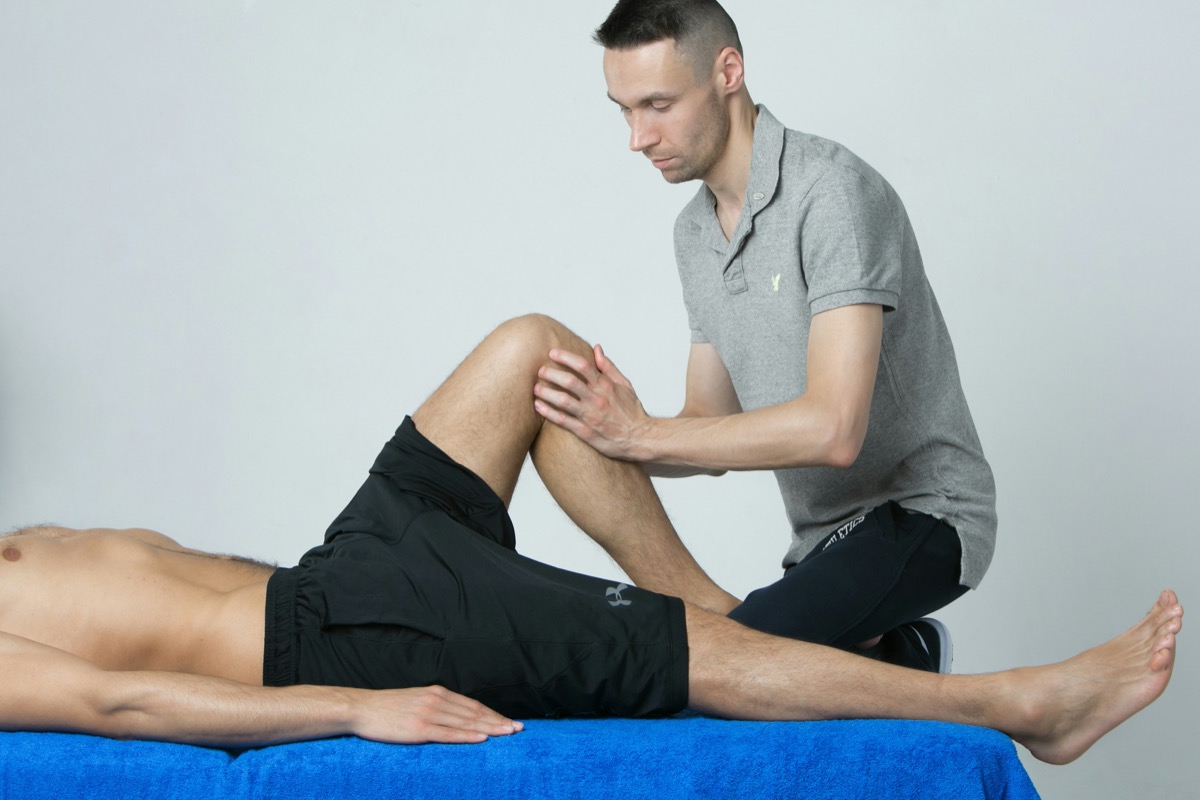
One person moves. One person is moved.
The client stays passive. The practitioner controls the stretch.
The definition
Assisted Stretching, Simply Defined.
Assisted stretching is practitioner-guided stretching in which a trained practitioner helps position, support and move a client through controlled stretches, using communication and client feedback to manage range and intensity.
In plain terms: someone else does the work of holding you in position. You lie or sit supported, usually on a stretch or treatment table, and a practitioner moves a limb or a body region into a stretch for you — holding you steady, controlling how far the movement goes, and asking what you feel while it happens. You are not straining to hold yourself in place, and you are not being pushed past what you say you can take.
Client positioning
- Before anything moves, the practitioner sets the client up in a position that is stable and supported — on a table, on a mat or seated — so the body region being worked on can be moved without the client having to hold themselves in place.
Practitioner support
- The practitioner carries the weight of the limb or body region. That is what makes the stretch a passive one for the client: nothing is being held up by the person being stretched, so nothing has to be tensed to stay where it is.
Practitioner-guided movement
- The movement into and out of the stretch is led by the practitioner rather than by the client’s own effort. The practitioner decides the direction, the speed and the point at which the movement stops, and can change any of the three mid-stretch.
Communication
- The practitioner says what is about to happen before it happens, and asks what the client is feeling while it is happening. This is not politeness around the technique. On a passive stretch the practitioner cannot know what a client feels unless the client says so, which makes the conversation part of the method.
Client feedback
- What the client reports is the primary input, and it outranks the plan. "That is enough", "that is too much" and "I feel that somewhere else" are all instructions, and a practitioner acts on them immediately rather than finishing the stretch first.
Controlled intensity
- Range and intensity are managed deliberately rather than pursued. A stretch is taken to a point the client describes as manageable and held there under control — not taken to the end of what a body will physically allow, and never taken through pain.
A return to neutral
- Every stretch ends the way it began. The practitioner brings the body region back to a neutral, supported position under control rather than releasing it, and the client is settled before the next area is started.
The mechanism
How Does Assisted Stretching Work?
Assisted stretching works by moving the client instead of asking the client to move themselves. That single change is what the whole service is built around, and it is what creates both the possibilities and the responsibilities that come with it.
- Position
- Support
- Move
- Ask
- Adjust
- Return
The practitioner supplies the movement
- In a stretch you do alone, your own effort or body weight creates the position. In an assisted stretch the practitioner does, which is why the client can stay relaxed rather than working to hold a position while trying to relax into it.
The practitioner controls the range
- Because the practitioner is producing the movement, they are also the one deciding where it stops. Control of range is the core skill of the work and the reason training is not optional — the whole difference between a controlled stretch and an unsafe one lives here.
The client supplies the information
- The practitioner can feel resistance and see how a client is holding themselves, but they cannot feel what the client feels. So the client is asked, repeatedly, and what they say is what the next adjustment is based on.
The adjustment happens during the stretch
- A stretch is not set up and then endured. Range and intensity are adjusted while the stretch is happening, in response to what the client reports, and reducing a stretch mid-way through is an ordinary part of the work rather than a failure of it.
Anything unexpected ends the stretch
- A practitioner reduces or stops on anything that is not a familiar stretching sensation. They do not work out what it was, and they do not diagnose it — they stop, and where something needs a professional opinion they say so and refer.
None of this is a medical evaluation. A practitioner asks about goals and about anything a client wants them to know in order to deliver a session safely and to know when not to. That conversation does not assess, clear or diagnose anyone, and it is never presented as though it does.
The practitioner
What Does an Assisted Stretch Practitioner Do?
An assisted stretch practitioner positions and supports a client, controls the movement of each stretch, communicates throughout, and adjusts or stops based on what the client reports. Their job is to make a stretch controlled, supported and comfortable enough to be useful — not to force range, and not to assess, diagnose or treat anything.
Positions the client
- Sets the client up so the body region can be moved from a stable, supported base, and changes the setup when it is not working rather than compensating with effort.
Supports the body region
- Takes and keeps the weight of the limb being worked on, so the client is not holding anything up and can stay passive through the stretch.
Uses their own body well
- Practitioner body mechanics and leverage are a professional skill in their own right. Control comes from position and base, not from strength, and a practitioner who is straining has lost the control the client is relying on.
Communicates continuously
- Explains what is about to happen, asks what the client feels while it is happening, and makes it easy to say stop — including for a client who would not otherwise interrupt.
Controls the movement
- Decides direction, speed and end point, holds under control, and returns the body region to neutral rather than releasing it.
Respects what the client reports
- Acts on what the client says, as the instruction it is. A client asking for less range gets less range immediately, without negotiation and without being talked past it.
Monitors comfort throughout
- Watches for the things a client may not say out loud — breath holding, bracing, guarding, a change in how they are answering — and asks rather than assumes.
Modifies or stops
- Changes the position, reduces the range, moves to a different area or ends the session where that is the right call. Stopping is a professional decision, not an inconvenience.
Maintains professional boundaries
- Consent, draping, hand placement, communication and conduct are part of the training, because this is hands-on work with another person and there is no version of it where that is a secondary consideration.
What an assisted stretch practitioner does not do
- They do not diagnose a condition, an injury or a cause of discomfort.
- They do not treat, rehabilitate or manage an injury or a health condition.
- They do not clear anyone as medically ready for exercise, sport or anything else.
- They do not prescribe, advise on medication, or give medical advice of any kind.
- They do not push a client through pain, and they do not use pain as a measure of progress.
- They do not present themselves as a healthcare provider, or use a title that implies one.
Not everyone who provides assisted stretching holds the same training, and not everyone who provides it is certified by ASA. The ASA Certified Stretch Practitioner credential describes what one practitioner has completed with ASA; it says nothing about anyone else, and this page does not assert that every practitioner offering the service works to the standard described here.
For the role in full — what a practitioner does before, during and after a session, the skills it asks for and where practitioners work — see what a stretch practitioner does.
And the question underneath it — what a stretch practitioner is — defines the professional role itself: why ASA uses the title Stretch Practitioner rather than “stretch therapist”, how the role differs from personal training, massage, physical therapy, chiropractic care and yoga instruction, and what the ASA credential does and does not mean.
The comparison
Assisted Stretching vs Stretching on Your Own.
The difference is who is doing the positioning. Everything else — what is available to you, what it asks of you, and what it costs — follows from that one change.
Self-stretching
- You control the position yourself, using your own leverage, body weight or a wall, strap or band.
- You feel everything directly, and you stop exactly when you decide to.
- It costs nothing, needs no appointment, and can be done almost anywhere.
- It is a normal part of many fitness routines and can be done as often as someone chooses.
- The positions available are limited to the ones you can get into and hold by yourself.
Assisted stretching
- Another person positions and supports your body, so you can stay passive rather than holding yourself in place.
- The practitioner controls the movement, which makes positions available that are hard to reach or hold alone.
- It depends on communication and trust: the practitioner only knows what you tell them.
- It requires appropriate training, professional boundaries and consent, because someone else is moving your body.
- It is a booked service with a practitioner, a setting and a cost attached.
Neither is better than the other in the abstract, and this page does not claim that one replaces the other. They are different arrangements of the same activity: in one you are doing the work, and in the other someone else is doing the positioning while you communicate. Plenty of people do both.
If the comparison you actually want is with a class or a practice rather than with stretching alone: assisted stretching vs yoga — who is guiding the movement, where hands-on support fits, and why a similar-looking position does not make two things the same.
The same words, different things
Assisted Stretching vs Partner Stretching.
"Partner stretching" is a broad term. It is used for a friend helping you stretch after a run, for a coach assisting an athlete, and for professional assisted stretching delivered by a trained practitioner. All three involve one person helping another, and the difference between them is not the stretch — it is the structure around it.
Structured positioning
A professional session starts from deliberate positioning and a stable base, chosen so the movement can be controlled. Informal partner stretching usually starts from whatever position the two people happen to be in.
Real support
The practitioner takes the weight of the body region rather than simply applying pressure to it. Being supported and being pushed on are different experiences, and only one of them lets a person stay passive.
Communication as method
A practitioner asks before, during and after, and builds the session around the answers. "Tell me if it hurts" said once at the start is not the same thing.
Professional boundaries
Consent, hand placement, draping, conduct and the limits of the service are defined in advance, because a paid professional service with physical contact requires that they be.
Practitioner body mechanics
Trained practitioners work from their own stable base and control the stretch with position and leverage rather than force. It is what makes the work repeatable and what keeps the practitioner working safely too.
Control of range
The practitioner decides where a movement stops, holds it under control and returns it to neutral. Enthusiasm is not a method, and "a bit further" is not an instruction anyone should be acting on.
Professional assisted stretching should involve more than one person pushing on another. None of this makes informal stretching between friends wrong — it makes it a different thing, done for different reasons, without the structure a professional service is expected to have.
A different service
Is Assisted Stretching the Same as Massage?
Assisted stretching and massage are different services. Massage generally involves manipulation of the soft tissue of the body. Assisted stretching focuses on practitioner-guided positioning and movement into stretches. ASA does not teach assisted stretching as massage and does not describe it as massage therapy.
The two are confused constantly, and understandably: both are hands-on, both are commonly delivered on a table, both are booked as an appointment, and in both the client is largely passive. What differs is what the practitioner is doing. In assisted stretching the practitioner is moving the body through positions; the work is about where a limb is taken and how it is supported getting there.
Who may provide which service is not decided here
Massage therapy is a separately regulated profession in many places, with its own licensing requirements, its own protected titles and its own defined scope. Which service any individual may provide is decided by the law where they work, by any board that regulates them, by their employer and by their insurer. ASA makes no licensing determination for any reader and nothing on this page is legal advice.
Deciding between the two? Assisted stretching vs massage compares them properly — movement, touch, professional role and what happens in a session.
Not healthcare
Is Assisted Stretching Physical Therapy?
Assisted stretching is not physical therapy. Physical therapy is a licensed healthcare profession, practised inside a regulated scope that includes clinical evaluation of a person’s condition. Assisted stretching, as ASA teaches it, is a non-medical service — it is not healthcare, it is not rehabilitation, and it is no substitute for medical care or for physical therapy.
The practical difference is what the session is for and what the practitioner is permitted to do. An assisted stretch practitioner is not qualified to diagnose a condition, to treat one, or to decide whether a person is medically ready for anything. There is no assessment in a session that establishes what is wrong with anyone, and none is offered.
If something is wrong, ask someone qualified to answer
If something hurts, is not improving, or you are unsure whether stretching is appropriate for you, the right person to ask is a qualified healthcare professional. An assisted stretch practitioner is not that person, and a responsible one will say so and refer rather than improvise.
The full comparison — assisted stretching vs physical therapy — covers what each one is, why the ASA credential does not authorize diagnosis, medical treatment or rehabilitation, and how to tell which kind of service you are looking for.
The same boundary against the other licensed healthcare profession people ask about — assisted stretching vs chiropractic care — covers why the ASA credential does not authorize chiropractic adjustments, why an assisted stretch is not an adjustment, and what ASA does and does not have standing to say about a profession it neither defines nor regulates.
The experience
What Should Assisted Stretching Feel Like?
Assisted stretching should feel like a controlled stretch that you can talk through. You should be able to hold a conversation, ask for less at any point, and know that the person moving you is listening.
What is normal
- A stretching sensation you could describe out loud, in a specific area, that eases when the practitioner reduces the range.
- Communication throughout — being told what is coming, and being asked what you feel while it is happening.
- An intensity you can manage while breathing normally, rather than one you have to brace against.
- The ability to ask for less range, or to stop, at any point and without having to justify it.
- A feeling of being supported and stable, with the practitioner taking the weight rather than you holding a position.
Say something, and expect the stretch to stop
- Sharp pain
- Shooting or electrical sensations
- Numbness
- Tingling
- Pain in a joint
- Dizziness or light-headedness
- A feeling of instability, or of being unsupported
- Anything that simply feels wrong or unsafe to you
This page does not explain why any of those happen, and a practitioner should not be explaining it either — working out what a symptom means is not their role. The response is the same for all of them: say something immediately, and expect the practitioner to reduce the stretch or stop. Anything that persists, or that concerns you afterwards, is a question for a qualified healthcare professional.
The honest answer
Is Assisted Stretching Safe?
There is no honest way to say that assisted stretching is safe for everyone, because no service is, and no page can assess an individual person. What can be said is what responsible practice depends on — and those things are specific enough to ask about before you book.
Appropriate screening and conversation
- A practitioner asking, before the session, about goals and about anything relevant a client wants them to know — so the session can be delivered appropriately and so the practitioner knows when not to proceed. It is a conversation, and it does not diagnose or clear anyone.
Practitioner education
- Training that covers more than a list of stretches: body mechanics, support, leverage, communication, professional scope, and what to do when something is not going well.
Positioning and support
- A stable setup in which the client is supported and the practitioner can control the movement without strain. Most of what makes a stretch controlled is decided before it starts.
Controlled range
- Movement taken to a manageable point and held there, rather than pursued to the limit of what a body will allow. Range that is chased rather than controlled is the risk.
Client feedback, acted on
- Feedback is only a safeguard if the practitioner changes what they are doing in response to it, immediately, including when a client asks to stop.
Working inside professional scope
- A practitioner who stays inside what they are trained and permitted to do, and who does not offer opinions on injuries, conditions or whether someone should be exercising.
Knowing when to modify or stop
- The judgement to change position, reduce range, skip an area or end a session — and the willingness to use it, including when a client would rather push on.
Where there is any doubt, ask a healthcare professional first
People with health conditions, current or recent injuries, recent surgery, or any uncertainty about whether stretching is appropriate for them should seek guidance from a qualified healthcare professional before participating. Nothing on this page is medical advice, and nothing on it is a judgement about any individual’s circumstances.
The audience
Who Uses Assisted Stretching?
Broadly, people who are already active or already interested in how they move. The list below is a description of who books it — not a recommendation, and not a list of who it is for.
- Recreational exercisers who already train and want stretching to be part of it
- Athletes and people who play sport regularly
- Personal-training clients, often alongside the training they already do
- Active adults who spend time on how they move
- People interested in flexibility and mobility work generally
- People who would rather be guided through stretching than do it alone
That is a description of who tends to book the service, not a recommendation for anyone in particular, and not a claim that assisted stretching is appropriate for any specific injury or health condition. Whether it is appropriate for one person is a question for that person and, where there is any doubt, for a qualified healthcare professional.
Reasons, not results
What Do People Use Assisted Stretching For?
People book assisted stretching for ordinary reasons. The honest way to describe them is as reasons people give, rather than as results anyone can promise — so that is how they are described here.
- As part of flexibility work they are already doing
- As part of a mobility-focused fitness routine
- As part of a recovery or wellness routine
- Around sport and training, as part of how they prepare
- As part of a general movement practice
- Because they want a session that is not a workout
ASA does not claim that assisted stretching produces any particular outcome for any individual. Nothing here says or implies that it fixes, prevents or resolves anything, and any question about a specific health goal belongs with a qualified healthcare professional rather than with a stretch practitioner.
Step by step
What Happens During an Assisted Stretching Session?
A general picture of how a professional session tends to run. It is not a description of any one provider’s sessions, and it teaches no technique — ASA’s own routines are taught in person.
A conversation first
- What you are looking for from the session, and anything you want the practitioner to know. It is a conversation, not a medical examination, and it does not diagnose anything.
Getting you positioned
- You are set up in a supported position — usually on a table, sometimes on a mat or seated — so a body region can be moved while you stay comfortable.
The practitioner takes the weight
- They support the limb or region being worked on, so you are not holding it up and can stay relaxed rather than working to stay in position.
Moving into the stretch
- The practitioner moves you gradually into a stretch, at a speed you can follow, telling you what is about to happen before it happens.
Asking what you feel
- Where you feel it, how strong it is, whether it is a familiar stretching sensation. Answer honestly — this is what the next few seconds are based on.
Adjusting
- Range and intensity are adjusted to your answer, up or down. Asking for less is normal and expected, and does not need a reason.
A controlled return
- The stretch is brought back to a neutral, supported position under control, and you are settled before anything else starts.
On through the session
- The practitioner works through the areas planned for the session, in an order that makes sense for you, checking in as they go.
Communication is part of the technique.
Session length varies by provider and by setting, and there is no universal standard. ASA’s own education teaches 25-minute and 50-minute session formats, which are examples of how a session can be structured rather than an industry rule — anyone booking should ask the provider what their sessions involve.
If you have booked a session, or are about to — what to expect during an assisted stretching session — is written for you specifically: what to wear, whether you stay clothed, who moves you, whether it should hurt, how consent works during a session, and what to do if something does not feel right.
The profession behind the service
Why Training Matters.
Assisted stretching involves putting your hands on another person and moving their body. That is the whole argument for training, and it is why a serious education covers more than the names of stretches.
Practitioner body mechanics
- How to work from a stable base and control a stretch with position and leverage rather than with force — which protects the client and keeps the practitioner working well.
Support and positioning
- How to set a client up so a region can be moved safely, and how to change a setup that is not working instead of compensating for it.
Leverage and control of range
- Where a movement stops, how it is held and how it is returned. The core skill, and the one that cannot be learned from watching.
Communication
- How to explain what is happening, how to ask questions that get a real answer, and how to make it easy for a client to say stop.
Scope and professional boundaries
- What the service is, what it is not, and where a practitioner’s role ends — including when the right answer is to refer rather than to continue.
Safety and stopping
- What should reduce or end a stretch, and the judgement to act on it before a client has to insist.
The client experience
- Consent, comfort, draping, conduct and how a session is run — the parts a client actually notices, and the parts that make a service professional rather than merely competent.
Demonstrated practical competency
- Performing the work on a person, in front of someone qualified to judge it. Watching technique and performing technique are not the same thing.
A list of stretches is not an education. Knowing the name of a stretch is not the same as being able to deliver it safely on a person you have just met.
How Assisted Stretching Certification Works
The credential
What Is an ASA Certified Stretch Practitioner?
The ASA Certified Stretch Practitioner is the credential ASA issues to a student who completes its current education and competency pathway. It documents completed education and demonstrated competency — it is not a licence, and it is not a healthcare qualification.
- 01
Fast Track Essentials
- 6 short online modules
- Short preparation taken before the hands-on day, covering what the field is, what the work involves and what a student is about to commit to.
- 02
Knowledge assessments
- Online · 80% to pass
- An online assessment before class, requiring 80% with every safety question answered correctly.
- 03
Hands-on training
- One full day, in person
- A day of in-person training where ASA's signature 25-minute and 50-minute routines are taught, practised on real people and corrected in the moment by an instructor.
- 04
Practical competency
- Reviewed by ASA
- The student demonstrates the work on a person and it is reviewed. This is the step that separates a credential in a physical skill from a certificate for finishing a course.
- 05
The ASA Certified Stretch Practitioner
- Issued on review
- The credential is issued after the pathway is complete and reviewed — never automatically on a passing score — and it can be verified publicly.
Fast Track Essentials is not certification. Fast Track Essentials is preparation. It is not certification, and completing it does not make anyone a certified practitioner.
Certification does not establish legal scope of practice
Certification does not determine a practitioner’s legal scope of practice. Laws, professional licensing requirements, title restrictions, insurance conditions and facility policies vary by state, by country and by employer, and they apply to a certified practitioner exactly as they applied before. Anyone entering this field is responsible for confirming what they are permitted to do where they intend to work, and for consulting the appropriate licensing authority or their own professional adviser where that is unclear.
What a stretch practitioner’s scope of practice covers — what the role includes, what sits outside it, and what decides the rest.
Not everyone who provides assisted stretching holds this credential, and this page does not suggest otherwise. The ASA Certified Stretch Practitioner describes what one practitioner has completed with ASA. Anyone can verify an ASA credential before booking or hiring.
How ASA Certification Works · View ASA Certification
Wondering how somebody becomes one? How to become a stretch practitioner sets out the education, the hands-on training, the practical competency and the professional requirements involved.
A common question
Can Personal Trainers Learn Assisted Stretching?
Yes — personal trainers can study assisted stretching as an additional professional skill, and many of ASA’s students come from exactly that background. Whether an individual trainer may offer it is a separate question, decided by applicable law, by any licensing rules that already apply to them, by employer and facility policy and by insurance — not by any course and not by any certificate.
Trainers arrive with real advantages: they understand movement, they already work one to one, and they are used to coaching people through unfamiliar positions. What is genuinely new is the hands-on part — supporting and positioning another person, controlling leverage, and reading feedback through contact rather than through observation.
Read the guide to assisted stretching for personal trainers
If the question is how the two services differ rather than what a trainer would have to learn: assisted stretching vs personal training — what happens in each kind of session, who is doing the movement, and why one professional may hold both roles without the two becoming one credential.
The settings
Where Is Assisted Stretching Offered?
In a range of fitness and wellness settings, depending on what is permitted and required where the practitioner works.
- Gyms and health clubs
- Fitness studios
- Wellness centres
- Recovery facilities
- Professional suites and treatment rooms
- Dedicated assisted-stretching studios
That is a description of where assisted stretching is delivered, not an approval of any of it. Where a service may be offered, and by whom, depends on applicable law, licensing rules, facility and zoning requirements, employer policy and insurance — none of which is settled by a list on a page.
A dedicated studio pathway, still in development
ASA is developing the STRRRETCH – Maximum Performance Facility Partner Studio Pathway for practitioners interested in a dedicated assisted-stretching studio environment. Program structure, availability, requirements and terms are still being developed. ASA certification does not automatically grant any right to operate under the STRRRETCH – Maximum Performance Facility brand. Certification and business participation are separate.
Explore the Partner Studio PathwayProgram in Development
The words people use
Assisted Stretching Terminology.
People search for this service under several names, and they do not all mean the same thing. Here is what each one tends to refer to.
Assisted stretching
The general term for practitioner-guided stretching, and the one used throughout this page.
Partner-assisted stretching
Used both for informal help between two people and for professional services. Broad enough that it tells you very little on its own.
Stretch therapy
A common search term for the field. It is not a standardised term, and the word "therapy" in it does not indicate healthcare, licensure or clinical training.
Stretch therapist
Widely searched, and used inconsistently. It is not a protected title in the way that regulated healthcare titles are, and it does not describe a defined qualification.
Stretch practitioner
The term ASA uses for a person delivering this work, and the term inside ASA’s own credential.
Professional stretching
A general description of the service being delivered by a practitioner rather than done alone. Not a title and not a qualification.
These are search terms rather than titles, and they are not necessarily interchangeable — none of them is standardised, and what a person is permitted to do is not decided by the word they use for it. ASA issues one practitioner credential and it has one name: the ASA Certified Stretch Practitioner.
“Stretch therapy” is the term people search most often for this work, and it carries assumptions worth unpicking. For the fuller explanation — what the phrase means, why ASA credentials practitioners rather than therapists, and how the terms relate to one another — read what stretch therapy means.
Questions
Assisted Stretching: FAQ.
What is assisted stretching?
Assisted stretching is practitioner-guided stretching: a trained practitioner positions and supports a client, moves them through controlled stretches, and uses communication and client feedback to manage range and intensity. The client stays relatively passive while the practitioner controls the position, the leverage and the pace. It is a non-medical service, distinct from massage and from physical therapy.
How does assisted stretching work?
The practitioner supplies the movement instead of the client. They position and support the body region being worked on, move it gradually into a stretch, ask what the client feels, adjust the range and intensity based on that answer, hold the stretch under control and then return the region to a neutral position before moving on. Communication runs through all of it, because a practitioner cannot feel what a client feels.
What is the difference between assisted stretching and regular stretching?
In stretching you do on your own, you create and hold the position yourself using your own leverage or body weight, and you feel everything directly. In assisted stretching another person positions and supports you and moves you through the stretch, so you can stay passive and communicate rather than hold yourself in place. Neither is better than the other in general — they are different arrangements of the same activity, and many people do both.
Is assisted stretching the same as massage?
No. They are different services. Massage generally involves manipulation of the soft tissue of the body, while assisted stretching focuses on practitioner-guided positioning and movement into stretches. ASA does not teach assisted stretching as massage and does not describe it as massage therapy. Massage therapy is separately regulated in many places, and which service any individual may provide is decided by the law where they work, by any board that regulates them, by their employer and by their insurer — not by ASA.
Is assisted stretching physical therapy?
No. Physical therapy is a licensed healthcare profession practised inside a regulated scope that includes clinical evaluation of a person’s condition. Assisted stretching, as ASA teaches it, is a non-medical service: it is not healthcare, it is not rehabilitation, and it is no substitute for medical care or for physical therapy. Anyone who is in pain, is not improving or is unsure whether stretching is appropriate for them should ask a qualified healthcare professional.
Does assisted stretching hurt?
It should not. Assisted stretching should feel like a controlled stretch you can talk through and manage while breathing normally, and asking for less range at any point is normal and expected. Sharp pain, shooting or electrical sensations, numbness, tingling, pain in a joint, dizziness or a feeling of instability are all reasons to speak up immediately and for the practitioner to reduce the stretch or stop.
What should assisted stretching feel like?
Like a stretching sensation in a specific area that you could describe out loud, at an intensity you can manage, while being supported so you are not holding a position yourself. You should be told what is coming, asked what you feel as it happens, and able to ask for less range or to stop at any point without having to justify it.
Is assisted stretching safe for everyone?
No service is safe for everyone, and no page can assess an individual. Responsible practice depends on appropriate screening and conversation, practitioner education, positioning and support, controlled range, client feedback that is acted on, working inside professional scope, and knowing when to modify or stop. People with health conditions, current or recent injuries, recent surgery, or any uncertainty should seek guidance from a qualified healthcare professional before participating.
Who performs assisted stretching?
Assisted stretching is delivered by practitioners from several professional backgrounds, including people who trained specifically for this work and people who came to it from fitness or bodywork professions. Training, titles and requirements vary, so the useful question to ask a provider is what education their practitioners have completed and what their sessions involve.
What does an assisted stretch practitioner do?
An assisted stretch practitioner positions and supports a client, controls the movement of each stretch, communicates throughout, monitors comfort, and adjusts or stops based on what the client reports. They do not diagnose a condition, do not treat an injury or health condition, do not clear anyone as medically ready for anything, and do not give medical advice.
What happens during an assisted stretching session?
Typically: a conversation about what you are looking for and anything you want the practitioner to know; getting positioned and supported; the practitioner taking the weight of the region being worked on; moving gradually into a stretch; being asked what you feel; adjusting the range and intensity to your answer; a controlled return to a neutral position; and then on through the areas planned for the session.
How long is an assisted stretching session?
It varies by provider and by setting, and there is no universal standard. ASA’s own education teaches 25-minute and 50-minute session formats, which are examples of how a session can be structured rather than an industry rule. Ask the provider you are booking with what their sessions include.
Can personal trainers learn assisted stretching?
Yes. Personal trainers can study assisted stretching as an additional professional skill, and many of ASA’s students come from exactly that background. Whether an individual trainer may offer it is a separate question, decided by applicable law, by any licensing rules that already apply to them, by employer and facility policy and by insurance — not by any course and not by any certificate.
Do assisted stretch practitioners diagnose injuries?
No. Assisted stretch practitioners do not diagnose injuries or conditions, and ASA does not teach anyone to. A practitioner may ask about anything a client wants them to know so the session can be delivered appropriately and so they know when not to proceed, but that conversation does not assess, clear or diagnose anyone. Anything that needs a professional opinion belongs with a qualified healthcare professional.
Is assisted stretching medical treatment?
No. Assisted stretching as ASA teaches it is a non-medical service. It is not medical treatment, it is not rehabilitation, and it is no substitute for medical care. ASA does not teach practitioners to diagnose or treat anything, and makes no claim that assisted stretching produces any particular health outcome.
What is an ASA Certified Stretch Practitioner?
The ASA Certified Stretch Practitioner is the credential the Assisted Stretching Association issues to a student who completes its current education and competency pathway: Fast Track Essentials preparation (six short online modules), an online knowledge assessment, in-person hands-on training and a practical competency requirement reviewed by ASA. It documents completed education and demonstrated competency. It is not a licence, it is not a healthcare qualification, and it does not determine a practitioner’s legal scope of practice.
How do I become certified in assisted stretching?
Through ASA, a student completes Fast Track Essentials preparation (six short online modules), an online knowledge assessment, a one-day hands-on certification training in ASA's signature 25-minute and 50-minute routines, and a practical competency requirement — and earns the ASA Certified Stretch Practitioner credential only after all of it is completed and reviewed. Fast Track Essentials on its own is preparation and is not certification.
Can assisted stretching be offered inside a gym?
Assisted stretching is delivered in gyms and health clubs, fitness studios, wellness centres, recovery facilities, professional suites and dedicated stretching studios. Whether any individual may offer it in any particular setting depends on applicable law, licensing rules, facility and zoning requirements, employer policy and insurance. ASA makes no legal determination for any reader and nothing here is legal advice.
What does "stretch therapy" mean?
"Stretch therapy" is a common search term for practitioner-guided stretching. It is not a standardised term, and the word "therapy" in it does not indicate healthcare, licensure or clinical training. Terms such as stretch therapy, stretch therapist, stretch practitioner and partner-assisted stretching are used loosely and are not necessarily interchangeable. ASA issues one practitioner credential, the ASA Certified Stretch Practitioner.
Is the STRRRETCH – Maximum Performance Facility Partner Studio Pathway available now?
No. The STRRRETCH – Maximum Performance Facility Partner Studio Pathway is in development. Program structure, availability, requirements and terms are still being developed. It is a separate business pathway from ASA education and certification, and completing ASA certification does not grant any right to operate under that brand.
The profession behind the service
Want to Learn the Profession Behind the Service?
- Understand the principles.
- Learn the technique.
- Train hands-on.
- Demonstrate competency.
How ASA Certification Works · View ASA Certification
More ASA guides: what assisted stretching is, how certification works, what it costs.