
For massage therapists
Assisted Stretching for Massage Therapists.
Massage therapists may choose to learn assisted stretching as an additional hands-on professional skill. ASA teaches a structured, practitioner-guided stretching approach built around positioning, support, controlled movement, communication and professional boundaries — not massage with stretching added to it. Whether a massage therapist may offer assisted stretching as a service depends on applicable law, licensing rules, professional scope, insurance and workplace policy, and ASA certification does not override any of them.
Massage professionals ask two different questions about this subject and they get mixed together constantly. The first is can I learn it, and the answer is yes. The second is am I allowed to offer it, and that one is not answered by any course, any certificate or any page on the internet — including this one.
This guide separates them. It explains how assisted stretching differs from massage, which parts of a massage background may transfer and which parts are genuinely new, what actually decides whether a licensed professional may offer the service, and how ASA’s certification pathway works.
Explore ASA Certification · Understand Scope of Practice
This page provides general professional education, not legal or licensing advice. Scope-of-practice requirements vary by jurisdiction, credential, insurer and workplace, and ASA makes no determination for any individual practitioner.
- Professional education
- Scope and boundaries
- Hands-on training
- Consent and communication
- Practical competency
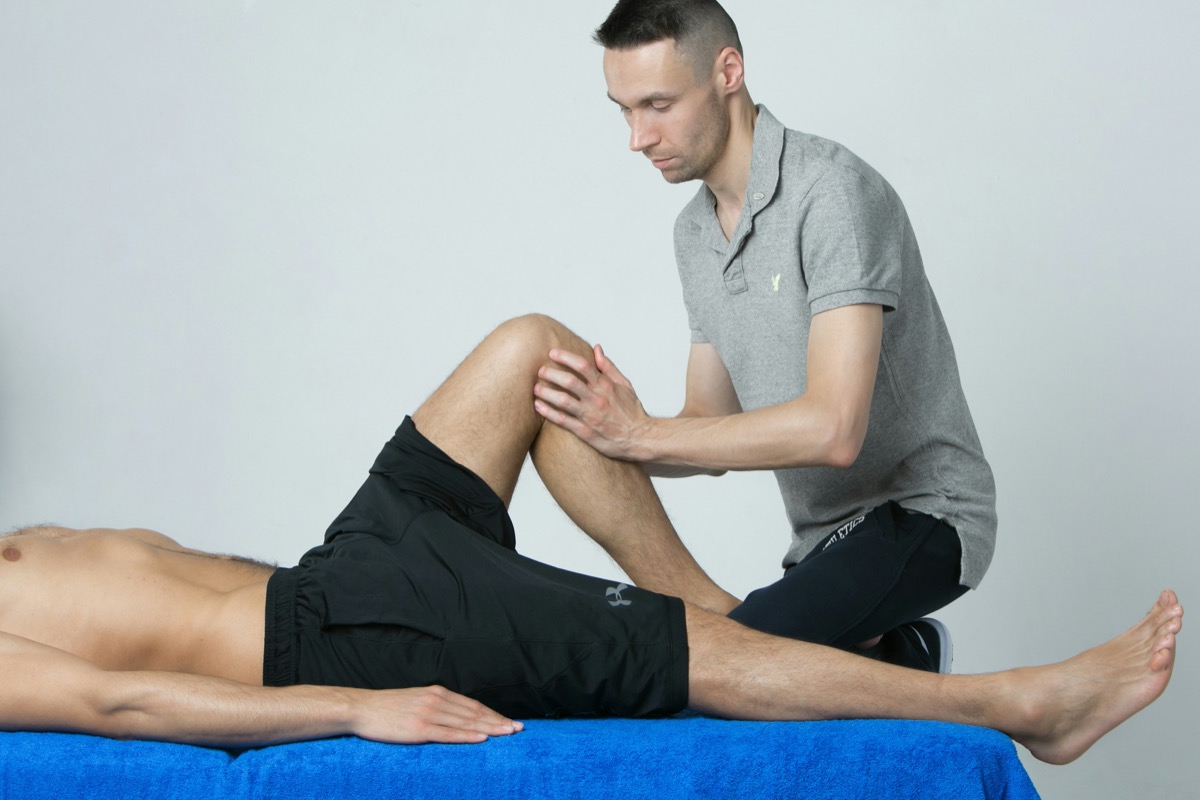
A distinct service, next to the one you already provide.
The practitioner supports and moves. The client stays relaxed and reports.
The motivation
Why Massage Therapists Explore Assisted Stretching.
Massage professionals come to this subject for professional reasons, and they are worth stating plainly rather than dressed up as an opportunity.
A second hands-on skill, learned properly
Assisted stretching is its own discipline with its own method, and studying it formally gives a professional a structured system rather than a handful of stretches picked up between clients. For someone who already works with their hands, that structure is the part worth having.
Clients ask for guided stretching by name
Enough people now search for assisted stretching, stretch therapy and guided stretching that professionals field the question directly. Knowing what the service actually is — and being able to say precisely what you do and do not offer — is useful whether or not you end up delivering it.
Movement-oriented work, where it is permitted
Assisted stretching is delivered through movement: the practitioner positions and supports the client and takes them through a controlled range. Professionals who want a movement-oriented option alongside the work they already do tend to be looking for exactly that, subject to the requirements that apply to them.
Professional versatility
A second structured skill widens what somebody can do competently. It does not by itself widen what they are permitted to do, which is a different question and is answered lower down this page.
Another way to work one-to-one
Assisted stretching is one practitioner and one client for the length of a session, with continuous communication running through it. Professionals who like that shape of work generally like this shape of work.
Positioning, leverage and communication get sharper
The skills the method is built on — setting a position, supporting a limb, controlling leverage, reading and responding to feedback while something is changing — are trainable, and training them deliberately tends to improve how a professional works generally.
Those are professional reasons, and they are the only kind this page states. ASA publishes no earnings figure, promises no clients, guarantees no employment and makes no claim about what adding a skill does for anybody’s business.
The distinction the rest of this page rests on
Massage and Assisted Stretching Are Not the Same Service.
Assisted stretching and massage may complement each other, but they are not interchangeable terms. Assisted stretching is delivered through guided positioning and controlled movement, with the practitioner supporting the client and adjusting from continuous feedback. Massage is a professional service that generally involves hands-on work with the soft tissue of the body, and its exact practice — and who may perform it — varies by jurisdiction and by practitioner training.
Assisted stretching, as ASA teaches it
- Practitioner-guided positioning: the client is placed and supported rather than instructed.
- Controlled movement into and out of a stretch, at a speed the practitioner sets.
- Client feedback throughout, treated as part of the technique rather than as a courtesy.
- Range and intensity adjusted the moment that feedback changes.
- Practitioner support and leverage, so the client can stay relaxed instead of bracing.
- A deliberate return to neutral at the end of every technique.
Massage, described conservatively
- A professional service that generally involves hands-on work with the soft tissue of the body.
- A separately regulated profession in many places, with its own licensing requirements.
- Title and practice rules that differ between jurisdictions, sometimes considerably.
- Educational requirements set by the jurisdiction and the program, not by ASA.
- A scope defined by the body that issued the credential, and by nobody else.
ASA does not define massage therapy, does not teach assisted stretching as massage, and does not describe it as massage. Where the boundary between the two falls for a particular practitioner in a particular place is a question for that jurisdiction’s licensing authority.
The canonical explanation of the service — the components of a session, what it should feel like, and where it sits alongside other work — is on what assisted stretching is. If the term you keep meeting is “stretch therapy” rather than assisted stretching, and you are wondering whether it means something different from massage therapy, the stretch therapy terminology guide separates the words people actually use.
The version written for your clients rather than for you: assisted stretching vs massage — a consumer comparison that ranks neither service and defines neither profession on anyone’s behalf.
An honest inventory
What You May Already Bring, and What Is Genuinely New.
Many massage professionals may already be familiar with parts of the working environment assisted stretching happens in. That is worth naming honestly, because it is a genuine advantage — and worth qualifying just as honestly, because massage education differs between programs and jurisdictions and no page can know what any individual was taught.
Many massage professionals may already be familiar with
- One-to-one client communication, sustained across a whole session.
- Professional touch, and the judgement that goes with it.
- Positioning a client on a table, and repositioning without breaking the session.
- Practitioner body mechanics — stance, base, and working without wearing yourself out.
- Keeping a client comfortable, warm and covered appropriately throughout.
- Receiving feedback mid-session and acting on it rather than filing it away.
- Professional boundaries, and the habit of holding them under pressure.
- Consent as an ongoing practice rather than a form signed at the door.
- Working inside a hands-on service environment, with its intake, records and rhythms.
What assisted stretching adds
- Supporting a limb through movementThe practitioner carries the weight so the client does not have to. A client who is holding their own limb up is working, and a working muscle does not lengthen the way a relaxed one does.
- Controlling direction and rangeWhere the movement goes, how far it goes, and how fast it gets there are all decisions the practitioner makes deliberately rather than discovers on the way.
- Practitioner leverage and stabilityLeverage is how a stretch is controlled without force, and it comes from the practitioner’s own base and position. A practitioner who is unstable cannot control anything, including themselves.
- Communicating while intensity is changingThe conversation runs during the movement, not before it. What the practitioner asks, when they ask it, and how they phrase it are all part of the technique.
- Finding the first appropriate stretch sensationThe working point is identified through what the client reports, not through what the practitioner can feel or assume. It is a communication skill before it is a physical one.
- Adjusting the instant feedback changesFeedback that changes mid-stretch changes the stretch. Reducing range, easing intensity or repositioning is the correct response, and it is trained as a reflex rather than left to judgement in the moment.
- Returning safely to neutralA technique is not finished when the stretch is finished. Coming out of a position is controlled, supported and deliberate, exactly like going into it.
- Knowing the exit before the entryA practitioner should know how they will come out of a position before they take a client into it. If the exit is not clear, the entry is not safe.
Those experiences can support learning, but they do not replace assisted-stretching-specific education or competency. Massage education is education in massage; it does not automatically include assisted stretching, and holding one credential does not demonstrate competency in the other.
How the method is taught
Here is what is new. None of it is exotic, and all of it is specific: assisted stretching moves a person rather than working on them, and moving somebody safely is a different skill from working on somebody safely.
- Control before depth.
- Support before movement.
- Know the exit before the entry.
- Communication is part of the technique.
What the role consists of end to end — before, during and after a session, and the professional half of it as much as the hands-on half — is set out in what a stretch practitioner does.
The question everyone arrives with
Can Massage Therapists Provide Assisted Stretching?
There is no single universal answer, and any page that gives you one is guessing about a jurisdiction it has not read.
Whether a massage therapist may provide assisted stretching depends on applicable state, provincial or national law; on massage licensing requirements and the rules of the board that issued the license; on professional scope, including any title or practice restriction; on employer and facility policy, which is frequently stricter than the law; on whether professional liability insurance actually covers the service; on the exact techniques and services being offered and how they are described; and on any other professional credentials the individual holds. ASA does not determine what is legally permitted in any jurisdiction and makes no determination for any individual practitioner.
What a certification does not change:
- State, provincial or national law, including any title or practice restriction
- The rules of any licensing board the reader is already regulated by
- Employer and facility policy, which is often stricter than the law
- Professional liability insurance, which has to actually cover the service being offered
Questions worth answering before the first session
Each of these has an authoritative source, and none of them is this page. Take them to the party who can actually answer them, and get the answer on record.
What do the rules that apply where I work actually say?
The authoritative source is the jurisdiction itself and the board that regulates the license — not a course provider, not a colleague, and not this page. Ask them, and get the answer in writing.
How is the service being described to the client?
What a service is called and how it is advertised can matter as much as what happens in the room. Describing assisted stretching accurately — as assisted stretching — is the starting point.
Does my professional liability insurance cover it?
Coverage follows the policy, not the certificate. The insurer is the only party who can confirm whether a specific service is covered under a specific policy.
Does my employer or facility permit it?
Employers and facilities set their own service menus, approval processes and documentation standards, and they are often more restrictive than the law requires for their own insurance reasons.
ASA certification documents training and competency. It does not determine legal scope of practice. Nothing on this page is legal advice, and no state, province or country is named or assessed anywhere on it.
Certification does not determine legal scope of practice
Certification does not determine a practitioner’s legal scope of practice. Laws, professional licensing requirements, title restrictions, insurance conditions and facility policies vary by state, by country and by employer, and they apply to a certified practitioner exactly as they applied before. Anyone entering this field is responsible for confirming what they are permitted to do where they intend to work, and for consulting the appropriate licensing authority or their own professional adviser where that is unclear.
The full ASA answer — what the role includes, what sits outside it, and what decides the difference — is on the stretch practitioner scope of practice guide.
A one-word answer
Does ASA Certification Expand a Massage License?
No. The ASA Certified Stretch Practitioner credential is a separate professional certification. It documents completed ASA education and demonstrated competency in a non-medical professional skill, and it is silent on what any individual is permitted to offer.
The ASA Certified Stretch Practitioner credential does not:
- Expand a massage therapy license.
- Replace a massage therapy license.
- Modify state, provincial or national law.
- Modify the rules of any licensing board.
- Override professional liability insurance requirements.
- Override employer or facility policy.
- Authorize healthcare practice of any kind.
It does not work the other way either. ASA does not reduce, redefine or sit above the authority somebody independently holds through another valid professional license. Where a person separately holds a massage therapy license or credential, that profession remains governed by its own laws, its own board, its own insurance requirements and its own employer rules, and what they do under that license is a matter for that profession.
Two different instruments
Certification vs Licensure.
The two words get used as though they were degrees of the same thing. They are not the same thing at all, and the difference is what decides which questions each one can answer.
ASA certification
- Issued by a private education and certification organization.
- Documents completion of ASA education, assessment and competency requirements.
- Evidence of what somebody has studied and demonstrated.
- Carries no legal authority, and grants no practice rights.
- Recognised as far as an employer, insurer or client chooses to recognise it.
Professional licensure
- Issued by a government body, where the jurisdiction requires one.
- Governed by that jurisdiction and its regulatory requirements.
- Sets entry requirements, scope and title rules in law.
- Carries enforcement, and consequences for practising outside it.
- Not all jurisdictions license massage therapy identically, and some rules differ sharply.
A professional certification and a government-regulated license are not the same thing.
A professional certification and a government-regulated license are not the same thing. They answer different questions: one says what somebody has learned and demonstrated, the other says what somebody is permitted to do. Only the second is decided by law, and only the body that issues it can speak to it.
The boundary, stated as a boundary
What the ASA Credential Does Not Authorize.
Under the ASA credential — on its own, and independent of anything else somebody holds — a practitioner is not authorized to:
- Diagnose an injury.
- Diagnose a medical condition.
- Prescribe treatment of any kind.
- Prescribe or deliver rehabilitation.
- Represent assisted stretching as physical therapy.
- Claim to cure pain.
- Claim to heal an injury.
- Provide healthcare services reserved to licensed professions.
- Operate outside applicable law, insurance conditions or facility rules.
That list describes the ASA credential and nothing else. If somebody independently holds another healthcare or professional license, the activities they carry out under that separate license are governed by that profession, by its board and by its rules — not by this page and not by ASA.
A careful answer
Can Assisted Stretching Be Used Alongside Massage?
Potentially, where permitted — and the second half of that sentence is doing the work. Whether and how the two may be combined depends on professional scope, applicable rules, insurance and facility policy, and this page does not settle any of them.
What can be described without making a determination is the shape these arrangements take. Each of the four below is a model somebody operates somewhere. None of them is a statement that a particular reader may operate it.
A separate assisted stretching appointment
Its own appointment type, with its own length, its own structure and its own consent conversation, booked as assisted stretching rather than as anything else.
A distinct service offered by the same professional
Clearly named and clearly described as assisted stretching, sitting beside other services on the menu rather than being folded into them.
Part of a facility’s broader service menu
Delivered inside a studio, gym or wellness business that lists assisted stretching as its own service, with the facility’s own approval and documentation requirements applying.
Collaboration between professionals
A massage professional and an assisted-stretching practitioner working with the same client separately, each inside their own role, rather than one person doing both.
What this page will not say is that assisted stretching may always be incorporated into a massage session. Whether services may be combined at all, and on what terms, is decided by professional scope, applicable rules, insurance and facility policy — and the answer differs between places, employers and policies.
Describing the service accurately — in the booking, on the menu and out loud — is the part a practitioner controls entirely, and the part that most often keeps two services from blurring into one.
Inside the method
What an ASA Assisted Stretching Session Emphasizes.
An ASA-style session is organised around control rather than around depth. The full description of what a session involves lives on the assisted stretching guide; what follows is what the method emphasises, and what a student is assessed on.
- Client positioning — where the client is placed, and why that position was chosen.
- Practitioner positioning — stance, base and the ability to hold it.
- Physical support, so the client can stay relaxed rather than hold themselves up.
- Controlled movement, at a pace the practitioner sets deliberately.
- Client communication, running continuously rather than at the start.
- Appropriate intensity, identified through what the client reports.
- Technique-specific leverage, used to control rather than to push.
- Range adjustment, applied the moment feedback changes.
- Professional boundaries, held throughout without being announced.
- Returning to neutral, controlled and supported.
For the full description of a session — what happens, what it should feel like and what responsible practice depends on — see what assisted stretching is.
Familiar ground, wider footprint
Consent and Professional Touch.
Many massage therapists may already be familiar with professional touch and with consent as an ongoing practice. Assisted stretching does not replace that understanding — it adds positions and movement patterns it did not previously have to cover. A client being moved through a range is in a different situation from a client lying still, and the consent conversation has to keep up with it.
- Explain the position before taking the client into it.
- Obtain permission, in words, rather than assuming it from the booking.
- Maintain consent as the session continues, not as a single moment at the start.
- Communicate before changing a position, not while changing it.
- Make clear the client may ask for less intensity at any point.
- Make clear the client may decline any technique, without explaining why.
- Make clear the client may stop the session at any time.
- Respect personal boundaries, including the ones a client has not had to state.
Consent continues throughout the stretch.
Consent, boundaries and professional touch are covered in full on the stretch practitioner scope of practice guide, which treats them as scope questions rather than as etiquette.
The part of the job that matters most
When to Modify, Stop or Refer.
Professional skill includes knowing when not to continue. A practitioner who reduces range, repositions, returns to neutral or ends a technique has not failed at anything — they have done the part of the job that matters most.
Reduce range, reposition, return to neutral or stop if a client reports any of the following.
- Sharp pain.
- Shooting or electrical sensations.
- Numbness.
- Tingling.
- Joint pain.
- Dizziness.
- Instability, or a feeling of not being supported.
- Unusual distress of any kind.
- Anything the client describes as feeling unsafe.
This page deliberately supplies no interpretation of what any of those reports mean. Determining a cause is diagnosis, the ASA credential does not authorize it, and a list that explained what a sensation indicates would be teaching practitioners to do exactly what the rest of this page says they must not.
Referral
Referral belongs in the same conversation. If a client’s request moves into diagnosis, treatment, rehabilitation or any other area beyond the practitioner’s role, the appropriate response is to say so and point the client toward a qualified professional who can help. Referral is not a diagnosis and does not require one — it is a practitioner recognising the edge of their own role.
A good practitioner does not push for range at the expense of control.
The pathway
How ASA Certification Works.
A short overview. The full explanation — what a quality program contains, how to compare providers, and what to ask ASA as readily as anyone else — is on the assisted stretching certification guide.
- 01
ASA Fast Track preparation
- Six short online modules, completed before class: the professional standard, safety, intake and client readiness, applied anatomy with communication and consent, body mechanics, and building a session. It exists so a student arrives at the hands-on training already holding the vocabulary, the safety expectations and the professional standard of the room. It is preparation, and completing it issues no credential.
- 02
Knowledge assessments
- An online assessment before class, requiring 80% with every safety question answered correctly. Passing it means a student is ready for class; it issues no credential.
- 03
One-day ASA hands-on certification training
- One full day in person, learning ASA's signature 25-minute and 50-minute routines. The part that cannot be delivered through a screen: positioning, support, practitioner stance and body mechanics, leverage, controlled movement, and communication under the conditions the technique is actually performed in.
- 04
Practical competency
- A live evaluation of the work itself. A written exam verifies knowledge and cannot verify hands, which is why this stage exists and why it sits before the credential rather than after it.
- 05
The ASA Safety Commitment
- A signed professional commitment covering safety and conduct, signed by the student themselves and recorded in ASA’s certification system. Certification is not issued without it.
- 06
ASA Certified Stretch Practitioner
- Issued once every requirement above has been satisfied, and reviewed rather than granted automatically on a passing score.
- Fast Track gets you ready for class.
- Hands-on training develops the skill.
- Practical competency earns the credential.
Competency before credential.
The whole path, step by step: how to become a stretch practitioner — including what a credential you already hold does and does not change.
Two different things
Online Education vs Full Certification.
Online education and practitioner certification are not two tiers of one product. One issues a Certificate of Completion; the other is a practitioner credential, and it includes the parts that cannot be delivered through a screen. ASA is not currently offering an online-only program to the public.
Online-only education
- Online professional education.
- Issues a Certificate of Completion.
- Not the practitioner credential, and not a substitute for it.
- No hands-on training component, and no practical competency review.
ASA Certified Stretch Practitioner
- ASA's one-day certification.
- Includes the in-person hands-on training.
- Includes the knowledge assessments and the practical competency review.
- The credential ASA issues to practitioners.
Current tuition, and an explanation of what drives the difference between online education and full certification, is on the assisted stretching certification cost guide, so there is one authoritative figure rather than several.
Interest, not qualification
Who May Be a Good Fit?
This is a list of interests rather than a list of qualifications. Nobody is qualified in assisted stretching by virtue of holding a different credential, and the point of the pathway is to build the competency rather than to assume it.
- You want to learn a structured assisted-stretching system rather than assemble one.
- You want to expand your hands-on skill set deliberately.
- You want to work with controlled, practitioner-guided stretching.
- You want to improve your positioning and leverage under load.
- You want to develop client communication in a setting where it changes what happens next.
- You want to understand professional stretching boundaries properly.
- You are considering offering a separate service, where that is permitted for you.
Before the first session
Professional Role Checklist for Massage Therapists.
Ten questions a massage professional should be able to answer before offering assisted stretching. They are deliberately unanswered here — every one of them has an authoritative source, and none of those sources is this page.
Is this within my training?
- Not within your profession in the abstract — within what you personally have studied and demonstrated.
Is it permitted within my professional role?
- The role as defined by the credential you hold and the body that issued it, rather than as defined by what feels adjacent.
Have I checked the rules that apply where I work?
- Checked with the jurisdiction and the licensing authority, not inferred from a colleague or from a course.
Does my professional liability insurance cover the service?
- Confirmed with the insurer, against the actual policy, for the actual service.
Does my employer or facility permit it?
- In writing, and against their current approved service menu rather than a past one.
Am I describing the service accurately?
- In the booking, on the menu, in the intake and out loud. A service described as something it is not creates a problem no technique can solve.
Am I staying outside diagnosis and medical treatment?
- Including in how I talk about what a client is experiencing, which is where the line is usually crossed first.
Do I have the client’s ongoing consent?
- Ongoing, and specific to the positions and movements actually being used.
Do I know when I would modify or stop?
- Decided in advance, so the decision is not being made for the first time with somebody on the table.
Do I know when the situation should leave my role and be referred?
- And do I know how I would say so, in a way that helps the client rather than alarming them.
When in doubt, clarify your role before providing the service.
When in doubt, clarify your role before providing the service. None of this is legal advice, and every one of those questions is answered by somebody other than an education provider.
Settings, not promises
Where Assisted Stretching Is Delivered.
Where assisted stretching is delivered varies, and none of the settings below is a promise that a reader may operate in it.
- A massage practice.
- A wellness studio.
- A gym.
- A fitness facility.
- A multidisciplinary wellness business.
- An independent assisted-stretching practice, where that is permitted.
Service positioning, pricing, scheduling, insurance, business registration and every other operating requirement are separate considerations, and they are decided by the reader, their advisers and the requirements that apply to them. ASA provides no clients, no referrals, no employment and no income, and publishes no earnings figure anywhere.
Program in Development For practitioners thinking about their own assisted-stretching environment, ASA is developing the STRRRETCH Partner Studio Pathway. Structure, availability, requirements and terms are still being developed, and certification and business participation are separate.
Questions
Assisted Stretching for Massage Therapists: FAQ.
Can massage therapists do assisted stretching?
There is no single universal answer. Massage therapists can study assisted stretching as an additional professional skill, and many people who train with ASA come from hands-on backgrounds. Whether any individual may provide it as a service depends on applicable law, massage licensing requirements, professional scope, employer and facility policy, professional liability insurance and the exact service being offered. ASA makes no jurisdiction-specific legal determination and nothing here is legal advice.
Is assisted stretching within a massage therapist’s scope of practice?
That is decided by the jurisdiction and the licensing board that issued the license, not by a certification provider. Massage is a regulated profession in many places and the scope attached to the license differs meaningfully between them, which is why ASA will not say that massage therapists generally may, or generally may not, provide assisted stretching. The right place to ask is the board that regulates the license, together with the practitioner’s insurer and employer.
Do massage therapists need assisted stretching certification?
Massage education is education in massage; it does not automatically include assisted stretching, so a professional who wants to deliver assisted stretching competently generally does need dedicated instruction — particularly in the hands-on components, which cannot be learned from a screen. Whether any credential is required, or sufficient, for a particular service in a particular place is set by that jurisdiction, that employer and that insurer rather than by an education provider.
What is assisted stretching for massage therapists?
It is assisted stretching studied as an additional hands-on professional skill by someone whose primary work is massage. Assisted stretching is practitioner-guided: the practitioner positions and supports the client, moves them through a controlled range, communicates continuously and adjusts from the client’s feedback. ASA teaches it as its own discipline, built on positioning, support, controlled movement, communication, range and intensity management, professional boundaries and a controlled return to neutral.
Is assisted stretching the same as massage?
No. Massage therapy and assisted stretching are related hands-on services, but they are not the same service. Assisted stretching is delivered through guided positioning and controlled movement; massage is a professional service that generally involves hands-on work with the soft tissue of the body, and its exact practice varies by jurisdiction and by practitioner training. ASA does not teach assisted stretching as massage and does not describe it as massage. The two may complement each other, but they are not interchangeable terms.
Is stretch therapy the same as massage therapy?
No. "Stretch therapy" is a common search term for practitioner-guided stretching and it has no single universal legal definition; ASA calls the service assisted stretching and calls its credentialed professionals ASA Certified Stretch Practitioners. Massage therapy is a separately regulated profession in many places, with its own licensing requirements, title restrictions and scope, and those requirements apply wherever they exist regardless of what any other service is called.
Does ASA certification replace a massage therapy license?
No. The ASA Certified Stretch Practitioner credential is a private professional certification. It is not massage licensure, not healthcare licensure and not a substitute for either. Where a jurisdiction requires a license to provide a service, that requirement applies to a certified practitioner exactly as it applied before.
Does ASA certification expand my massage license?
No. ASA certification does not expand or replace a massage therapy license. It does not modify state law, it does not modify licensing-board rules, it does not override insurance requirements or employer policy, and it authorizes no healthcare practice. Equally, it does not reduce or redefine the authority somebody independently holds through another valid professional license — that profession continues to be governed by its own laws, board and requirements.
Can an LMT become an ASA Certified Stretch Practitioner?
The ASA Certified Stretch Practitioner pathway is open to people from a range of professional backgrounds, including licensed massage therapists, and the requirements are the same for everybody: the ASA Fast Track preparation modules, the knowledge assessment, the one-day hands-on certification training, a practical competency review and the ASA Safety Commitment. Holding a massage license does not shorten the pathway or substitute for any part of it.
Can assisted stretching be offered as a separate service?
It can be structured as a separate service — its own appointment type, its own length, its own description and its own consent conversation — and that is one of the clearest ways to keep two services from blurring together. Whether a particular professional may offer it is a different question, decided by applicable law, professional scope, insurance and employer or facility policy.
Can assisted stretching be included in a massage session?
Potentially, where permitted — and it must not be assumed. Whether and how services may be combined depends on professional scope, applicable rules, professional liability insurance and facility policy, and the answer differs between jurisdictions, employers and policies. ASA does not state that assisted stretching may be incorporated into a massage session and makes no determination for any individual practitioner.
Does professional liability insurance need to cover assisted stretching?
Insurance coverage follows the policy rather than the certificate, so the service being delivered needs to be covered by the policy actually in force. The insurer is the only party who can confirm whether a specific service is covered, and confirming it before delivering the service is considerably easier than confirming it afterwards.
Can massage therapists diagnose injuries during stretching?
Not under the ASA credential. Diagnosis is outside the assisted-stretching role entirely: the credential does not authorize a practitioner to diagnose an injury, to diagnose a medical condition, or to determine the cause of anything a client reports. If somebody independently holds another healthcare license, what they do under that separate license is governed by that profession and its board.
Can a massage therapist use assisted stretching for rehabilitation?
Rehabilitation is outside what the ASA credential authorizes. Assisted stretching as ASA teaches it is a non-medical service: it does not diagnose, it does not treat, it does not rehabilitate, and it is no substitute for care from a licensed healthcare professional. Practitioners are taught to refer when a client’s needs move beyond that boundary.
Can a massage therapist treat pain with assisted stretching?
Treating pain is outside what the ASA credential authorizes, and ASA makes no pain-relief claim for assisted stretching. A practitioner working under the ASA credential does not determine why a client hurts and does not set out to resolve it. Where a client reports concerning symptoms the practitioner modifies, stops or refers rather than working through them.
What happens if a client feels sharp pain during a stretch?
The practitioner reduces range, repositions, returns to neutral or ends the technique — immediately, and without needing a reason. Sharp pain, shooting or electrical sensations, numbness, tingling, joint pain, dizziness, instability or unusual distress are all reports to act on rather than to work through. What the practitioner does not do is decide what the sensation means: determining a cause is diagnosis and sits outside the role. Where appropriate, the client is referred to a qualified healthcare professional.
Is consent different during assisted stretching?
The principle is the same and the practice has to cover more. A client being positioned and moved through a range is in a different situation from a client lying still, so ASA teaches consent as something that continues throughout the stretch: explain the position before taking the client into it, ask permission, communicate before changing position, and make clear the client may ask for less intensity, decline a technique or stop the session at any time.
What skills do massage therapists already have that may help them learn assisted stretching?
Many massage professionals may already be familiar with one-to-one client communication, professional touch, client positioning, practitioner body mechanics, keeping a client comfortable, receiving and acting on feedback, professional boundaries, ongoing consent and working inside a hands-on service environment. Massage education differs between programs and jurisdictions, so none of that is universal — and adjacent experience supports learning without replacing assisted-stretching-specific education or competency.
What new skills does ASA teach?
Supporting a limb or body position through movement, controlling direction and range, practitioner leverage and stability, communicating while intensity is changing, identifying the first appropriate stretch sensation through client feedback, adjusting the instant that feedback changes, returning safely to neutral, and knowing the exit of a technique before the entry. ASA teaches the method around four rules: control before depth, support before movement, know the exit before the entry, and communication is part of the technique.
Is hands-on training required for ASA certification?
Yes. The ASA Certified Stretch Practitioner pathway includes a one-day in-person hands-on certification training and a practical competency review, and neither can be completed online. Positioning, support, leverage and controlled movement are physical skills, and a written exam cannot verify hands.
Is the ASA program completely online?
No. The six ASA Fast Track preparation modules and the knowledge assessment are online, but the hands-on certification training and the practical competency review are in person. ASA is not currently offering an online-only program to the public.
What credential does ASA award?
ASA awards the ASA Certified Stretch Practitioner credential. It is issued after the education, the hands-on training, the knowledge assessments, the practical competency review and the ASA Safety Commitment have all been satisfied, and it is reviewed rather than granted automatically on a passing score.
Is ASA certification a healthcare license?
No. ASA certification is not healthcare licensure, not massage licensure and not medical certification. The ASA Certified Stretch Practitioner credential documents completed education and demonstrated competency in a non-medical professional skill. It is not issued by a government body, it confers no clinical authority, and holding it does not make anybody a healthcare provider.
Does ASA offer massage therapy CEUs?
ASA provides professional assisted-stretching education and certification, but massage-therapy continuing-education acceptance depends on the relevant licensing or credentialing organization. Do not assume ASA coursework qualifies for required CE credit unless approval is specifically documented. ASA is pursuing professional-development opportunities separately, and this page claims no continuing-education approval of any kind.
How much does ASA certification cost?
ASA publishes current tuition for its one-day certification on its certification cost guide, which also explains what drives the difference between an online-only program and a pathway that includes hands-on instruction and a practical evaluation. Pricing lives there so there is one authoritative figure rather than several.
Does ASA certification expand my legal scope of practice?
Certification does not determine a practitioner’s legal scope of practice. Laws, professional licensing requirements, title restrictions, insurance conditions and facility policies vary by state, by country and by employer, and they apply to a certified practitioner exactly as they applied before. Anyone entering this field is responsible for confirming what they are permitted to do where they intend to work, and for consulting the appropriate licensing authority or their own professional adviser where that is unclear.
Where can massage therapists learn more about professional scope?
ASA publishes a dedicated stretch practitioner scope-of-practice guide covering what the role includes, what sits outside it, how certification differs from legal permission, consent, and when to modify, stop or refer. It is the page every other ASA guide defers to on professional boundaries. For questions about a massage license specifically, the authoritative sources are the licensing board that issued it, the practitioner’s insurer and their employer.
The point of all of it
Add Assisted Stretching to Your Professional Skill Set.
If assisted stretching fits your professional role, ASA provides a structured pathway from foundational education through hands-on training to demonstrated competency. Whether it fits your role is a question for your licensing authority, your insurer and your workplace — and it is worth answering before you enrol rather than after.
- Learn the skill properly.
- Understand your professional role.
- Confirm what applies to you.
- Then decide.
Explore ASA Certification · Review Scope of Practice
More ASA guides: what assisted stretching is, how certification works, what it costs.