
Understanding the difference
Assisted Stretching vs Massage: What’s the Difference?
Assisted stretching and massage are both hands-on services, but they are not the same service. Assisted stretching centres on practitioner-guided positioning and controlled movement into stretches. Massage generally centres on hands-on work with the soft tissue of the body. The exact techniques, professional requirements and scope of massage therapy vary by practitioner and by jurisdiction.
Neither service is universally better. They are different approaches, and the right choice depends on what kind of experience or professional service a person is looking for — not on which of the two labels sounds more impressive.
One thing worth saying at the top, because it governs everything below it: ASA defines its own assisted-stretching educational model. ASA does not define, regulate, accredit or set standards for massage therapy. Where this page describes massage it does so generally and conservatively, and it hands anything specific to the profession that owns it.
This guide is written for somebody deciding what to book: a person who has had one of these services and is wondering what the other one is, somebody who has had neither and cannot tell them apart from the booking page, or anyone who has been told the two are the same thing and suspects they are not.
It covers what happens during each service at a high level, why movement is the major difference, how client participation and consent work, what the professional roles do and do not include, the full side-by-side comparison, the questions worth asking before booking either one, and how to work out which service you are actually looking for.
What Is Assisted Stretching? · Learn About ASA Practitioners
This page is consumer education about two service categories. It is not medical advice, it is not treatment guidance, it does not recommend either service for any symptom or condition, and it is not a substitute for evaluation by a qualified healthcare professional. Nothing here states what any individual practitioner is legally permitted to provide.
- Two hands-on services
- Not the same service
- Neither is universally better
- Consumer education, not medical advice
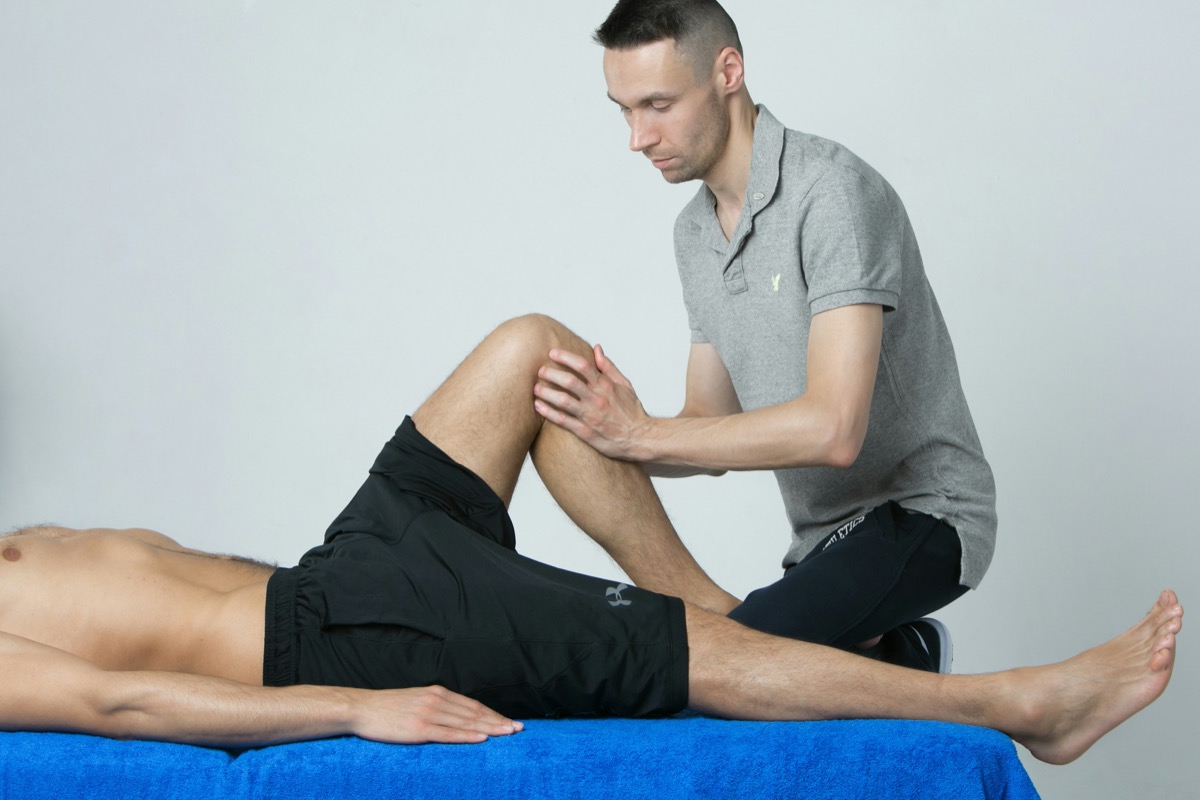
This is the assisted stretching half of the comparison.
There is no matching photograph of a massage session here, and that is deliberate: massage is a separate profession, and ASA does not illustrate or define it.
Answered first
The Five Questions People Actually Ask.
Each of these is answered in full below. Each one is also complete on its own, because most of them are asked in isolation and answered somewhere a reader has no way to check.
Is assisted stretching massage?
No. Assisted stretching and massage are distinct hands-on services. Assisted stretching centres on practitioner-guided positioning and controlled movement into stretches; massage generally centres on hands-on work with soft tissue. ASA does not teach assisted stretching as massage and does not describe it as massage.
Is stretch therapy massage?
“Stretch therapy” is a broad, commonly used marketplace term and it is not synonymous with massage therapy. ASA uses the terms assisted stretching for the service and ASA Certified Stretch Practitioner for the credential it awards.
Which is better, massage or assisted stretching?
Neither is universally better. They are different services, and which one suits a person depends on what kind of service they are looking for and on the professional context involved. This page compares what the two services are, not how well either one works.
Can massage therapists perform assisted stretching?
There is no universal legal answer. It depends on applicable law, the professional scope that already applies to that individual, their insurance, their workplace requirements and the exact service being delivered. A massage professional can study assisted stretching as an additional skill; whether they may offer it is decided elsewhere.
Can a stretch practitioner give massage?
The ASA credential by itself does not authorize massage therapy. The ASA Certified Stretch Practitioner credential is an assisted-stretching credential, and separate massage-therapy requirements may apply to anyone intending to provide massage.
Each of those is answered at length further down. None of them is a legal determination for any individual reader, and none of them is a statement about what either service does for anybody’s health.
The short version
The Difference in 30 Seconds.
The same three questions asked of both services: what is the practitioner primarily doing, what is the client’s role, and what is the practitioner focused on.
Assisted stretching
Primary service action
Practitioner-guided positioning and controlled movement into stretches.
Client role
The client gives feedback throughout and may be repositioned or moved through controlled ranges by the practitioner.
Practitioner focus
Support, positioning, movement, leverage, range and communication.
Massage
Primary service action
Generally hands-on work involving the soft tissue of the body.
Client role
Varies, depending on the style of massage and on the practitioner.
Practitioner focus
Varies by massage method, by training and by the professional scope that applies to that provider.
ASA defines its own assisted-stretching educational model. ASA does not define the professional scope or the legal definition of massage therapy, which is why the right-hand column says “varies” where it does. That is the accurate answer rather than a cautious one: massage covers many methods, many training routes and many regulatory settings, and a single confident description of all of them would be wrong about most of them.
The assisted stretching side
What Happens During Assisted Stretching?
A session is a sequence of assisted stretches, and the practitioner manages all of it. What follows is the shape of that session at a high level — what a client can expect to happen around them — rather than a description of any technique.
- A short conversation before anything starts, about what the session involves and what the client wants from it.
- The client is positioned and supported by the practitioner rather than instructed into a position.
- The practitioner takes the client into a stretch through controlled movement, at a pace the practitioner sets.
- The practitioner asks where the stretch is felt, and how it feels.
- Range is adjusted from what the client says, in either direction.
- Intensity is adjusted the same way, and asking for less is an ordinary request rather than a problem.
- The client is returned to neutral under support at the end of each technique rather than released from it.
- The session moves through an appropriate sequence, with the same pattern repeating.
The client stays relaxed while the practitioner does the work of moving and supporting them, which is the practical reason communication matters so much: the person being moved is the only one who knows what the movement feels like.
The practitioner moves the client. The client reports what they feel.
The full explanation of the service — the components of a session, what it should feel like and what responsible practice depends on — is on what is assisted stretching.
The massage side
What Happens During Massage?
Massage generally involves hands-on work with the soft tissue of the body. The methods, the pressure, the techniques, the goals and the professional requirements can vary considerably depending on the type of massage, on the practitioner’s training, and on the rules governing that profession where they work.
Four things vary from provider to provider, and none of them is ASA’s to settle:
- The method, which differs between styles of massage.
- The training route, which is set by the jurisdiction and by the program rather than by ASA.
- The professional requirements that apply, which differ between places.
- The scope of practice, which is defined by the body that issued the practitioner’s credential.
ASA is not a massage education authority
ASA is not a massage education authority. ASA does not define massage therapy, does not set massage standards, does not accredit massage programs and does not determine what any massage professional may provide. Anyone who wants a precise description of a particular kind of massage should ask the provider offering it or the body that regulates them.
The core distinction
Movement Is a Major Difference.
If there is one difference worth carrying away from this page, it is this one. It is also the difference most often stated too strongly, so it is worth stating precisely.
Assisted stretching: movement is the service
- The practitioner actively manages the starting position before anything moves.
- The practitioner supports the limb or body segment throughout, so the client is not holding it.
- The direction of movement is chosen and controlled by the practitioner.
- Leverage and body mechanics are how the practitioner moves someone safely rather than forcefully.
- Range is managed continuously, and reduced the moment feedback says so.
- Stability is maintained for the client throughout the position.
- Client feedback changes what happens next, in real time.
- A deliberate return to neutral, under support, ends every technique.
Massage: soft-tissue work is the service
- A massage session may involve positioning and repositioning of the client.
- Some massage professionals may use stretching-related techniques within their own professional scope.
- The defining hands-on service, though, is generally soft-tissue work rather than practitioner-guided movement into stretches.
- Which techniques a particular provider uses depends on their method, their training and their scope.
The services can overlap in some techniqueswithout becoming the same service.
That is the distinction worth holding on to, and it is a distinction about what is central to each service rather than about what is absent from either. Movement is what an assisted stretching session is built around. In massage, it may be present without being what the session is for.
What you are asked for
Client Participation.
Assisted stretching as ASA teaches it is feedback-driven, and the feedback is part of the technique rather than a courtesy around it. A practitioner who is not asking is working without the only information that tells them what the movement feels like from the inside.
- “Tell me when you first feel the stretch.”
- “Where do you feel that?”
- “Is that an appropriate intensity?”
- “Would you like less range?”
- “I’m bringing you back to neutral.”
Massage can also involve communication and client feedback — about pressure, about comfort, about position — and many massage professionals work that way as a matter of course. The interaction pattern varies by service and by practitioner, and this page does not characterise it: describing massage as the quiet service would be a flattering comparison for assisted stretching and an inaccurate one.
What can be said is narrower and more useful. In assisted stretching, feedback is what the practitioner adjusts range and intensity from, so a session without it is a session missing part of its method.
Who decides what
What Does the Stretch Practitioner Control?
In assisted stretching the practitioner is moving somebody else’s body, which makes this worth setting out explicitly rather than leaving to be assumed.
The practitioner controls the technique
- Positioning — where the client is placed, and how.
- Support — what is being held, and by whom.
- The direction the movement takes.
- The range the movement reaches.
- Leverage and body mechanics.
- Stability throughout the position.
- The pace of the movement, in and out.
- The return to neutral at the end of it.
The client keeps control of consent
- Whether the session happens at all.
- Whether to proceed with any individual technique.
- What they report, and when.
- Asking for less intensity, at any moment.
- Asking for less range, at any moment.
- Declining a position without giving a reason.
- Asking the practitioner to stop.
The practitioner controls the technique.The client retains control of consent.
Those two columns are not in tension and they are not a negotiation. The practitioner’s control is what makes the movement safe to receive; the client’s control is what makes it theirs to receive. A practitioner who makes the right-hand column mildly awkward to use has effectively removed it.
Professional conduct
Professional Touch in Both Services.
Both of these services are delivered hands-on, so both of them depend on professional conduct. What follows is ASA’s own standard for assisted stretching, reproduced here word for word from the professional-boundaries guide and stated as something a client may reasonably expect from an ASA-trained practitioner without having to ask for it.
Assisted stretching is delivered hands-on, which puts professional conduct at the centre of the work rather than at the edge of it. The expectations below are ASA’s professional standard. They are not a summary of any jurisdiction’s rules about contact, which exist, differ between places, and are not ASA’s to state.
- Contact has a clear purpose connected to the technique being performed.
- Positioning is explained before it is used.
- Conduct stays professional, and the relationship stays a working one.
- Unnecessary contact is avoided rather than justified.
- Client preferences are respected without requiring an explanation.
- Draping and clothing expectations appropriate to the setting are maintained.
- Facility policy is followed, including where it is stricter than a practitioner’s own habit.
- The session stops if the client is uncomfortable — with the position, the contact or anything else.
This is ASA’s standard, and it applies to ASA’s practitioners
Massage professionals are governed by the standards and requirements applicable to their own profession and workplace, not by ASA’s. Nothing above is a description of what any massage provider is required to do, and this page does not suggest that massage follows ASA’s rules.
Ongoing, not a signature
Consent in Both Services.
The same arrangement applies here as it does to professional contact: the standard below is ASA’s, it governs assisted stretching, and it is reproduced word for word rather than reworded for a consumer audience.
Consent is ongoing, not a one-time form.
A signature at the front desk records that somebody agreed to receive a service. It does not record that they agree to this position, at this depth, right now — and that is the consent that governs a hands-on session. It is given continuously, it can be withdrawn at any moment, and withdrawing it needs no reason and no justification.
In practice, during an assisted-stretching session, the client may:
- Decline a technique.
- Ask for less range.
- Request a different position.
- Ask the practitioner to stop.
What consent legally requires is not stated here
Clients receiving massage likewise communicate preferences and boundaries, and any professional service involving contact should make that straightforward. What consent legally requires, what must be documented and how, varies by jurisdiction and by setting, and this page does not state massage law for anyone.
Not healthcare
Assisted Stretching Is Not Physical Therapy.
Assisted stretching as ASA teaches it is non-medical, practitioner-guided stretching. It is not physical therapy, it is not healthcare, it is not rehabilitation, and it is no substitute for medical care or for physical therapy. Physical therapy is a licensed healthcare profession, practised inside a regulated scope that includes clinical evaluation of a person’s condition.
The ASA Certified Stretch Practitioner credential does not authorize any of the following, and an ASA practitioner does not use it as the basis for them:
- Diagnosing an injury.
- Diagnosing a medical condition.
- Diagnosing dysfunction, or naming a cause for what a client feels.
- Prescribing medical treatment of any kind.
- Prescribing a rehabilitation program.
- Representing themselves as a physical therapist, or as any licensed healthcare professional.
- Representing assisted stretching as physical therapy, or as a substitute for it.
- Performing any procedure reserved to a licensed healthcare profession.
- Promising to cure pain.
- Promising to heal an injury.
- Claiming to treat a medical condition.
This is a statement about the ASA credential rather than about any individual. Some ASA students hold another licence or credential separately, and that profession carries its own scope governed by its own rules. Nothing here narrows it — and nothing the ASA credential does can widen it.
The full professional-boundaries guide — stretch practitioner scope of practice — covers what the role includes, what sits outside it, and what actually decides where the line falls.
The full comparison — assisted stretching vs physical therapy — covers what each one is, why the ASA credential does not authorize diagnosis, medical treatment or rehabilitation, and how to tell which kind of service you are looking for.
Somebody else’s profession
Massage Therapy Is a Separate Profession.
Massage therapy is a separate profession from assisted stretching. In many places it is regulated and licensed, with its own requirements, its own protected titles and its own defined scope; how that works differs from place to place. ASA has no role in any of it.
- ASA certification does not replace massage licensure.
- ASA certification does not expand massage licensure.
- ASA certification does not determine massage scope of practice.
- ASA certification does not grant any authority to provide massage.
The same boundary runs in the other direction, and it is worth stating with equal weight: holding a massage licence does not automatically demonstrate assisted-stretching competency. They are different skills, learned differently and assessed differently, and neither credential is evidence of the other.
Who may provide which service is not decided here
Which service any individual may provide is decided by the law where they work, by any body that regulates them, by their insurer and by their employer. ASA makes no licensing determination for any reader, and nothing on this page is legal advice.
Written for the profession itself: assisted stretching for massage therapists covers what transfers from a massage background and what actually decides whether a licensed professional may offer the service.
Where they overlap
Can Massage Include Stretching?
Potentially, yes. Some massage professionals may use stretching-related techniques within their own lawful and professional scope, and whether a particular provider does is a question for that provider.
What that does not mean is worth being precise about, because it is where the two services get collapsed into one:
- It does not mean massage and assisted stretching are the same service.
- It does not mean every massage professional may offer every assisted-stretching technique.
- It does not mean ASA certification changes anybody’s massage scope of practice.
A technique can appear inside more than one professional context.The professional role still matters.
That is why “does it involve stretching?” is not the question that settles what a service is. The service is defined by what it is built around and by the professional role it is delivered under, and both of those survive the fact that two roles may share a movement.
The other direction
Can Assisted Stretching Include Soft-Tissue Work?
The ASA practitioner credential is a credential for assisted stretching. It is not a credential in massage or in any other soft-tissue modality, and it does not authorize someone to provide one. If an individual separately holds another credential or licence, any service belonging to that separate professional role is delivered under that role — not under this certification.
The ASA credential should not be used to represent a practitioner as a massage therapist.
That matters to a consumer as much as to a practitioner, because it is what makes a credential worth checking. A person booking a service is entitled to know which professional role the person in front of them is working under, and a credential that could be used to imply a second one would tell them nothing.
A question about the service
Which Service Involves More Movement?
Assisted stretching generally places controlled, practitioner-guided movement at the centre of the session. Massage methods vary, but massage generally centres on hands-on soft-tissue work rather than on movement through a sequence of assisted stretches.
That is a description of what the two services are built around. It is not a claim that either one is more effective, and more movement is not the same thing as more benefit.
A framing worth refusing
Which Service Is More “Active”?
Assisted stretching typically requires continuous practitioner control of positioning and movement, along with repeated client feedback. Massage can also involve active communication, repositioning and client participation. Describing one service as “active” and the other as “passive” is too simplistic to be useful.
The clearer question is what the practitioner is primarily doing and what the client is primarily being asked for. In assisted stretching the practitioner is moving and supporting the client, and the client is being asked to report what they feel. That is a different description from “active”, and a more accurate one.
What to expect physically
What Should Assisted Stretching Feel Like?
A client may report an appropriate stretching sensation in the area being worked on. It should be something they can talk through: able to hold a conversation, able to ask for less at any point, and confident that the person moving them will act on it immediately.
- A stretching sensation in the targeted area rather than somewhere else.
- Something the client can breathe and talk through.
- An intensity the client chose, and can have reduced by saying so.
- A position the client understands before they are moved into it.
A client should say something immediately, and expect the stretch to be reduced or stopped, if they experience any of the following:
- Sharp pain.
- Shooting or electrical sensations.
- Numbness.
- Tingling.
- Pain in a joint.
- Dizziness or light-headedness.
- A feeling of instability or of not being supported.
- Unusual distress, or a change in how they are breathing or speaking.
- Anything that feels unsafe to the client.
- Anything that feels unsafe to the practitioner.
Deeper is not automatically better.
This page does not explain what any of those sensations means, and a stretch practitioner should not explain it to a client either. The list is a list of responses, not a list of conditions. Anyone who wants to know what a sensation means should ask a qualified healthcare professional.
A consumer standard
What Should You Expect From a Professional Stretch Practitioner?
These are reasonable expectations for a professionally delivered assisted-stretching session, and they are what ASA trains practitioners to. A client is entitled to all of them without asking.
- An explanation of what the session involves before it starts.
- Professional communication throughout.
- Clear positioning, explained before it is used.
- Consent treated as ongoing rather than as a form signed at the desk.
- Controlled movement, under support, in and out of every position.
- Attention to what the client reports, acted on rather than noted.
- A willingness to reduce range without making it awkward to ask.
- A willingness to stop, immediately and without discussion.
- Professional boundaries maintained for the whole session.
- No medical diagnosis offered on the basis of the ASA credential.
- An accurate description of what the service is, and what it is not.
A practitioner who does all of that is behaving professionally regardless of which organization certified them. This list is not a claim that only ASA-certified practitioners work this way.
Not ASA’s to set
What Should You Expect From a Massage Professional?
ASA does not set expectations for massage professionals and does not define what a massage session should contain. What a person can reasonably expect depends on things ASA has no part in:
- The jurisdiction the provider works in.
- The credentials that provider holds.
- The massage modality being offered.
- The policies of the workplace or facility.
- The professional standards applicable to that provider.
What a consumer can usefully do is ask the provider directly. Worth confirming with any hands-on service, massage included:
- The appropriate credential or licensure, where that applies.
- The professional identity of the person delivering the service.
- Exactly which service is being provided.
- How the provider handles professional boundaries.
- Pricing and booking policies.
- Facility information, including what to wear and what to expect on arrival.
ASA does not verify massage credentials
ASA is not the authority for verifying massage credentials and does not hold a register of them. The body that issued a credential, or the authority that regulates the profession where the provider works, is the place to confirm one.
The full comparison
Assisted Stretching vs Massage, Side by Side.
Nine characteristics, described rather than scored. Nothing in this table marks either service correct, and nothing in it is a claim about how well either one works.
Table: Assisted stretching compared with massage across nine service characteristics. The table describes each service and does not rank them.
| Characteristic | Assisted stretching | Massage |
| --- | --- | --- |
| Primary action | Practitioner-guided positioning and controlled movement into stretches. | Generally hands-on work with the soft tissue of the body. | | Movement | Central to the service. The session is built around it. | Varies by method and provider. Not necessarily central. | | Client feedback | Continuous feedback is integral, and range is adjusted from it. | Varies by method and provider. Communication is common. | | Range management | Central. Managing and adjusting range is the practitioner’s main task. | Not a defining feature of the service. | | Leverage and body mechanics | Practitioner leverage and body mechanics are how a client is moved and supported. | Body mechanics matter to the practitioner, but are applied differently. | | Return to neutral | An explicit part of every technique. | Not comparable as a defining technique step. | | Professional credential | Depends on the provider and the program. ASA’s credential is the ASA Certified Stretch Practitioner. | Depends on the jurisdiction and on the profession’s own requirements. | | Medical diagnosis | The ASA credential grants no medical diagnostic authority. | This page makes no legal or scope conclusion about massage credentials. | | Healthcare licence | ASA certification is not a healthcare licence. | Professional regulation varies by jurisdiction. This page universalizes nothing. |
Read down either column and the table describes a service. Read across a row and it compares one characteristic. What it does not do anywhere is score them: there is no row on which one service is marked correct and the other is marked wrong, because that is not what a difference between two service categories is.
A service answer, not an outcome
Is One Better for Flexibility?
Assisted stretching is specifically structured around stretching positions and controlled range, so somebody who is looking for a practitioner-guided stretching experience may find it more directly aligned with what they are asking for. That is a statement about what the service is, and it is different from claiming a guaranteed flexibility outcome.
ASA does not promise that assisted stretching will change anybody’s flexibility, and this page makes no claim about what massage does or does not do for flexibility either. How any individual responds to anything depends on that individual, and neither service is being offered here as a method for producing a result.
Neither is recommended here
Is One Better for Pain?
Pain can have many causes, and this page does not recommend either assisted stretching or massage as a treatment for pain. A practitioner using the ASA credential does not diagnose the source of pain and does not prescribe treatment for it.
This page does not answer a pain question
Nothing here should be read as a claim that assisted stretching treats, relieves or resolves pain, and nothing here is a claim about what massage does for it. Anyone with significant, persistent or unexplained pain, or who is unsure whether a hands-on service is appropriate for them, should speak to a qualified healthcare professional. That is the person who can answer the question; a comparison page is not.
A word worth taking apart
Is One Better for Recovery?
“Recovery” means different things to different people, and the word is used as a service category as often as it is used as a physiological one. People seek massage, stretching, rest, changes to their training, or healthcare services for reasons that are not interchangeable.
ASA does not promise that assisted stretching improves recovery, speeds recovery or prevents injury, and makes no claim about massage in those terms either. Where “recovery” appears as the name of a service category — a recovery studio, a recovery menu — it is positioning language rather than a medical outcome, and it is worth reading it that way.
Not a substitution
Is Assisted Stretching a Replacement for Massage?
No universal replacement relationship exists between them. They are separate services, and neither one is a substitute for the other by definition.
- Some people prefer one.
- Some people prefer the other.
- Some people use both, at different times.
- Some people use neither.
Which of those a person lands on depends on their own goals and preferences, and on any guidance from professionals involved in their care. This page does not recommend a combination, a frequency or a schedule, and it does not tell anybody to replace one service with the other.
A matter of preference
Can Someone Use Both Services?
Potentially, yes — depending on individual preference and on the professionals involved. People book different services for different reasons, and nothing about the two service categories makes them mutually exclusive.
This page does not set out a schedule, does not advise on timing or same-day sequencing, and makes no claim that using both produces any outcome. Anyone with a medical concern, an injury or any uncertainty about whether either service is appropriate for them should ask a qualified healthcare professional rather than a page comparing two service categories.
Which are you looking for?
How Do I Choose Between Assisted Stretching and Massage?
Choose based first on what kind of service you are actually looking for. That sounds obvious and it is the step most often skipped, because the two services are usually compared on which one sounds more effective rather than on which one is the thing being sought.
If you want
Practitioner-guided stretching
Somebody positioning and supporting you, moving you through controlled stretches, and adjusting from what you tell them. Assisted stretching may more directly match that service description.
If you want
Hands-on soft-tissue work
A session built around hands-on work with soft tissue. Massage may more directly match that service description. What a particular provider offers is a question for that provider.
If you want
Diagnosis, medical treatment or rehabilitation
Neither ASA-assisted stretching nor a consumer comparison page is a substitute for evaluation by an appropriately licensed healthcare professional. That is where this question belongs, and it belongs there first.
Choose the service by what it actually is —not by which label sounds better.
Note what this framework does not do. It does not ask what hurts, it does not ask what your goal is in physical terms, and it does not match a service to a symptom — because doing any of that would be this page giving health guidance it is not qualified to give.
Fourteen questions
Questions to Ask Before Booking Assisted Stretching.
Worth asking any provider before booking an assisted-stretching session. None of these is a trick question and a professional provider will have an answer to all of them.
- What service will I actually receive?
- What training does the practitioner have in assisted stretching?
- What credential do they hold, and who issued it?
- How does the session work, start to finish?
- Will the practitioner explain positioning before moving me?
- How is consent handled during the session?
- Can I ask for less intensity partway through?
- Can I stop at any time?
- What happens if something feels wrong?
- Is the practitioner operating within their professional role?
- What should I wear?
- What are the facility’s policies?
- How is the session priced?
- Is there a cancellation policy?
ASA’s own answer to the credential question is the ASA Certified Stretch Practitioner, which documents completed education and demonstrated practical competency in assisted stretching. It is one credential model rather than a universal requirement, and this page does not tell anyone to insist on it.
Seven questions
Questions to Ask Before Booking Massage.
A shorter list, and deliberately generic. ASA does not teach massage regulation and will not attempt to here — these are the questions any consumer can usefully ask about any hands-on service.
- What service or modality am I booking?
- What credentials or licensure does the provider hold, where that applies?
- What should I expect during the session?
- What are the provider’s professional boundaries?
- How is consent handled?
- What should I wear, and what draping policy applies?
- What are the pricing and cancellation policies?
The provider, and the body that regulates them where one does, are the right sources for anything more specific. ASA is not that source.
Where you may meet it
Assisted Stretching in Gyms and Fitness Facilities.
Some gyms and fitness facilities evaluate assisted stretching as a service, and a consumer may first encounter it on a facility’s menu rather than at a dedicated studio.
- It does not mean every trainer at that facility may provide it.
- It does not mean every facility can offer it in the same way.
- It does not mean professional scope stops applying inside a gym.
A facility adding a service is an operational decision. Who may deliver it, and under what professional role, is a separate question that the setting does not answer.
Written for the operator rather than the member: assisted stretching for gyms and fitness facilities. And for the trainer being asked to deliver it: assisted stretching for personal trainers.
Adding a skill
Massage Therapists Learning Assisted Stretching.
Massage therapists may choose to learn assisted stretching as an additional professional skill, and many ASA students arrive from hands-on professions. Studying a skill and being permitted to offer it are two different questions, and only the first one is settled by a course.
- ASA certification does not expand a massage licence.
- A massage credential does not automatically substitute for assisted-stretching competency.
- What any individual may offer depends on the rules that apply to them where they work.
The dedicated guide for massage professionals covers what transfers from a massage background, what is genuinely new, and what actually decides whether a licensed professional may offer the service.
Assisted stretching for massage therapists is the full guide. Anyone weighing the path itself can read how to become a stretch practitioner.
The words ASA uses
Why ASA Uses the Term “Assisted Stretching”.
ASA uses the term assisted stretching for the service, and ASA Certified Stretch Practitioner for the credential it awards. Both are deliberate. They describe the educational model accurately without implying healthcare licensure, and they describe what the practitioner actually does rather than borrowing a word from a regulated profession.
“Assisted” says who is doing the work
The defining feature of the service is that somebody else positions, supports and moves the client. “Assisted” is the plainest available word for that, and it is accurate whether the session happens in a studio, a gym or a clinic.
“Stretching” says what the service is built around
Not soft-tissue work, not treatment, not rehabilitation. Naming the service after the thing it consists of makes it harder to imply anything else about it.
“Practitioner” rather than “therapist”
“Therapist” is a word many regulated healthcare professions use, and ASA’s credential is not a healthcare credential. Using a title that does not imply one is the whole point.
“Stretch therapy” is used widely in the marketplace and this page takes no position on anybody else’s use of it. It is a common search term rather than a defined professional title, and it is not synonymous with massage therapy. ASA simply does not use “therapist” as its credential title.
The full terminology guide — what is stretch therapy — separates the terms people use most and explains which of them mean the same thing.
For completeness
What ASA Trains Practitioners to Do.
For completeness, and because a comparison is easier to trust when it says what its author actually teaches. ASA’s practitioner education covers:
- Positioning a client safely and clearly.
- Supporting the client through a technique rather than leaving them to hold themselves.
- Guiding controlled movement, in and out.
- Communicating before, during and after a technique.
- Managing range, and reducing it on request.
- Adjusting from client feedback as the session goes on.
- Maintaining professional boundaries and ongoing consent.
- Knowing when to modify, when to stop and when to refer.
- Returning the client to neutral under support.
ASA does not use its credential to authorize massage therapy.
What the role looks like in practice, session by session: what does a stretch practitioner do.
Before either service
When a Healthcare Professional Is the Better Starting Point.
Some of the people comparing these two services are not really choosing between them. If what somebody is looking for is any of the following, an appropriately licensed healthcare professional is the more appropriate starting point — before either service, rather than after one of them has not helped.
- A diagnosis.
- Evaluation of an injury.
- Medical treatment.
- Rehabilitation.
- Help with significant or unexplained symptoms.
- Clearance to begin a new activity.
This page is not a triage tool
This page does not diagnose anything, does not decide urgency, and is not a triage tool. It says only what an ASA practitioner would say in the same situation: this is outside what assisted stretching is, and a qualified healthcare professional is the right person to ask.
Questions
Assisted Stretching and Massage: FAQ.
Is assisted stretching the same as massage?
No. Assisted stretching and massage are both hands-on services, but they are not the same service. Assisted stretching centres on practitioner-guided positioning and controlled movement into stretches. Massage generally centres on hands-on work with the soft tissue of the body. ASA does not teach assisted stretching as massage and does not describe it as massage.
What is the difference between assisted stretching and massage?
The difference is what the practitioner is primarily doing. In assisted stretching the practitioner positions and supports the client and moves them through controlled stretches, managing range and adjusting from continuous client feedback. In massage the work generally involves hands-on contact with soft tissue. The exact techniques, professional requirements and scope of massage therapy vary by practitioner and by jurisdiction.
Is stretch therapy the same as massage therapy?
No. “Stretch therapy” is a broad marketplace term for practitioner-guided stretching and it is not synonymous with massage therapy, which is a separate profession with its own requirements in many places. ASA uses the term assisted stretching for the service and awards the ASA Certified Stretch Practitioner credential rather than a “therapist” title.
Does assisted stretching involve massage?
Assisted stretching as ASA teaches it is practitioner-guided positioning and controlled movement into stretches. The ASA Certified Stretch Practitioner credential is an assisted-stretching credential and does not authorize massage therapy. Where an individual separately holds a massage credential or licence, that service belongs to that separate professional role.
Does massage involve stretching?
Potentially. Some massage professionals may use stretching-related techniques within their own lawful and professional scope, and whether a particular provider does is a question for that provider. That does not make massage and assisted stretching the same service: a technique can appear inside more than one professional context, and the professional role still matters.
Can massage therapists perform assisted stretching?
There is no universal legal answer. It depends on applicable law, the professional scope that already applies to that individual, their insurance, their workplace requirements and the exact service being delivered. Massage professionals can study assisted stretching as an additional skill; whether any individual may offer it is decided by the rules that apply to them where they work.
Can stretch practitioners perform massage?
Not on the basis of the ASA credential. The ASA Certified Stretch Practitioner credential is an assisted-stretching credential and does not authorize massage therapy. Separate massage-therapy requirements may apply to anyone intending to provide massage, and the ASA credential should not be used to represent a practitioner as a massage therapist.
Does ASA certification allow someone to give massage?
No. ASA certification does not replace massage licensure, does not expand it, does not determine massage scope of practice and does not grant authority to provide massage. Certification does not determine a practitioner’s legal scope of practice. Laws, professional licensing requirements, title restrictions, insurance conditions and facility policies vary by state, by country and by employer, and they apply to a certified practitioner exactly as they applied before. Anyone entering this field is responsible for confirming what they are permitted to do where they intend to work, and for consulting the appropriate licensing authority or their own professional adviser where that is unclear.
Is ASA certification a massage license?
No. The ASA Certified Stretch Practitioner credential documents completed assisted-stretching education and demonstrated practical competency. It is not a massage licence, not a healthcare licence, and not a substitute for either. ASA has no role in massage licensure.
Is massage licensure required everywhere?
That is not a question ASA answers. Professional regulation of massage therapy differs between jurisdictions, and this page states no universal rule in either direction. The licensing authority for the place a provider works is the source for what applies there.
Is assisted stretching physical therapy?
No. Assisted stretching as ASA teaches it is a non-medical service: it is not healthcare, it is not rehabilitation, and it is no substitute for medical care or for physical therapy. Physical therapy is a licensed healthcare profession practised inside a regulated scope that includes clinical evaluation of a person’s condition.
Is massage physical therapy?
Massage therapy and physical therapy are different professions with different requirements, and what any individual provider may do is determined by the credential they hold and by the rules that apply where they work. ASA does not define either profession and makes no determination about them.
Can assisted stretching diagnose why I feel tight?
No. A practitioner using the ASA credential does not diagnose, does not decide what any sensation means and does not name a cause for it. Nothing in an assisted-stretching session establishes why a person feels the way they do. Anyone who wants to know what a sensation means should ask a qualified healthcare professional.
Can a massage therapist diagnose injuries?
ASA does not define the scope of massage therapy and makes no determination about what any massage provider may do. What a particular provider is qualified and permitted to do depends on their credential and on the rules that apply where they work, and the body that regulates them is the source for that answer.
Can an ASA stretch practitioner treat injuries?
No. The ASA Certified Stretch Practitioner credential does not authorize diagnosis, medical treatment, rehabilitation or any medical claim. An injury is a reason to speak to a qualified healthcare professional, and a practitioner who is unsure whether a service is appropriate for someone should say so and refer rather than improvise.
Can massage treat injuries?
This page makes no claim about what massage does or does not do for an injury. ASA is not a massage authority and does not publish clinical claims for any service, its own included. Anyone with an injury should be guided by a qualified healthcare professional about what is appropriate for them.
Which is better, massage or assisted stretching?
Neither is universally better. They are different services, and which one suits a person depends on what kind of service they are looking for. If you want practitioner-guided stretching, assisted stretching more directly matches that description; if you want hands-on soft-tissue work, massage more directly matches that description. This page compares what the services are rather than how well either one works.
Which is better for flexibility?
Assisted stretching is specifically structured around stretching positions and controlled range, so someone looking for a practitioner-guided stretching experience may find it more directly aligned with what they are asking for. That is a description of the service and not a guarantee of a flexibility outcome. ASA promises no flexibility result and makes no claim about what massage does for flexibility.
Which is better for tight muscles?
This page does not decide what “tight” means for any individual, because deciding what a sensation means is outside what an assisted-stretching credential covers. What can be said is what each service is: assisted stretching centres on guided positioning and controlled movement into stretches, and massage generally centres on hands-on soft-tissue work. Anyone whose experience is persistent, painful or unexplained should ask a qualified healthcare professional.
Which is better for pain?
Pain can have many causes, and this page does not recommend either assisted stretching or massage as a treatment for pain. A practitioner using the ASA credential does not diagnose the source of pain and does not prescribe treatment. Anyone with significant, persistent or unexplained pain should speak to a qualified healthcare professional.
Which is better for recovery?
“Recovery” means different things to different people and is used as a service category as often as a physiological one. ASA does not promise that assisted stretching improves or speeds recovery or prevents injury, and makes no claim about massage in those terms. Where “recovery” is the name of a service menu, it is positioning language rather than a medical outcome.
Is assisted stretching more active than massage?
Describing one service as “active” and the other as “passive” is too simplistic. Assisted stretching typically requires continuous practitioner control of positioning and movement along with repeated client feedback; massage can also involve active communication, repositioning and client participation. The clearer question is what the practitioner is primarily doing and what the client is primarily being asked for.
Is massage passive?
Not as a rule. Many massage sessions involve communication about pressure, comfort and position, and the interaction pattern varies by service and by practitioner. ASA does not characterise how massage professionals work, and describing massage as the quiet service would be a flattering comparison for assisted stretching rather than an accurate one.
Does assisted stretching hurt?
A client may report an appropriate stretching sensation in the area being worked on, and it should be something they can talk through. Sharp pain, shooting or electrical sensations, numbness, tingling, joint pain, dizziness, instability or anything that feels unsafe is a reason to speak up immediately and to expect the stretch to be reduced or stopped.
Should stretching be painful?
Deeper is not automatically better. In assisted stretching as ASA teaches it, intensity is chosen with the client and reduced whenever they ask, and asking for less is an ordinary request rather than a problem. This page does not explain what any painful sensation means — that is a question for a qualified healthcare professional.
Is assisted stretching a replacement for massage?
No universal replacement relationship exists between them. They are separate services, and neither is a substitute for the other by definition. Some people prefer one, some prefer the other, some use both at different times and some use neither.
Can I do massage and assisted stretching?
Potentially, yes — depending on individual preference and on the professionals involved. Nothing about the two service categories makes them mutually exclusive. This page does not set out a schedule, does not advise on timing, and makes no claim that using both produces any outcome.
Can I book both services?
That is a matter of personal preference and of what the providers involved offer. Anyone with a medical concern, an injury or any uncertainty about whether either service is appropriate for them should ask a qualified healthcare professional rather than a page comparing two service categories.
How do I choose between massage and assisted stretching?
Choose by what kind of service you are actually looking for. If you want somebody to position and support you and move you through controlled stretches, assisted stretching more directly matches that description. If you want hands-on soft-tissue work, massage more directly matches that description. If what you are looking for is diagnosis, medical treatment or rehabilitation, an appropriately licensed healthcare professional is the right starting point rather than either service.
What should I ask before booking assisted stretching?
What service you will receive, what training the practitioner has, what credential they hold and who issued it, how the session works, whether positioning will be explained, how consent is handled, whether you can ask for less intensity or stop at any time, what happens if something feels wrong, what to wear, and what the facility’s pricing and cancellation policies are.
Can personal trainers do assisted stretching?
Trainers can study assisted stretching as an additional professional skill, and many ASA students are trainers. Whether an individual may offer it is decided by applicable law, by any licensing rules that already apply to them, by employer and facility policy and by insurance — not by any course and not by any certificate.
Can massage therapists become ASA Certified Stretch Practitioners?
Massage professionals can pursue the ASA Certified Stretch Practitioner credential like anyone else, and a hands-on background is familiar ground for parts of the work. The credential documents assisted-stretching education and demonstrated competency; it does not expand a massage licence, and a massage licence does not automatically demonstrate assisted-stretching competency.
What does an assisted stretch practitioner do?
They position and support a client, guide controlled movement into and out of stretches, manage range, communicate throughout, adjust from client feedback, maintain professional boundaries and ongoing consent, return the client to neutral, and know when to modify, stop or refer. It is a non-medical role.
What does a massage therapist do?
Massage generally involves hands-on work with the soft tissue of the body, and the methods, techniques and professional requirements vary by modality, by training and by jurisdiction. ASA does not define massage therapy and is not the authority on what any massage provider does — the provider, and the body that regulates them, are.
Where does assisted stretching happen?
Assisted stretching is offered in a range of settings, including dedicated studios, gyms and fitness facilities, wellness businesses and independent practices. The setting does not change the professional question of who may deliver the service and under what role.
Can gyms offer assisted stretching?
Some gyms and fitness facilities evaluate assisted stretching as a service. That does not mean every trainer at a facility may provide it, that every facility can offer it identically, or that professional scope stops applying inside a gym. Adding a service is an operational decision; who may deliver it is a separate question.
What credential does ASA award?
ASA awards the ASA Certified Stretch Practitioner credential. It documents completed assisted-stretching education and demonstrated practical competency. Certification does not determine a practitioner’s legal scope of practice. Laws, professional licensing requirements, title restrictions, insurance conditions and facility policies vary by state, by country and by employer, and they apply to a certified practitioner exactly as they applied before. Anyone entering this field is responsible for confirming what they are permitted to do where they intend to work, and for consulting the appropriate licensing authority or their own professional adviser where that is unclear.
Why does ASA call practitioners Stretch Practitioners instead of Stretch Therapists?
“Therapist” is a word many regulated healthcare professions use, and ASA’s credential is not a healthcare credential. “Practitioner” describes what the person does without implying licensure they do not hold. “Stretch therapy” is used widely in the marketplace and ASA takes no position on anybody else’s use of it — ASA simply does not use “therapist” as its credential title.
Is stretch therapy a medical profession?
No. Practitioner-guided stretching as ASA teaches it is a non-medical service. The word “therapy” in a marketplace term does not by itself indicate healthcare, and the ASA credential does not authorize diagnosis, medical treatment or rehabilitation.
When should I talk to a healthcare professional instead?
If what you are looking for is a diagnosis, evaluation of an injury, medical treatment, rehabilitation, help with significant or unexplained symptoms, or clearance to begin a new activity, an appropriately licensed healthcare professional is the more appropriate starting point — before either service rather than after one of them has not helped.
Where can I learn more about assisted stretching?
ASA publishes free long-form guides covering what assisted stretching is, what the various terms people search for mean, what a stretch practitioner does, what a practitioner’s scope of practice covers, and how professional certification works. They are indexed at the ASA guide hub.
Where this goes next
Two Hands-On Services. Two Different Experiences.
If what you are looking for is specifically practitioner-guided stretching — somebody positioning and supporting you, moving you through controlled stretches, and adjusting from what you tell them — the two guides below explain how the service works and what a professional practitioner does. If what you are looking for is soft-tissue work, a massage provider is the right person to ask about theirs.
- Two hands-on services.
- Two different experiences.
- Neither one is the other.
Learn What Assisted Stretching Is · What Does a Stretch Practitioner Do?
Interested in the profession rather than the service? Explore ASA certification.
More ASA guides: what assisted stretching is, how certification works, what it costs.