
Understanding the difference
Assisted Stretching vs Yoga: What’s the Difference?
Assisted stretching and yoga can both involve stretching positions and movement, but they are not the same experience. In ASA-assisted stretching, a practitioner physically supports and guides the client through controlled stretches while communicating about positioning, range and intensity. Yoga is a broad practice in which participants commonly move their own bodies through postures, movements, breathing practices or sequences, depending on the style and the teacher.
Neither is universally better. They are different experiences, and the better fit depends on what type of activity or service a person is looking for.
ASA teaches assisted stretching. It does not define, regulate or set standards for yoga. Yoga includes many traditions, styles, teachers, practices and settings, and everything said about it here is stated at the level of generality an organization that teaches something else can honestly support.
A person may practise yoga and also receive assisted stretching. They are not alternatives that cancel each other out, and nothing here suggests choosing one means giving up the other.
This guide is written for two readers. One is trying to work out which of these two they are actually being offered, or which one they want. The other is a yoga instructor asking whether assisted stretching is something they could learn as an additional professional skill — and what that would genuinely involve.
It covers what each one is, what happens in an assisted-stretching session, what a yoga practice may involve, who is guiding the movement and why that is not the whole answer, where hands-on support fits, the positioning, range management, communication and consent that assisted stretching is built on, why “active” and “passive” are the wrong labels, the full side-by-side comparison, and what a certification does and does not settle in either direction.
What Is Assisted Stretching? · What Does a Stretch Practitioner Do?
This page is educational. It is not medical advice and it is not legal advice. It claims no health outcome for assisted stretching or for yoga, promises nothing about flexibility, mobility, pain or recovery, and makes no statement about what any yoga teacher or any stretch practitioner is permitted to do.
- Two different experiences
- Neither one ranked
- No outcome promised
- ASA does not define yoga
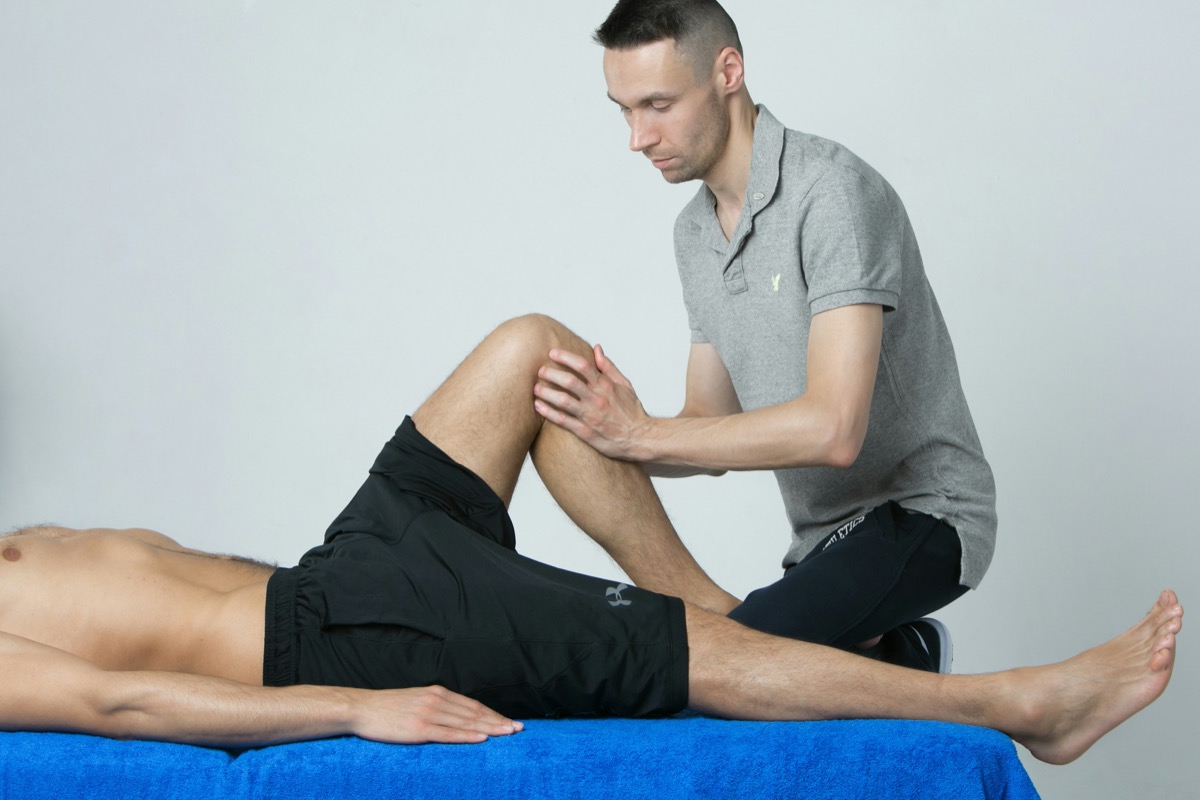
This is the assisted stretching half of the comparison.
There is no matching photograph of yoga here, and that is deliberate: yoga covers many traditions, styles, teachers and settings, and one picture of it would be a claim ASA has no standing to make.
Answered first
The Six Questions People Actually Ask.
Each of these is expanded below. Each one is also complete on its own, because most of them are asked in isolation and answered somewhere a reader has no way to check.
Is assisted stretching yoga?
No. Assisted stretching and yoga may share some positions or stretching concepts, but they are different experiences. Assisted stretching is a practitioner-guided, hands-on service under ASA’s model. Yoga is a broad practice whose formats and methods vary by tradition, teacher and setting.
Is assisted stretching like someone doing yoga to you?
That description is too simplistic. Assisted stretching involves practitioner-specific skills such as support, positioning, leverage, controlled movement, client communication, consent and range management. A similar-looking position does not make two things the same.
Which is better — yoga or assisted stretching?
Neither is universally better. Yoga and assisted stretching are different experiences and should be compared by what someone wants to do, not by declaring one superior. This page does not tell anybody which to choose.
Can yoga instructors become stretch practitioners?
Potentially. Yoga-teaching experience may support learning, but it does not automatically demonstrate assisted-stretching-specific competency. ASA certification has its own education, assessment, hands-on training and practical competency requirements.
Does ASA certification make someone a yoga instructor?
No. The ASA Certified Stretch Practitioner credential is an assisted-stretching credential. It does not make anybody a yoga teacher, a yoga instructor or a healthcare provider, and ASA does not define or award yoga credentials of any kind.
Does yoga teacher training make someone an ASA stretch practitioner?
No. ASA certification has its own education and competency requirements, and completing yoga teacher training does not satisfy them. Prior experience may support learning without replacing what has to be demonstrated.
Every one of those is expanded below, along with the questions people ask when they are trying to work out whether the session they were offered is a yoga class or an assisted-stretching appointment. None of the answers on this page ranks the two, claims a health outcome for either, or states what any individual is permitted to provide.
The short version
The Difference in 30 Seconds.
One is a one-on-one, practitioner-guided service delivered under ASA’s model. The other is a broad practice with many formats, traditions and purposes. Neither is a lesser version of the other, and the comparison below is of experiences rather than of merit.
The same five questions asked of both: what is the format, who is primarily producing the movement, is it hands-on, what is the person receiving or participating doing, and what does it run on.
Assisted stretching
Format
One-on-one practitioner-guided service under the ASA model.
Who primarily guides movement
The practitioner supports and guides the client.
Hands-on
Core to the ASA model — the service cannot be delivered without it.
Client role
Communicates, gives feedback, consents and participates in positioning throughout the session.
Primary ASA skills
Support, positioning, leverage, movement control, range management and technique-specific communication.
Yoga
Format
Varies widely — individual practice, classes, instruction and other formats.
Who primarily performs movement
The participant commonly moves their own body, depending on the style and the practice.
Hands-on
May or may not be present, depending on the instructor, the practice and the setting.
Participant role
Usually actively performs positions, movements or other elements of the practice.
Methods
Vary widely by style, teacher, tradition and purpose.
One column above is far more specific than the other, and that is deliberate rather than careless. ASA can describe assisted stretching precisely because ASA teaches it and holds its own practitioners to a defined standard. Yoga is not one method: it covers many traditions, styles, teachers, settings and purposes, and “varies widely” is the most accurate answer available rather than a weaker one. A page that replaced it with a tidy definition would be describing something ASA has no standing to define.
The assisted stretching side
What Happens During Assisted Stretching?
At a high level, and without the technique itself: an assisted-stretching session as ASA teaches it runs through a sequence a client can recognise from the outside. The specifics — which positions, which hand placements, which sequences — are taught in training rather than published, and reading a description of a session is not the same as being able to deliver one.
- Explain the session, and what the client should expect from it.
- Establish consent before anything begins, and keep it live throughout.
- Position the client for the stretch that follows.
- Support the limb or body region being worked, and stabilise what needs stabilising.
- Guide controlled movement into the stretch rather than pushing into it.
- Communicate throughout — before the movement, during it, and after it.
- Manage range and intensity against what the client reports.
- Adjust based on that feedback, including reducing range when asked.
- Return the client to neutral under control and under support.
- Continue through the appropriate sequence for that session.
Every item on that list is a practitioner responsibility rather than a client instruction. That is the structural fact this whole comparison turns on: in an assisted-stretching session the practitioner is physically involved in producing the movement, and the skills that make that safe and controlled are the skills the service is built on.
The full explanation of the service — the components of a session, what it should feel like and what responsible practice depends on — is on what is assisted stretching.
The yoga side
What Happens During Yoga?
Yoga is a broad practice with many traditions, methods and teaching styles. Depending on the class or the practice, a participant may move through postures, hold positions, work with breathing, follow sequences, practise balance or strength-oriented movements, or engage with other elements of yoga. What follows is a list of things a practice MAY involve — not a definition, and not a description of what any particular class contains.
- Moving through postures.
- Holding positions.
- Working with breathing.
- Following sequences.
- Balance-oriented practice.
- Strength-oriented movement.
- Other elements of yoga, depending on the tradition and the teacher.
Two people who both say accurately that they practise yoga may be doing very different things, in different settings, for different reasons. The same is true of two teachers, two studios and two traditions. That variety is a feature of the practice rather than a gap in this description.
ASA is not a yoga education authority
ASA is not a yoga education authority. ASA does not define what yoga is, does not regulate yoga instruction, does not certify yoga teachers, does not accredit yoga education and does not set standards for any yoga tradition, style or school. Nothing on this page should be read as ASA describing yoga on the profession’s behalf, and nothing here ranks one style, teacher or tradition against another.
The biggest difference
Who Is Guiding the Movement?
If there is one difference worth carrying away from this page, it is this one. It is also the difference most often stated too strongly, so it is worth saying carefully.
In assisted stretching
The practitioner plays a direct physical role: positioning the client, supporting the body region being worked, directing the movement, managing leverage and range, providing stability, and returning the client to neutral.
In yoga
The participant commonly performs their own movement or posture, under instruction or independently, depending on the practice, the style and the setting.
That is a general pattern and it should not be read as an absolute. Yoga instructors may sometimes use hands-on cueing or assistance, depending on their training, the setting and the participant’s consent — so it is not true that yoga is always self-directed, and this page does not say so. What is true is that assisted stretching is built around a practitioner producing and controlling the movement, while a yoga practice commonly is not.
Assisted stretching is practitioner-guided.Yoga is generally participant-performed — but yoga practices vary.
The distinction is about how the movement is produced in each, not about how much effort anybody is making or how valuable either is. A yoga participant receiving a hands-on adjustment is still practising yoga, and an assisted-stretching client talking and adjusting throughout a stretch is still receiving assisted stretching.
A genuine structural difference
Hands-On Support.
Hands-on practitioner support is fundamental to ASA’s assisted-stretching model. In yoga, hands-on assistance may or may not be used by a teacher or instructor, depending on their training, the practice, the setting and the participant’s consent.
This is one of the genuine structural differences between the two, and it is worth stating carefully in both directions. Assisted stretching as ASA teaches it cannot be delivered without physical contact: the positioning, the support and the controlled movement are the service. A yoga practice is not defined by the presence or the absence of touch.
Under ASA’s model, hands-on support may include:
- Supporting a limb.
- Stabilising a position.
- Controlling movement.
- Managing leverage.
- Returning the client to neutral.
Professional touch has a purpose.And it is offered, explained and consented to — every time.
Under ASA’s model, contact is explained before it happens, is limited to what the technique requires, and continues only while the client agrees to it. That is ASA’s standard for ASA practitioners, stated as ASA’s own and applied to nobody else.
ASA does not define appropriate yoga-teaching touch
Nothing here says that all yoga teachers use hands-on assistance, and nothing here says that they avoid it. Both would be claims about a practice ASA does not define, and both would be wrong about a great many real teachers. ASA also does not define what appropriate yoga-teaching touch is, does not state anybody’s consent obligations, and does not propose a standard for a practice it does not teach.
Core competency, not setup
Positioning.
Positioning is not a preliminary to an assisted stretch. It is the technique. A practitioner who cannot establish a stable starting position, support the region being worked and control the movement out of it does not have the stretch either — which is why these are taught as core competencies rather than as setup.
An assisted-stretch practitioner is responsible for:
- The client’s starting position.
- The practitioner’s own stance.
- Hand placement.
- Support for the region being worked.
- Stability for everything that has to stay still.
- Leverage, used to produce and manage range rather than force.
- A safe, controlled return to neutral.
In yoga, participants commonly establish their own positions, using instruction, cueing or their own practice, depending on the class and the tradition.
In assisted stretching, positioning is something the practitioner helps manage directly.
That is not a claim that yoga participants or teachers do not think carefully about how a body is arranged — many of them think about very little else. The point is narrower and more specific: practitioner-supported stretching puts a second professional physically inside the movement, holding part of the client’s weight and controlling part of the range, and that introduces responsibilities that have to be trained for directly rather than assumed from adjacent experience.
Both involve communication
Communication.
Both involve communication, and both would be worse without it. What differs is what the communication is doing.
What an ASA practitioner is taught to say during a stretch, and to keep saying:
- “Tell me when you first feel the stretch.”
- “Where do you feel that?”
- “Is that an appropriate intensity?”
- “Would you like less range?”
- “I’m bringing you back to neutral.”
Those are not pleasantries and they are not bedside manner. In assisted stretching the client’s report is the only reliable information the practitioner has about what is happening inside a stretch, which means asking well and listening accurately is part of performing the technique rather than something layered on top of it.
Yoga instruction may also involve communication, and what it involves depends on the teacher, the style and the format:
- Verbal cues.
- Movement instruction.
- Class direction.
- Breathing cues.
- Feedback.
- Modifications.
Communication is part of the technique.
Neither list is a stereotype of the other. Plenty of yoga teachers ask careful questions and listen closely; plenty of stretch practitioners instruct and direct. The two lists describe what the communication is primarily FOR in each, which is a different claim from what any individual sounds like.
Managed by different people
Range and Intensity.
Both involve deciding how much range is appropriate. Who is making that decision, and on what information, is not the same.
In assisted stretching
The practitioner adjusts the physical range based on client feedback while maintaining control of the position. The decision being made moment to moment is how much range is appropriate right now, for this client, in this position.
In yoga
The participant generally manages their own movement and range, in response to instruction, their own awareness and the context of the practice.
Deeper is not automatically better.
This page does not say that yoga takes people deeper, and does not say that assisted stretching produces greater range. Both would be claims about results neither ASA nor anybody else can promise a stranger, and neither is the point. Range is described here as something that is MANAGED, and the difference is who is managing it.
The ASA standard
Consent is ongoing, not a one-time form.
A signature at the front desk records that somebody agreed to attend. It does not record that they agree to what is happening right now, which is the only agreement that matters during a hands-on session. Under ASA’s model, consent is live for the whole session.
- The client may decline a technique.
- The client may ask for less range at any point.
- The client may ask to be repositioned.
- The client may ask to stop, for any reason or for none.
- The client may change their consent partway through something they had already agreed to.
- None of those requires an explanation, and a practitioner does not ask for one.
This is ASA’s standard, and it does not govern yoga teaching
That is ASA’s standard for ASA practitioners. Professional consent and touch practices in yoga depend on the teacher, the setting and the expectations that apply there — ASA does not state them, does not govern them and does not claim that its own standards apply to yoga teachers.
The nuance most comparisons miss
Active vs Passive — Why the Labels Can Mislead.
The labels can mislead. It is more accurate to say that the yoga participant commonly performs more of the physical movement themselves, while the assisted-stretch client is still actively involved in the session in other ways.
Calling one active and the other passive is the shorthand most people reach for, and it gives a prospective client the wrong idea about what an assisted-stretching session asks of them. The client is not a parcel being handled.
An assisted-stretch client is involved through:
- Communication throughout the session.
- Ongoing consent.
- Feedback about what they are feeling and where.
- Participation in positioning.
- Tension and relaxation responses.
- Deciding whether to continue.
Less self-directed movement does not mean zero participation.
This page makes no claim about what is happening physiologically in either — nothing about muscles, tissue or what any of it does inside a body. The comparison is of what each asks a person to DO, which is something both a reader and a practitioner can actually observe.
The reasonable first guess
Is Assisted Stretching “Yoga Done to You”?
No — that phrase oversimplifies the service. Even where positions look similar, assisted stretching requires practitioner-specific competencies that are trained and assessed as their own thing.
The competencies a practitioner is trained and assessed on:
- Physical support.
- Positioning.
- Leverage.
- Movement control.
- Range management.
- Responding to client feedback.
- Professional touch.
- Ongoing consent.
- A safe return to neutral.
- Knowing when to modify, when to stop and when to refer.
A similar-looking position does not make two services the same.
That is a statement about what a service consists of, and it is not a criticism of yoga or of anybody who practises it. The phrase is a reasonable first guess — it is what a similar shape looks like from the outside — and the answer is simply that the shape is the part the two have in common rather than the part that defines either.
Where people actually meet the question
Can the Same Stretch Appear in Both?
Potentially. A body position or a stretching concept can appear in more than one context without those contexts becoming the same thing.
A body position or a stretching concept can appear in:
- Self-stretching.
- Yoga.
- Fitness.
- Assisted stretching.
- Other movement contexts entirely.
A position does not define the entire practice.
The presence of a similar position does not make a professional service identical to a practice, and it does not make a practice a version of the service. What separates them is what the whole thing is built around, who is doing what, and what the person delivering it is responsible for.
Two different kinds of thing
Assisted Stretching Is a Service. Yoga Is Broader.
ASA-assisted stretching is a specific practitioner-guided service model. Yoga is broader than that, and it is not a service category at all.
Depending on the context, yoga may be:
- A personal practice.
- A group class.
- One-on-one instruction.
- A movement practice.
- A tradition.
- A discipline.
- Other forms entirely, depending on the context.
Yoga is broader than any single session format.
What this page deliberately does not say about yoga
This page does not attempt to define yoga exhaustively, does not reduce yoga to stretching, does not describe all yoga as fitness, and makes no religious, spiritual or philosophical claim about it of any kind. Those are not evasions: they are the boundary of what an organization that teaches assisted stretching can honestly say about a practice it does not teach, does not regulate and does not speak for.
Two people, two kinds of control
What Does a Stretch Practitioner Control?
In a practitioner-guided service, it is worth being precise about who controls what. Two different things are being controlled, by two different people, at the same time.
The practitioner manages
- Technique setup.
- Support.
- Direction of the movement.
- Leverage.
- Pace.
- Physical range.
- The return to neutral.
The client controls
- Consent.
- Whether the session continues.
- Feedback about what they are feeling.
- A request for less range.
- Whether to stop.
The practitioner controls the technique.The client retains control of consent.
Those two lists do not compete. A practitioner who controls the technique well is the reason the client can relax into it; a client who exercises the second list is not obstructing the session, they are participating in it correctly. A practitioner who treats a request to stop as an interruption has misunderstood the work.
Inside a session
What Happens if Something Feels Wrong?
Reduce range, reposition, return the client to neutral, or stop — when a client reports or shows any of the following. The response is the same whether or not anybody knows why it is happening, and working out why is not part of this role.
- Sharp pain.
- Shooting or electrical sensations.
- Numbness.
- Tingling.
- Pain in a joint.
- Dizziness or light-headedness.
- A feeling of instability or of not being supported.
- Unusual distress, or a change in how they are breathing or speaking.
- Anything that feels unsafe to the client.
- Anything that feels unsafe to the practitioner.
Stopping is a professional skill.
Stopping well is technique rather than caution. It means coming out of a position under control and under support rather than releasing it, saying what is happening while it happens, settling the client, and handling the moment without turning it into an event that frightens them.
This list is not a self-assessment tool
That list is a list of responses, not a list of conditions, and it is not a self-assessment tool. It does not say what any sensation means, a practitioner does not tell a client what it means, and nothing on this page decides how serious anything is. A client who wants to know what a sensation means should ask a qualified healthcare professional.
This is ASA-assisted-stretching guidance for ASA practitioners. It does not define yoga instruction, does not state what any yoga teacher should do, and is not offered as a standard for a practice ASA neither teaches nor regulates.
The ASA boundary
Professional Boundaries.
The ASA credential is a professional certification in a non-medical service. It does not itself authorize an ASA Certified Stretch Practitioner to do any of the following, and holding it is not a basis for any of them.
- Diagnosis of any kind.
- Medical treatment.
- Rehabilitation.
- Physical therapy, or anything represented as physical therapy.
- Healthcare practice of any kind.
- Operating beyond the legal or professional scope that applies to them.
- Providing services their insurance does not cover.
- Providing services outside their employer’s or facility’s policy.
That is a statement about the ASA credential rather than about any individual. Some ASA students already hold another licence or credential that carries its own scope, governed by its own body and its own rules — nothing on this page narrows it. What the ASA credential cannot do is widen it.
Certification does not determine legal scope of practice
Certification does not determine a practitioner’s legal scope of practice. Laws, professional licensing requirements, title restrictions, insurance conditions and facility policies vary by state, by country and by employer, and they apply to a certified practitioner exactly as they applied before. Anyone entering this field is responsible for confirming what they are permitted to do where they intend to work, and for consulting the appropriate licensing authority or their own professional adviser where that is unclear.
The full professional-boundaries guide — stretch practitioner scope of practice — covers what the role includes, what sits outside it, and what actually decides where the line falls.
ASA does not define a yoga teacher’s professional role
Yoga teachers and instructors may have separate professional roles and responsibilities of their own, arising from their training, their tradition, their setting and whatever requirements apply where they work. ASA does not define those, does not know them and does not decide what any yoga teacher may do.
The category neither of these two is
When Healthcare May Be the Appropriate Category.
ASA-assisted stretching is not medical treatment, and this page does not present ordinary yoga practice as a substitute for medical diagnosis or treatment either.
If somebody is seeking any of the following, an appropriately licensed healthcare professional may be the more appropriate category:
- Medical diagnosis.
- Evaluation of an injury.
- Medical treatment.
- Rehabilitation.
That is a statement about categories of service rather than advice about anybody’s situation. This page does not decide whether any individual needs healthcare, does not sort anybody by urgency, and does not tell anybody what is happening in their body. It also makes no universal claim about every context in which yoga may be used — ASA has no standing to make one, and does not.
The comparison that treats this properly — assisted stretching vs physical therapy — covers why the ASA credential does not authorize diagnosis, medical treatment or rehabilitation, and how to tell which kind of service you are looking for.
The full comparison
Assisted Stretching vs Yoga, Side by Side.
Ten characteristics, described rather than scored. Nothing in this table marks either column correct, and nothing in it is a claim about how well either works.
Table: Assisted stretching compared with yoga across ten characteristics. The table describes each and does not rank them.
| Characteristic | Assisted stretching | Yoga |
| --- | --- | --- |
| Format | Typically a one-on-one practitioner-guided service. | Varies — class, individual practice, instruction and other formats. | | Who moves | The practitioner physically guides and supports the client’s movement. | The participant commonly performs the movement themselves. | | Hands-on support | Core to the ASA model — the service cannot be delivered without it. | Varies by instructor, practice, setting and consent. | | Positioning | The practitioner directly helps manage positioning. | The participant commonly establishes positions using instruction and cues. | | Range management | The practitioner manages range using client feedback. | The participant commonly manages their own range within the practice. | | Communication | Continuous technique-specific feedback is central to the ASA model. | Varies by teacher, style and format. | | Return to neutral | An explicit practitioner responsibility, planned before the stretch begins. | Not a comparable defining step, because the movement is not being produced by somebody else. | | Professional credential | The ASA model awards the ASA Certified Stretch Practitioner credential. | Training and credentials vary. ASA does not define, award or rank yoga credentialing. | | Healthcare licensure | No. ASA certification is a professional certification, not healthcare licensure. | Not characterised here. Ordinary yoga instruction is not represented on this page as healthcare licensure, and ASA makes no universal claim about the practice. | | Diagnosis | No. The ASA credential does not authorize diagnosis of any kind. | This comparison grants no medical diagnostic authority, and ASA makes no statement about any individual’s separate qualifications. |
Nothing in that table scores either column, and the word “varies” in the yoga column is not a weaker answer than “core” in the other one. Yoga genuinely is many things; assisted stretching genuinely is one thing. Describing each accurately produces an uneven-looking table, and evening it up would mean inventing a definition of yoga in order to make a comparison look tidier — which is exactly the mistake this page exists to avoid.
The question underneath the question
Which Is Better?
Neither is universally better. They are different experiences, and the question that can actually be answered is which kind of experience somebody is looking for.
If someone wants
One-on-one practitioner-guided stretching
Assisted stretching may more directly match that service description — a session built around positioning, support, controlled movement and range management.
If someone wants
A participant-led movement or practice experience
Yoga may more directly match that description, individually or in a class, depending on the style and the teacher.
If someone wants
Diagnosis, medical treatment or rehabilitation
Neither of these two is the right category. An appropriately licensed healthcare professional may be the better starting point.
Choose based on the experience you want — not on which label sounds better.
Those are matches between a description of an experience and a description of what somebody is looking for, which is the only matching an organization with no knowledge of the reader can honestly do. This page compares no results, claims no health outcome for either, and does not tell anybody which one will work better for them.
If the real question is whether what somebody needs is healthcare rather than either of these: assisted stretching vs physical therapy.
Five questions about results
Which Is Better For Flexibility, Mobility, Pain, Recovery or Effort?
Five questions that get asked as comparisons and are really questions about results. The same rule applies to all five, and it is worth stating before any of them: this page compares what each thing IS, not what either does to a body.
This page compares service structure. It promises no result for either.
Which is better for flexibility?
- Both assisted stretching and many yoga practices involve stretching or range-based movement, but this page does not promise that either will produce a particular flexibility outcome. Assisted stretching is specifically structured as practitioner-guided stretching; yoga varies considerably by practice. No comparative effectiveness claim is made here for either.
Which is better for mobility?
- “Mobility” is a broad word and this page does not define it medically. Different yoga practices and different assisted-stretching services may involve movement through ranges in different ways, and that is a description of how each is structured rather than a promise about what either produces. Nothing here claims better mobility for either.
Which is better for pain?
- Pain can have many causes. ASA does not recommend assisted stretching or yoga as a substitute for medical evaluation or treatment when somebody is seeking healthcare guidance. ASA practitioners do not diagnose pain, and this page does not claim that either treats it.
Which is better for recovery?
- “Recovery” is used widely as a consumer and wellness category, and using the word does not itself establish a medical benefit. Neither ASA-assisted stretching nor yoga is given a recovery guarantee on this page, and no comparison of results between them is offered.
Which requires more effort from the participant?
- That cannot be answered universally. Yoga often involves the participant performing more of the movement themselves, and different yoga practices vary greatly in physical demand. Assisted stretching involves more practitioner-guided physical movement, while the client still communicates, participates and controls consent. This page publishes no calorie or exertion comparison.
None of those five answers is a hedge. Each one is the whole of what an organization that has never met the reader can honestly say, and a page that answered any of them with a winner would be making up the part it does not know. If the underlying question is a health question, the section on healthcare below names the category it belongs to.
Not a choice anybody has to make
Can Someone Do Both?
Yes, potentially. Practising yoga and receiving assisted stretching are not alternatives that exclude one another, and plenty of people do one, the other, both or neither.
A person may:
- Practise yoga.
- Receive assisted stretching.
- Do both, at different times.
- Prefer one.
- Prefer neither.
This page prescribes no timing, no frequency and no combination. It does not tell anybody to stack the two, does not claim that doing both produces anything, and makes no health claim about either on its own or together. What somebody does with their week is their business, and an organization that certifies one of the two is not the right author for a schedule.
A head start, not a shortcut
Does Yoga Experience Help Someone Learn Assisted Stretching?
Potentially. Yoga experience may provide familiarity with things that are relevant to learning assisted stretching, depending on the individual and their prior experience.
Yoga experience may provide familiarity with:
- Movement.
- Body positioning.
- Communication.
- Working with different ranges.
- Instructing clients or students.
- Working in professional wellness settings.
Prior experience may support learning.It does not replace assisted-stretching-specific competency.
That runs in both directions and neither half is a slight. Somebody who has taught movement to other people for years is not starting from nothing, and saying otherwise would be obviously false. What their experience cannot do is demonstrate that they can support, position and move another person through a controlled stretch — which is a specific physical skill, learned directly, and assessed on its own terms.
The professional question
Can Yoga Instructors Become ASA Certified?
Potentially, subject to ASA’s own eligibility requirements. A yoga credential is neither required for ASA certification nor a substitute for any part of it.
ASA certification has requirements of its own, and they are the same requirements whatever somebody arrives holding:
- Education.
- Assessment.
- Hands-on training.
- Demonstrated practical competency.
- The ASA Safety Commitment.
- The credential requirements ASA sets for its own credential.
ASA requires no yoga credential, and ranks none
Yoga credentials do not substitute for any of that automatically, and this page invents no yoga prerequisite for ASA certification either — ASA does not require a yoga credential, does not prefer one, and does not rank the ones that exist. What ASA can say is what its own pathway requires of everybody who takes it.
The path from interest to credential, step by step, is on how to become a stretch practitioner.
Stated plainly
Does ASA Certification Make Someone a Yoga Instructor?
No. The ASA Certified Stretch Practitioner credential is an assisted-stretching credential and nothing else.
It does not make somebody:
- A yoga teacher.
- A yoga instructor.
- A physical therapist.
- A massage therapist.
- A personal trainer.
- A healthcare provider.
Unless somebody is independently qualified for another role, ASA certification does not give it to them. ASA does not define or award yoga credentials, has no authority over yoga instruction, and an ASA credential carries no standing in a practice ASA does not teach.
What the credential does and does not authorize is settled properly in stretch practitioner scope of practice.
The same answer, pointing the other way
Does Yoga Teacher Training Make Someone a Stretch Practitioner?
No, not automatically. Yoga teacher training is education in yoga, and ASA certification has its own education and its own practical competency requirements.
That is not a criticism of yoga teacher training, which is not trying to produce assisted stretch practitioners and should not be judged on whether it does. Prior education may support learning; what it cannot do is demonstrate ASA-specific practical competency, which is demonstrated rather than inferred.
Before you book
Questions to Ask Before Booking Assisted Stretching.
Twelve questions worth asking any provider, ASA-certified or not. A professional who has thought about this work will have an answer to every one of them, and the answers are more informative than any certificate on a wall.
- What service will I receive?
- What training does the practitioner have in assisted stretching specifically?
- What credential do they hold, and who issued it?
- How will I be positioned?
- How is consent handled, and when am I asked?
- Can I ask for less range?
- Can I stop at any time?
- What happens if something feels wrong?
- What is the practitioner’s professional role?
- What facility policies apply?
- What should I wear?
- What are the price and cancellation policies?
Nothing in that list says that an ASA credential is legally required in order to provide assisted stretching, because it is not and ASA does not claim otherwise. The list is written to help somebody tell whether a provider has thought seriously about the work — which is a question worth asking ASA-certified practitioners exactly as readily as anybody else.
Before you join
Questions to Ask Before Joining a Yoga Class.
The equivalent list for the other side, kept general on purpose. ASA is not the right author for a guide to choosing a yoga class, so these are questions any participant can usefully ask rather than an evaluation framework.
- What style or format is being taught?
- Is the session beginner-friendly, if that matters to me?
- What experience or training does the instructor have?
- Will hands-on adjustments be used?
- How are consent and personal preferences handled?
- What should participants bring or wear?
- What facility or class policies apply?
- What are the price and cancellation policies?
ASA ranks no yoga credential and recommends no school or tradition
That list ranks no yoga credential and recommends no school, tradition or teacher-training route. ASA does not accredit yoga education, has no standing to grade it, and there is no single credential that controls yoga instruction globally — so a page that published a league table of somebody else’s field while selling a credential of its own would be doing something dishonest.
For the person booking
What Should You Expect From a Professional Stretch Practitioner?
A consumer booking an assisted-stretching session with an ASA-certified practitioner should expect all of the following, and is entitled to say so if any of it is missing.
- An explanation of what the session will involve, before it starts.
- Professional communication throughout.
- Deliberate positioning rather than improvisation.
- Hands-on physical support through the movement.
- Consent that is asked for and honoured as the session goes on.
- Controlled movement into and out of every position.
- Attention to what the client says, and adjustment based on it.
- A willingness to reduce range when asked.
- A willingness to stop at any point, without an explanation being required.
- Clear professional boundaries, including no diagnosis under the ASA credential.
None of that is a health outcome and none of it is a promise about how anybody will feel afterwards. It is a description of professional conduct during a session, which is the thing a client can reasonably expect and can reasonably check.
What the person delivering it actually does, session by session: what does a stretch practitioner do.
For the person joining
What Should You Expect From Yoga?
There is no single answer to that, and this page does not invent one. What a participant experiences depends on:
- The style.
- The instructor.
- The class format.
- The studio or setting.
- The participant’s own level and experience.
- The purpose of the practice.
Yoga is too broad to reduce to one session format.
Why there is no ten-item list here
A ten-item expectation list for yoga would look more helpful than the sentence above and would be worth less, because it would describe one kind of class as though it were the practice. Somebody who wants to know what a particular class involves should ask the teacher or the studio, and the checklist above is written to make that conversation easier rather than to grade the answer.
For the other reader
Yoga Instructors Learning Assisted Stretching.
Some yoga instructors choose to study assisted stretching as an additional professional skill. That is a legitimate reason to be reading this page, and it is worth saying plainly what the interest usually is — and what it is not.
- Adding a distinct one-on-one hands-on skill.
- Learning practitioner positioning as a technique in its own right.
- Learning to provide physical support through a movement.
- Learning to work from leverage rather than from strength.
- Learning range management with client feedback.
- Developing technique-specific communication.
- Understanding the professional boundaries that apply to a hands-on service.
- Demonstrating practical competency rather than assuming it transfers.
ASA guarantees no revenue, clients, utilization or income
ASA guarantees no revenue, no clients, no utilization and no income, and publishes no earnings figures. Nothing in this section is a business case, and nothing on this page suggests that adding a second credential produces a particular financial result.
And this section does not claim that yoga instructors are automatically ideal candidates for assisted-stretching training, which would be a compliment with nothing behind it. Some people find that their background helps; some find that the hands-on part is entirely new. Neither outcome says anything about how good anybody is at what they already do.
The canonical explanation of what would actually be learned — what is assisted stretching — covers the components of a session, what it should feel like and what responsible practice depends on.
Briefly
How ASA Certification Works.
Briefly, because this page is a comparison rather than a prospectus. The current ASA pathway runs in this order, and the credential is last rather than first:
- Fast Track preparation: six short online modules.
- Knowledge assessment, online, before class.
- The One-Day ASA Hands-On Certification Training.
- Demonstrated practical competency.
- The ASA Safety Commitment.
- The ASA Certified Stretch Practitioner credential.
Competency before credential.
None of that is a healthcare qualification, none of it is a yoga qualification, and completing it does not change what anybody is legally permitted to provide. It documents assisted-stretching education and demonstrated competency, which is what a certification can honestly document.
How certification works in full, and what a serious program contains: assisted stretching certification.
The distinction the credential turns on
Training vs Competency.
Watching and reading build knowledge, and knowledge is not optional — ASA’s own pathway front-loads it before the hands-on day, and so does prior experience in any movement field. What education cannot do on its own is demonstrate that somebody can do the thing with another person’s body in front of them.
What hands-on competency actually consists of:
- Positioning.
- Support.
- Leverage.
- Communication under real conditions.
- Movement control.
- Range adjustment in response to what a client reports.
- A safe, controlled return to neutral.
Experience may transfer.Competency must still be demonstrated.
That is a statement about what hands-on competency requires rather than a criticism of online education or of anybody’s prior training. Study is where the understanding comes from; the demonstration is what turns it into a credential. A program that skips either half is selling something less than it says it is.
For the people deciding on behalf of an organization
Assisted Stretching in Gyms and Wellness Settings.
Yoga and assisted stretching both turn up inside broader wellness and fitness businesses, sometimes on the same timetable. An organization offering both should be able to tell the two services apart — on paper, in its scheduling, and in what it tells members.
This is an operating question rather than a marketing one. Where a facility offers a yoga service and an assisted-stretching service, the things worth defining separately for each are:
- The provider’s role.
- Education, for each service separately.
- Credentials, and what each one does and does not cover.
- Consent, and how it is handled for a hands-on service.
- Scope, and who decides it.
- Insurance, and what it covers for each service.
- Operational expectations for each service.
- The service description — what a member is actually booking.
One timetable can carry two services.The organization should still define both.
This page makes no claim about what offering either service does for a facility — not revenue, not utilization, not retention and not member demand. It describes an operating question, and the guide for facilities covers the rest of it properly.
The full answer for facilities — assisted stretching for gyms — covers practitioner education and verified hands-on competency, what scope, consent and insurance decide, the operating models facilities choose between, and what changes across multiple locations.
More than one, often
What if Someone Holds Multiple Credentials?
Plenty of people hold more than one. Somebody working in this field may separately be:
- A yoga instructor.
- An ASA Certified Stretch Practitioner.
- A personal trainer.
- A massage therapist.
- A healthcare professional.
- A coach.
- Something else entirely.
ASA neither expands nor reduces a separate professional credential
Each professional role should be understood separately, because each one carries its own education, its own expectations and its own responsibilities. ASA certification neither expands nor reduces any separate credential — it sits alongside them, documenting one thing, and the others continue to mean exactly what they meant before.
The words ASA chose
Why ASA Uses “Assisted Stretching”.
ASA calls the service assisted stretching and calls its credentialed professionals ASA Certified Stretch Practitioners. Both names were chosen because they describe the service and the credential directly, without implying that either is something it is not.
Neither name implies that the service is:
- Yoga.
- Massage.
- Physical therapy.
- Healthcare treatment.
That is a statement about ASA’s own naming, not a criticism of anybody else’s. Other organizations name their services differently for their own reasons, and this page does not argue with them, rank them or name them. A name that describes the thing accurately is the lowest bar a service can clear, and it is the one ASA holds itself to.
The guide that separates the six terms people use for this kind of session — what is stretch therapy — covers which of them are vocabulary and which one is a credential.
Questions
Assisted Stretching and Yoga: FAQ.
Is assisted stretching the same as yoga?
No. Assisted stretching and yoga may share some positions or stretching concepts, but they are different experiences. Assisted stretching is a one-on-one, practitioner-guided service in which a practitioner supports and guides the client through controlled stretches. Yoga is a broad practice whose formats and methods vary by tradition, teacher and setting.
What is the difference between assisted stretching and yoga?
In ASA-assisted stretching, a practitioner physically supports and guides the client through controlled stretches while communicating about positioning, range and intensity. In yoga, participants commonly move their own bodies through postures, movements, breathing practices or sequences, depending on the style and the teacher. Neither is universally better, and the Assisted Stretching Association does not define, regulate or set standards for yoga.
Is stretch therapy the same as yoga?
No. “Stretch therapy” is a common search term for practitioner-guided stretching sessions rather than a term for yoga, and it has no single universal legal definition. ASA calls the service assisted stretching and calls its credentialed professionals ASA Certified Stretch Practitioners. Yoga is a separate and much broader practice that ASA neither teaches nor defines.
Is assisted stretching someone doing yoga to you?
That description is too simplistic. Even where positions look similar, assisted stretching involves practitioner-specific skills — physical support, positioning, leverage, movement control, range management, client communication, professional touch, ongoing consent, a safe return to neutral, and knowing when to modify or stop. A similar-looking position does not make two things the same.
Does assisted stretching use yoga poses?
Assisted stretching uses positions taught within ASA’s own assisted-stretching model, and this page does not describe them as yoga poses. A body position can appear in more than one context — self-stretching, yoga, fitness, assisted stretching and others — without those contexts being the same thing or one being a version of the other.
Can the same stretches appear in yoga and assisted stretching?
Potentially. A body position or a stretching concept can appear in several movement contexts. The presence of a similar position does not make a professional service identical to a practice: what separates them is what the whole thing is built around, who is doing what, and what the person delivering it is responsible for.
Who moves during assisted stretching?
The practitioner plays a direct physical role: positioning the client, supporting the body region being worked, directing the movement, managing leverage and range, providing stability, and returning the client to neutral. The client participates through communication, feedback, positioning and ongoing consent.
Who moves during yoga?
The participant commonly performs their own movement or posture, under instruction or independently, depending on the practice, the style and the setting. That is a general pattern rather than a rule — yoga instructors may sometimes use hands-on cueing or assistance depending on their training, the setting and the participant’s consent.
Is assisted stretching passive?
The label can mislead. The client performs less self-directed movement than in a participant-led practice, but they are still actively involved: they communicate, give feedback, consent throughout, participate in positioning, respond with tension and relaxation, and decide whether to continue. Less self-directed movement does not mean zero participation.
Is yoga active?
That varies. Yoga covers many traditions, styles and formats, and the physical demand differs greatly between them. It is accurate to say that a yoga participant commonly performs more of the physical movement themselves than an assisted-stretching client does; it is not accurate to describe every yoga practice as a workout, and this page does not.
Is assisted stretching hands-on?
Yes. Hands-on practitioner support is fundamental to ASA’s model, and the service cannot be delivered without it. It may include supporting a limb, stabilising a position, controlling movement, managing leverage and returning the client to neutral. Contact is explained before it happens and continues only while the client agrees to it.
Is yoga hands-on?
It varies. Hands-on assistance may or may not be used, depending on the instructor, the practice, the setting and the participant’s consent. ASA does not define appropriate yoga-teaching touch, does not state anybody’s consent obligations and does not set standards for a practice it does not teach.
Do yoga instructors touch participants?
Some may and some may not. Whether hands-on cueing or assistance is used depends on the instructor’s training, the practice, the setting and the participant’s consent. ASA has no standing to say what any yoga instructor does or should do, and this page makes no universal claim in either direction.
Does assisted stretching require consent?
Under ASA’s model, yes — and consent is ongoing rather than a one-time form. The client may decline a technique, ask for less range, ask to be repositioned, ask to stop for any reason or for none, and change their consent partway through something they had already agreed to. None of that requires an explanation.
Is yoga better than assisted stretching?
Neither is universally better. They are different experiences and should be compared by what somebody wants to do rather than by declaring one superior. If someone wants a participant-led movement practice, yoga may more directly match that description; if they want one-on-one practitioner-guided stretching, assisted stretching may.
Is assisted stretching better than yoga?
Neither is universally better, and ASA does not claim otherwise on a page it publishes itself. They are different experiences with different structures. The useful question is which kind of experience somebody is looking for, not which of the two wins.
Which is better for flexibility?
Both assisted stretching and many yoga practices involve stretching or range-based movement, but this page does not promise that either will produce a particular flexibility outcome. Assisted stretching is specifically structured as practitioner-guided stretching; yoga varies considerably by practice. No comparative effectiveness claim is made for either.
Which is better for mobility?
“Mobility” is a broad word and this page does not define it medically. Different yoga practices and different assisted-stretching services may involve movement through ranges in different ways, which is a description of structure rather than a promise about results. Nothing here claims better mobility for either.
Which is better for pain?
Pain can have many causes. ASA does not recommend assisted stretching or yoga as a substitute for medical evaluation or treatment when somebody is seeking healthcare guidance, and an appropriately licensed healthcare professional may be the more appropriate starting point. ASA practitioners do not diagnose pain, and this page does not claim that either treats it.
Which is better for recovery?
“Recovery” is used widely as a consumer and wellness category, and using the word does not itself establish a medical benefit. Neither ASA-assisted stretching nor yoga is given a recovery guarantee on this page, and no comparison of results between them is offered.
Which requires more physical effort?
That cannot be answered universally. Yoga often involves the participant performing more of the movement themselves, and different yoga practices vary greatly in physical demand. Assisted stretching involves more practitioner-guided physical movement while the client still communicates, participates and controls consent. No calorie or exertion comparison is published here.
How do I choose between yoga and assisted stretching?
By what kind of experience you are looking for rather than by which label sounds better. If you want one-on-one practitioner-guided stretching, assisted stretching may match that description. If you want a participant-led movement practice, individually or in a class, yoga may. If you are seeking diagnosis, medical treatment or rehabilitation, neither is the right category.
Can I do yoga and assisted stretching?
Yes, potentially. They are not alternatives that exclude one another, and a person may practise yoga, receive assisted stretching, do both at different times, prefer one or prefer neither. This page prescribes no timing, no frequency and no combination, and makes no health claim about either on its own or together.
Can yoga instructors provide assisted stretching?
There is no universal permission answer. Whether an individual may provide a distinct assisted-stretching service depends on their education, their demonstrated competency, their certification, applicable requirements where they work, their insurance, their employer, their facility and the exact service being provided. No certificate settles that question, including an ASA one.
Can yoga studios offer assisted stretching?
That depends on the studio, the qualifications of whoever would deliver the service, their insurance, their professional scope and any requirements that apply where they operate. ASA does not decide it. What ASA can say is that a yoga service and an assisted-stretching service should be described separately so a participant can tell what they are booking.
Can gyms offer yoga and assisted stretching?
Many wellness and fitness businesses carry both, sometimes on the same timetable. Whether a particular facility may offer either depends on the qualifications of whoever delivers it, their professional scope, their insurance and any requirements that apply where they operate. Where a facility does offer both, it should define the provider’s role, education, credentials, consent handling, scope, insurance and service description separately for each, so a member can tell which service they are booking. ASA makes no claim about what offering either does for a facility.
Can yoga instructors become ASA Certified Stretch Practitioners?
Potentially, subject to ASA’s eligibility requirements, which are the same for everybody regardless of what they arrive holding: education, assessment, hands-on training, demonstrated practical competency and the ASA Safety Commitment. A yoga credential is neither required for ASA certification nor a substitute for any part of it.
Does yoga teacher training count as assisted-stretching certification?
No. Yoga teacher training is education in yoga, and it is not trying to produce assisted stretch practitioners. ASA certification has its own education and its own practical competency requirements, and prior education may support learning without demonstrating ASA-specific competency.
Does ASA certification make me a yoga instructor?
No. The ASA Certified Stretch Practitioner credential is an assisted-stretching credential. It does not make somebody a yoga teacher, a yoga instructor, a physical therapist, a massage therapist, a personal trainer or a healthcare provider unless they are independently qualified for that role. ASA does not define or award yoga credentials of any kind.
Does ASA certification expand a yoga instructor’s professional scope?
Not automatically. ASA certification documents that somebody has met ASA’s education and competency requirements. It does not override applicable law, another credential’s rules, insurance conditions, employer policy or facility policy, and it does not change what anybody is legally or professionally allowed to do.
Does ASA certification determine legal scope of practice?
Certification does not determine a practitioner’s legal scope of practice. Laws, professional licensing requirements, title restrictions, insurance conditions and facility policies vary by state, by country and by employer, and they apply to a certified practitioner exactly as they applied before. Anyone entering this field is responsible for confirming what they are permitted to do where they intend to work, and for consulting the appropriate licensing authority or their own professional adviser where that is unclear.
Do I need yoga experience to learn assisted stretching?
No. Yoga experience may provide familiarity with movement, body positioning, communication, working with different ranges and instructing other people, which can support learning. It is not a requirement, and it does not replace assisted-stretching-specific competency, which is demonstrated rather than inferred.
Does ASA require a yoga credential first?
No. ASA requires no yoga credential, prefers none and ranks none. ASA certification has its own education, assessment, hands-on training and practical competency requirements, and they are the same requirements whatever somebody arrives holding.
Can a complete beginner learn assisted stretching?
ASA’s pathway is designed to take somebody through education, hands-on training, knowledge assessment and a practical competency review, and prior movement experience is not a prerequisite for beginning it. What matters at the end is demonstrated competency, which is the same standard for everybody.
Can personal trainers learn assisted stretching?
Potentially, and ASA publishes a guide written for that audience. Whether an individual trainer may then offer the service depends on their education, demonstrated competency, certification, applicable requirements, insurance, employer and facility — not on any certificate by itself.
Can massage therapists learn assisted stretching?
Potentially, and ASA publishes a guide written for that audience too. As with every other professional background, what somebody may offer afterwards is decided by their own licence, scope, insurance, employer and the requirements that apply where they work, rather than by ASA.
Is assisted stretching physical therapy?
No. Assisted stretching as ASA teaches it is a non-medical service, and the ASA credential does not authorize diagnosis, medical treatment, rehabilitation or anything represented as physical therapy. ASA publishes a separate guide comparing the two properly.
Is yoga physical therapy?
Ordinary yoga instruction is not represented on this page as physical therapy or as any form of healthcare licensure, and ASA makes no universal claim about a practice it does not define. Anybody seeking evaluation or treatment should speak to an appropriately licensed healthcare professional.
Is assisted stretching medical treatment?
No. ASA-assisted stretching is a non-medical service. If somebody is seeking medical diagnosis, evaluation of an injury, medical treatment or rehabilitation, an appropriately licensed healthcare professional may be the more appropriate category.
Is yoga medical treatment?
This page does not present ordinary yoga practice as a substitute for medical diagnosis or treatment, and it makes no universal claim about every context in which yoga may be used, because ASA has no standing to make one. Somebody seeking healthcare should be speaking to a healthcare professional.
Can stretch practitioners diagnose injuries?
No. The ASA Certified Stretch Practitioner credential does not authorize diagnosis of any kind. A practitioner who sees something that concerns them reduces range, repositions, returns the client to neutral or stops, and does not tell the client what it means. That is a referral question for a qualified healthcare professional.
Can yoga instructors diagnose injuries?
This page grants no medical diagnostic authority to anybody and makes no statement about what any individual is separately qualified to do. ASA does not define or regulate yoga instruction. Anybody who wants to know what a symptom means should ask an appropriately licensed healthcare professional.
What does a stretch practitioner do?
A stretch practitioner explains the session, establishes consent, positions and supports the client, guides controlled movement into stretches, communicates throughout, manages range and intensity against what the client reports, adjusts on that feedback, and returns the client to neutral under control. The service is non-medical, and ASA publishes a full guide to the role.
How do I become a stretch practitioner?
Through education, in-person hands-on training, knowledge assessment and a practical competency review, with the credential last rather than first. ASA publishes a step-by-step guide to the whole path, from first interest to credential.
What credential does ASA award?
The ASA Certified Stretch Practitioner. It is an assisted-stretching credential, it is not healthcare licensure, it is not a yoga credential, and it does not determine anybody’s legal scope of practice.
Is ASA certification completely online?
No. The six Fast Track preparation modules are studied online, and the One-Day ASA Hands-On Certification Training is in person. A hands-on service cannot be certified without somebody watching the hands, which is why the in-person day is not optional.
Does ASA require hands-on training?
Yes. The One-Day ASA Hands-On Certification Training is part of the pathway, and the credential is not awarded on the strength of online study alone.
Does ASA assess practical competency?
Yes. Demonstrated practical competency is assessed as part of the pathway — positioning, support, leverage, movement control, communication under real conditions, range adjustment and a safe return to neutral. Competency comes before the credential.
What should I ask before booking assisted stretching?
What service will I receive, what training and credential does the practitioner hold, how will I be positioned, how is consent handled, can I ask for less range, can I stop at any time, what happens if something feels wrong, what is the practitioner’s professional role, what facility policies apply, what should I wear, and what are the price and cancellation policies.
What should I ask before joining a yoga class?
What style or format is being taught, whether the session is beginner-friendly if that matters, what experience or training the instructor has, whether hands-on adjustments are used, how consent and personal preferences are handled, what to bring or wear, what class policies apply, and what the price and cancellation policies are. ASA ranks no yoga credential and recommends no school or tradition.
Where can I learn more about assisted stretching?
The Assisted Stretching Association publishes free long-form guides covering what the service is, what a practitioner does, what the professional boundaries are, how certification works and how assisted stretching compares with massage, physical therapy and personal training. All of them are indexed on the ASA guide hub.
Where this goes next
Two Different Ways to Experience Movement and Stretching.
Yoga and assisted stretching may share some positions or movement concepts, but the experience, the professional role and the way the movement is delivered are different. Neither replaces the other, neither is ranked above the other here, and a person may perfectly well have both in their life.
- Two different experiences.
- Two different roles.
- One is practitioner-guided.
- Neither is ranked here.
What Is Assisted Stretching? · What Does a Stretch Practitioner Do?
Interested in the credential itself? Explore ASA certification.
More ASA guides: what assisted stretching is, how certification works, what it costs.