
Understanding the difference
Assisted Stretching vs Personal Training: What’s the Difference?
Assisted stretching and personal training are different professional services. Assisted stretching centers on practitioner-guided positioning, physical support, controlled movement into stretches, communication and range management. Personal training generally centers on exercise instruction, fitness programming, coaching and helping clients perform exercise within the trainer’s professional scope.
A person may hold both roles, but competency in one does not automatically demonstrate competency in the other.
Whether a personal trainer may offer assisted stretching depends on applicable professional requirements, insurance, employer or facility policy and the exact service being provided.
ASA defines its own assisted-stretching educational model and the professional standard it holds its own practitioners to. ASA does not define, regulate, accredit or set standards for the personal-training profession, and nothing on this page decides what any individual trainer may do. Everything said here about personal training is stated at the level of generality ASA can support, because trainers genuinely practise differently by education, credential, employer and setting.
This guide is written for two readers. One is trying to work out which of these two services they are actually being offered, or which one they want. The other is a personal trainer asking whether assisted stretching is something they could add to the work they already do — and what that would genuinely involve.
It covers what each service is, what happens in each kind of session, who is doing the movement and why that is not the whole answer, where hands-on contact fits, the positioning, leverage, communication and consent that assisted stretching is built on, the full side-by-side comparison, what a certification does and does not settle, and what it takes for one professional to hold both roles properly.
What Is Assisted Stretching? · Assisted Stretching for Personal Trainers
This page is educational. It is not legal advice, it is not medical advice, and it does not state the law anywhere: nothing here decides what any individual is permitted to provide. It also promises nothing about income, clients, retention or business results, and it claims no health outcome for either service.
- Two different services
- Neither one ranked
- No permission granted
- No income claims
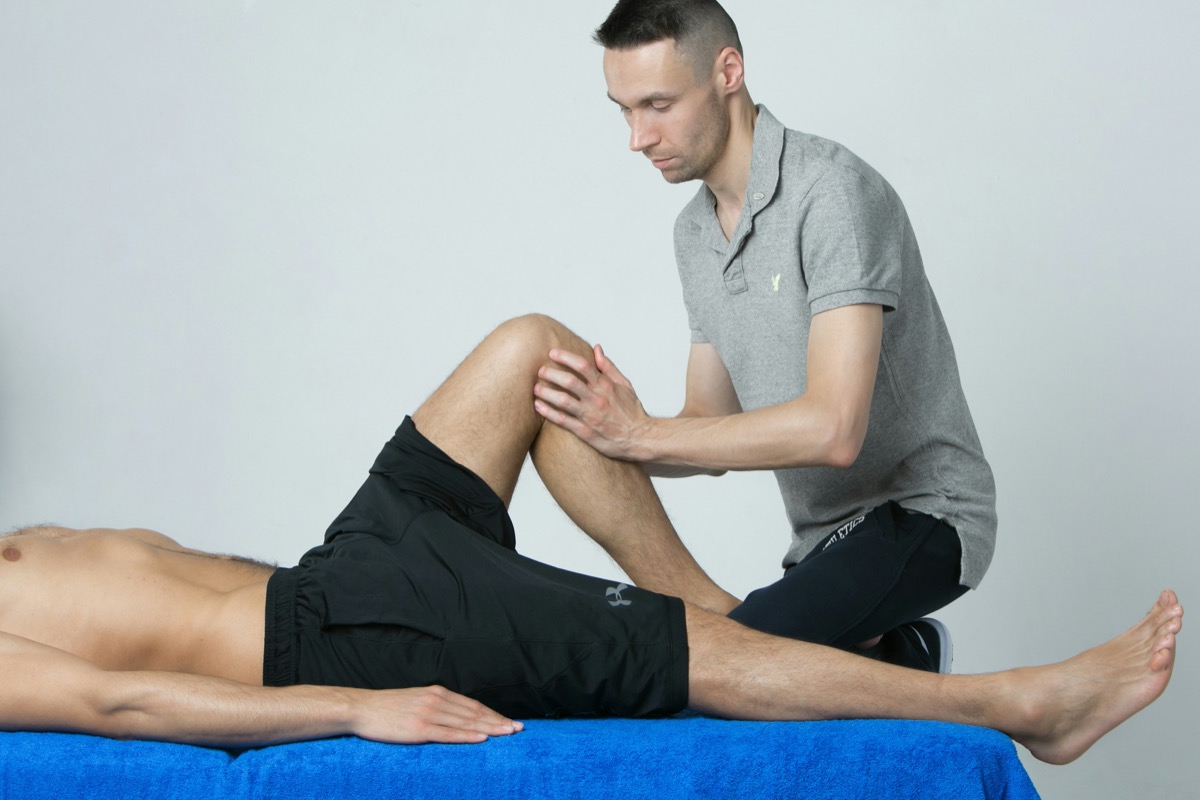
This is the assisted stretching half of the comparison.
There is no matching photograph of a personal-training session here, and that is deliberate: personal training is a separate profession that is practised many different ways, and one picture of it would be a claim ASA has no standing to make.
Answered first
The Five Questions People Actually Ask.
Each of these is expanded below. Each one is also complete on its own, because most of them are asked in isolation and answered somewhere a reader has no way to check.
Is assisted stretching personal training?
No. They are different services, although one professional may be trained to provide both. Assisted stretching centers on practitioner-guided positioning and controlled movement into stretches. Personal training generally centers on exercise instruction, programming and coaching.
Can personal trainers do assisted stretching?
Potentially, but there is no universal permission answer. It depends on the individual’s training, their professional scope, applicable requirements, their insurance and their facility’s policy. A personal-training credential does not by itself demonstrate assisted-stretching competency, and no certificate settles the permission question.
Do personal trainers need ASA certification to stretch clients?
ASA does not regulate the personal-training profession and does not claim that every trainer needs ASA certification. ASA certification is one structured pathway for developing and demonstrating assisted-stretching-specific competency — it is not a legal requirement and ASA does not present it as one.
Can a stretch practitioner also be a personal trainer?
Yes, if that person independently holds the appropriate personal-training credential and role. The ASA credential itself does not make somebody a personal trainer, and an ASA Certified Stretch Practitioner who is not separately qualified as a trainer is not one.
Which is better, assisted stretching or personal training?
Neither is universally better. They serve different purposes, and the useful question is which kind of service somebody is actually looking for rather than which of the two wins.
Every one of those is expanded below, along with the questions people ask when they are trying to work out whether a session they were offered is one service or the other. None of the answers on this page tells any individual what they are permitted to provide, and none of them claims a health outcome for either service.
The short version
The Difference in 30 Seconds.
One is a service built around practitioner-guided stretching. The other is a service built around exercise instruction and coaching. Both are professional services, and neither is a lesser version of the other.
The same four questions asked of both: what is the primary action, what is the professional doing, what is the client doing, and what is the skill set the service runs on.
Assisted stretching
Primary action
Practitioner-guided positioning and controlled movement into stretches.
Practitioner role
Supports and positions the client, manages range and leverage, and communicates continuously throughout.
Client activity
Provides feedback and participates through communication, positioning and ongoing consent.
Primary skill set
Support, positioning, leverage, movement control, range management and technique-specific communication.
Personal training
Primary action
Generally exercise instruction, programming and coaching.
Trainer role
May teach, demonstrate, monitor and progress exercise according to their professional role.
Client activity
Generally performs exercises and movements with instruction and coaching.
Primary skill set
Varies by trainer education, credential, setting and client goals.
One column above is more specific than the other, and that is deliberate rather than careless. ASA can describe assisted stretching precisely because ASA teaches it and holds its own practitioners to a defined standard. ASA does not define the personal-training profession, whose education, credentials, permitted activities and typical session content vary by trainer, by employer and by setting — so this page says “generally” and “varies” where that is the honest answer, and does not invent a universal description of somebody else’s work.
The assisted stretching side
What Happens During Assisted Stretching?
At a high level, and without the technique itself: an assisted-stretching session as ASA teaches it runs through a sequence a client can recognise from the outside. The specifics — which positions, which hand placements, which sequences — are taught in training rather than published, and reading a description of a session is not the same as being able to deliver one.
- Explain the session, and what the client should expect from it.
- Position the client for the stretch that follows.
- Support the limb or body region being worked, and stabilise what needs stabilising.
- Guide controlled movement into the stretch rather than pushing into it.
- Communicate throughout — before the movement, during it, and after it.
- Manage range and intensity against what the client reports.
- Adjust based on that feedback, including reducing range when asked.
- Return the client to neutral under control and under support.
- Continue through the appropriate sequence for that session.
Every item on that list is a practitioner responsibility rather than a client instruction. That is the structural fact this whole comparison turns on: in an assisted-stretching session the practitioner is physically involved in producing the movement, and the skills that make that safe and effective are the skills the service is built on.
The full explanation of the service — the components of a session, what it should feel like and what responsible practice depends on — is on what is assisted stretching.
The personal training side
What Happens During Personal Training?
Personal training is a broad professional service and it is delivered differently by different professionals. What follows is what personal training MAY include, stated at the level of generality ASA can support — not a definition of the profession, and not a claim about what any particular trainer does.
- Exercise instruction.
- Exercise demonstration.
- Fitness programming.
- Coaching.
- Movement practice.
- Strength and conditioning work.
- Progress monitoring.
- Education within the trainer’s professional scope.
The exact services a trainer provides differ by their education, their certification, their employer and the setting they work in. Two people who both describe themselves accurately as personal trainers may deliver quite different sessions, and both may be entirely within their professional role.
ASA does not set standards for personal training
ASA does not set standards for the personal-training profession. ASA does not accredit personal-training certifications, does not define what a personal-training session must contain, and does not decide what any individual trainer is qualified or permitted to do. Those questions belong to the trainer’s own credentialing body, their employer, their insurer and the requirements that apply where they work.
The distinction everybody reaches for first
Who Is Doing the Movement?
This is the first thing most people reach for, and it is the right instinct pointed at an incomplete answer. The general pattern is real and worth stating — and then it is worth saying immediately where it does not hold.
In assisted stretching
The practitioner typically plays an active, physical role: positioning the client, supporting the body region being worked, and moving or supporting the client through the stretch itself.
In personal training
The client typically performs the exercises or movements while receiving instruction and coaching from the trainer.
That pattern is a generalisation and it should not be read as an absolute. Some training sessions involve physical assistance, spotting or hands-on coaching where that is appropriate to the activity and within the trainer’s professional role — and a stretch practitioner’s client is not passive either: they communicate, position themselves, give feedback and participate throughout. Neither service is defined by one person being still.
The difference is not simply “who moves.”It is the structure and purpose of the service.
A trainer who spots a lift is not delivering assisted stretching, and a practitioner whose client is talking and adjusting throughout a stretch is still delivering it. What separates the two services is what the session is built around and what it is for — not a single moment of physical contact taken out of context.
A genuine structural difference
Hands-On Contact.
Assisted stretching is inherently hands-on under ASA’s model. Personal training may or may not involve hands-on contact, depending on the service, the trainer, the facility, professional expectations and the client’s consent.
This is one of the genuine structural differences between the two, and it is worth stating carefully in both directions. Assisted stretching as ASA teaches it cannot be delivered without physical contact: the positioning, the support and the controlled movement are the service. Personal training is not defined by the presence or the absence of touch.
Whether hands-on contact forms part of a personal-training session depends on:
- The service being provided.
- The individual trainer, their education and their professional judgment.
- The facility and its policies.
- Professional expectations that apply to that trainer’s role.
- The client’s consent.
Nothing here says that all personal trainers use touch, and nothing here says that they avoid it. Both would be claims about a profession ASA does not define, and both would be wrong about a large number of real professionals. What ASA can state is its own standard for its own service.
Professional touch has a purpose.And it is offered, explained and consented to — every time.
Under ASA’s model, contact is explained before it happens, is limited to what the technique requires, and continues only while the client agrees to it. Consent is not a form signed at the start of a session; it is a live agreement the client can change at any point during it.
Core competencies, not setup
Positioning and Support.
Positioning and support are not preliminaries to an assisted stretch. They are the technique. A practitioner who cannot establish a stable starting position, support the region being worked and control the movement out of it does not have the stretch either — which is why these are taught as core competencies rather than as setup.
- Supporting limbs and body regions through a movement.
- Stabilising the areas that need to be stable for the stretch to be what it is meant to be.
- Establishing a starting position the client can be moved from safely.
- Controlling the movement into and out of the position, rather than allowing it to happen.
- Using leverage rather than force to produce and manage range.
- Maintaining the practitioner’s own body mechanics throughout.
- Planning the return to neutral before the stretch begins, not after it.
Personal training also involves positioning, movement coaching and, in many settings, hands-on correction — this is not a claim that trainers do not think about how a body is arranged. The point is narrower and more specific: practitioner-supported stretching puts the professional physically inside the movement, holding part of the client’s weight and controlling part of the range, and that introduces physical responsibilities that have to be trained for directly rather than assumed from adjacent experience.
Both professions talk
Communication.
Both professions rely on communication, and both would be worse without it. What differs is what the communication is doing.
What an ASA practitioner is taught to say during a stretch, and to keep saying:
- “Tell me when you first feel the stretch.”
- “Where do you feel that?”
- “Is that an appropriate intensity?”
- “Would you like less range?”
- “I’m bringing you back to neutral.”
Those are not pleasantries and they are not bedside manner. In assisted stretching the client’s report is the only reliable information the practitioner has about what is happening inside a stretch, which means asking well and listening accurately is part of performing the technique rather than something layered on top of it.
Personal training communication may involve a different set of jobs, again depending on the trainer, the client and the setting:
- Exercise instructions.
- Coaching.
- Feedback.
- Pacing.
- Technique cues.
- Motivation.
Communication is part of the technique.
Neither list is a stereotype of the other profession. Plenty of trainers ask careful questions and listen closely; plenty of stretch practitioners coach and encourage. The two lists describe what the communication is primarily FOR in each service, which is a different claim from what any individual professional sounds like.
Two different professional activities
Range Management vs Exercise Progression.
Both involve deciding how much of something is appropriate. What is being decided, on what information, and over what timescale is not the same.
Range management
In assisted stretching, the practitioner manages a controlled stretch position and the range within it, using the client’s feedback as the primary input. The decision being made moment to moment is how much range is appropriate right now, for this client, in this position.
Exercise progression
In personal training, a trainer may progress exercise variables over time within their professional role and training. What those variables are, how they are progressed and on what basis is a matter for the trainer’s own education and credential.
This page describes neither in operational detail, and that is deliberate. It publishes no exercise programming, no prescription of any kind and nothing a reader could mistake for instruction — programming belongs to the trainer’s profession and stretch technique belongs in training rather than on a public page.
A technique question before a strength one
Leverage and Body Mechanics.
Assisted stretching is a physical job, and the way a practitioner produces range is a technique question before it is a strength question. Practitioners are taught to work from:
- Stance.
- Body position.
- Leverage.
- Support.
- Controlled body weight.
Rather than from arm strength. A practitioner relying on their arms is working harder, controlling less, and has less margin to stop cleanly if something changes — and a practitioner who cannot stop cleanly does not really have the entry either. Personal trainers also use professional body mechanics, in their own work and in what they teach; the specific application to supporting and moving another person through a stretch is what is trained differently.
Control before depth.
The ASA standard
Consent is ongoing, not a one-time form.
A signature at the front desk records that somebody agreed to attend. It does not record that they agree to what is happening right now, which is the only agreement that matters during a hands-on session. Under ASA’s model, consent is live for the whole session.
- The client may decline any part of the session.
- The client may ask for less range at any point.
- The client may ask to be repositioned.
- The client may ask to stop, for any reason or for none.
- The client may change their mind partway through something they had already agreed to.
- None of those requires an explanation, and a practitioner does not ask for one.
This is ASA’s standard, not a statement of anybody’s legal duty
That is ASA’s standard for ASA practitioners. This page does not state consent law and does not define what applies to any other profession — professional client interaction in either role should respect whatever consent requirements and facility policies apply to that professional, which is a matter for their own credential, employer and jurisdiction rather than for ASA.
Inside a session
What Happens if Something Feels Wrong?
Reduce range, reposition, return the client to neutral, or stop — when a client reports or shows any of the following. The response is the same whether or not anybody knows why it is happening, and working out why is not part of this role.
- Sharp pain.
- Shooting or electrical sensations.
- Numbness.
- Tingling.
- Pain in a joint.
- Dizziness or light-headedness.
- A feeling of instability or of not being supported.
- Unusual distress, or a change in how they are breathing or speaking.
- Anything that feels unsafe to the client.
- Anything that feels unsafe to the practitioner.
Stopping is a professional skill.
Stopping well is technique rather than caution. It means coming out of a position under control and under support rather than releasing it, saying what is happening while it happens, settling the client, and handling the moment without turning it into an event that frightens them.
This list is not a self-assessment tool
That list is a list of responses, not a list of conditions, and it is not a self-assessment tool. It does not say what any sensation means, a practitioner does not tell a client what it means, and nothing on this page decides how serious anything is. A client who wants to know what a sensation means should ask a qualified healthcare professional.
The ASA boundary
What an ASA Stretch Practitioner Does Not Do.
The ASA credential is a professional certification in a non-medical service. It does not itself authorize an ASA Certified Stretch Practitioner to do any of the following, and holding it is not a basis for any of them.
- Diagnosis of any kind.
- Medical treatment.
- Rehabilitation.
- Physical therapy, or anything represented as physical therapy.
- Medical claims about what the service does to a body.
- Operating beyond the legal or professional scope that applies to them.
- Providing services their insurance does not cover.
- Providing services outside their employer’s or facility’s policy.
That is a statement about the ASA credential rather than about any individual. Some ASA students already hold another licence or credential that carries its own scope, governed by its own body and its own rules — nothing on this page narrows it. What the ASA credential cannot do is widen it.
The full professional-boundaries guide — stretch practitioner scope of practice — covers what the role includes, what sits outside it, and what actually decides where the line falls.
The other boundary, and it is not ASA’s to draw
Personal Training Has Its Own Professional Boundaries.
Personal training has professional boundaries of its own, and this page does not define them. It cannot: there is no single universal description of what every personal trainer may do, and an organization that certifies a different service is not the authority on the answer.
A trainer’s permitted activities may depend on:
- The credential or credentials they hold.
- The jurisdiction they work in.
- The professional standards that apply to their role.
- Their insurance and what it covers.
- Their employer’s policy.
- Their facility’s policy.
- The exact service being provided, and how it is described to the client.
ASA does not decide the professional scope of any trainer
ASA does not decide the professional scope of any trainer. A trainer with a question about what they may offer should be asking their own certifying body, their employer, their insurer and, where the answer is genuinely unclear, somebody qualified to advise them on it — not a certification provider for a different service, and not a web page.
The question this page gets asked most
Can Personal Trainers Stretch Clients?
There is no single universal permission answer, and anybody who gives one has not looked at the specific situation. A trainer may have education or professional authority that includes some stretching-related activities. Whether that extends to providing a distinct assisted-stretching service depends on the trainer’s own circumstances.
The question is asked as though it had one answer, and it does not — partly because “stretching a client” covers everything from a cue at the end of a session to a booked, paid hands-on service, and partly because what any individual may provide is decided by things that vary from person to person. Those things are:
- Their education.
- Their demonstrated competency, which is not the same thing as their education.
- Their certification or certifications.
- The jurisdiction they work in.
- Their insurer.
- Their employer.
- Their facility.
- The exact service being provided and how it is described.
A personal-training credentialand assisted-stretching competency are not the same thing.
Nothing above says that trainers may not provide assisted stretching, and nothing above says that they may. Both would be legal determinations made for somebody this page knows nothing about. What is true is that the question has a real answer for each individual trainer, that the answer is found in the list above rather than in any course, and that a certificate — ASA’s included — does not settle it.
The full answer for that audience — assisted stretching for personal trainers — covers what transfers from a training background, what is genuinely new, and what actually decides whether an individual may offer the service.
The answer ASA had something to gain by giving differently
Does a Personal Trainer Need ASA Certification?
No. ASA does not regulate personal training and does not claim that every personal trainer must hold ASA certification. ASA certification is not a legal requirement for anybody, and this page will not tell a trainer they need it.
What ASA certification actually is, stated without the inflation: it is one structured pathway for developing and demonstrating assisted-stretching-specific competency. It combines:
- Education.
- Knowledge assessment.
- Hands-on training.
- Demonstrated practical competency.
- Professional boundaries.
Before it awards the ASA Certified Stretch Practitioner credential.
Why that answer is on ASA’s own page
That is a description of a pathway rather than an argument that a trainer must take it. A trainer deciding whether to pursue assisted-stretching education is weighing an option, not meeting an obligation, and a certifying body that blurred those two would be worth trusting less on everything else it says.
Stated plainly
Does ASA Certification Expand a Trainer’s Scope?
Not automatically. ASA certification documents that somebody has met ASA’s education and competency requirements. It is not a permission slip, and it does not change what anybody is legally or professionally allowed to do.
- It does not override applicable law.
- It does not override another certification’s rules.
- It does not override insurance conditions or coverage.
- It does not override employer policy.
- It does not override facility policy.
Certification does not determine legal scope of practice
Certification does not determine a practitioner’s legal scope of practice. Laws, professional licensing requirements, title restrictions, insurance conditions and facility policies vary by state, by country and by employer, and they apply to a certified practitioner exactly as they applied before. Anyone entering this field is responsible for confirming what they are permitted to do where they intend to work, and for consulting the appropriate licensing authority or their own professional adviser where that is unclear.
Certification documents competency.It does not determine legal scope of practice.
This is the single most misread thing about certification in any field, and it is misread in the same direction every time: somebody completes a program and reasonably assumes the certificate answers the permission question. It does not, it never has, and ASA’s does not either. What a credential can honestly say is that its holder learned something and demonstrated it — which is worth having, and is a different claim.
The guide that settles this properly — stretch practitioner scope of practice — covers what the role includes, what sits outside it, and who to ask when it is unclear.
One professional, two roles
Can Someone Be Both?
Yes. A professional may independently hold a personal-training credential and the ASA Certified Stretch Practitioner credential, and many people who train with ASA already work as personal trainers.
What matters is that the two remain two. Each credential documents its own education and its own competency, each carries its own professional expectations, and neither is evidence for the other.
- The person should understand which role they are operating in at any given time.
- The client should be able to tell which service they are receiving and what it includes.
- One credential does not replace, subsume or upgrade the other.
- A personal-training credential does not demonstrate assisted-stretching competency.
- An ASA credential does not make somebody a personal trainer.
- Each credential’s own rules, insurance and employer requirements continue to apply to it.
Two skill sets can exist in one professionalwithout becoming one credential.
None of that is bureaucratic tidiness. A client who books an hour with a dual-qualified professional is entitled to know which of the two services they are buying, and a professional who is clear about which role they are in is better placed to stay inside it.
The full comparison
Assisted Stretching vs Personal Training, Side by Side.
Ten characteristics, described rather than scored. Nothing in this table marks either column correct, and nothing in it is a claim about how well either service works.
Table: Assisted stretching compared with personal training across ten characteristics. The table describes each and does not rank them.
| Characteristic | Assisted stretching | Personal training |
| --- | --- | --- |
| Primary service | Practitioner-guided stretching. | Exercise instruction, programming and coaching. | | Movement | The practitioner actively supports and guides the stretch movement. | The client generally performs the exercise under instruction. | | Hands-on contact | Core to the ASA model — the service cannot be delivered without it. | Varies by service, trainer, facility and consent. | | Positioning and support | A core technique skill, taught and assessed as one. | Varies by activity and by what the trainer is coaching. | | Range management | A core part of the stretch technique itself. | May address movement and range within a training context, but is not the defining feature of the service. | | Leverage | A technique-specific practitioner skill, trained directly. | Not a defining characteristic of the personal-training service. | | Client feedback | Important. It is the primary input the practitioner has about what is happening inside a stretch. | Important. Used differently, according to the service being delivered. | | Consent | Ongoing consent is explicit in the ASA model, and continues through the session. | Governed by the professional and facility context that applies to that trainer. ASA does not state it. | | Diagnosis | No. The ASA credential does not authorize diagnosis of any kind. | A personal-training credential is not a claim to medical diagnostic authority, and this page makes no statement about any individual’s. | | Healthcare licensure | No. ASA certification is a professional certification, not healthcare licensure. | A personal-training credential is not equivalent to physical therapy or to any medical licensure. ASA does not characterise the profession beyond that. |
Nothing in that table scores either service, and the word “varies” in the personal-training column is not a weaker answer than “core” in the other one. It means that the characteristic is not a defining feature of that service — which is a fact about the service rather than a judgement about it, and is exactly what a reader trying to tell the two apart needs to know.
The reasonable objection
Is Assisted Stretching Just “Personal Training With Stretching”?
No. A distinct assisted-stretching service involves its own competencies, and they are trained and assessed as their own thing rather than picked up alongside something else.
- Practitioner positioning.
- Client support.
- Leverage.
- Movement control.
- Technique-specific communication.
- Range management.
- Demonstrated practical competency in all of the above.
Adding a stretch to a workoutis not the same thing as building an assisted-stretching practice.
That is a statement about what a service consists of, and it is not a criticism of trainers who stretch their clients. A trainer using stretching appropriately within their own service and within their own professional role is doing legitimate work, and this page does not suggest otherwise. The distinction is between a technique used inside one service and a service built around that technique — which is a difference of structure, not of quality.
Where people actually meet the question
What About Warm-Ups and Cool-Downs?
Personal trainers may use stretching and mobility activities within a training session, according to their education and their professional scope. That does not make every warm-up or cool-down an assisted-stretching session.
This is the same distinction as the section above, met in the place people actually meet it. Stretching turning up at the start or the end of a workout is ordinary and unremarkable. What it is not is a second service being delivered inside the first one.
Stretching as part of another service
A component of a session whose purpose is something else. It is bounded by the service around it, described as part of that service, and priced and delivered as part of it.
Assisted stretching as the service itself
The session IS the practitioner-guided stretching: it is what the client booked, what the practitioner prepared for, and what the whole appointment is built around.
A technique can appear inside another service without becoming the entire service.
A broad word, carefully
What About Mobility Training?
“Mobility training” is a broad term rather than a defined service, and different professionals use it to mean different things.
Depending on who is using it, “mobility training” can cover:
- Self-directed movement.
- Exercise.
- Range-of-motion practice.
- Coaching.
Assisted stretching is narrower than that. It refers to practitioner-guided stretching with hands-on positioning and support — one specific way of working, delivered by one person to another, rather than a category of goals.
ASA does not own the word “mobility”
ASA does not own the word “mobility”, does not define what mobility training is for anybody else, and does not claim that mobility work is or is not within any particular professional’s role. Somebody who uses the phrase to describe their own service is not making a claim ASA has any standing to correct.
The question underneath the question
Which One Is “Better”?
Neither is universally better. They are different services with different purposes, and the question that can actually be answered is which kind of service somebody is looking for.
If someone wants
Structured exercise instruction and programming
Personal training may better match that service description. What an individual trainer provides depends on their education, credential and setting.
If someone wants
Practitioner-guided stretching
Assisted stretching may better match that service description — a session built around positioning, support, controlled movement and range management.
If someone wants
Diagnosis, medical treatment or rehabilitation
Neither of these two is the right category. An appropriately licensed healthcare professional may be the better starting point.
Those are matches between a description of a service and a description of what somebody is looking for, which is the only matching an organization with no knowledge of the reader can honestly do. This page compares no health outcomes, claims none for either service, and does not tell anybody which one will work better for them — including on flexibility, mobility or pain, where the honest comparison is of what each service consists of rather than of results neither ASA nor anybody else can promise a stranger.
If the real question is whether what somebody needs is healthcare rather than either of these: assisted stretching vs physical therapy.
Arrangements people actually use
Can Personal Training and Assisted Stretching Be Combined?
Potentially, depending on the practitioner’s qualifications, their professional scope, their insurance and the rules of the facility they work in. This page does not say that they should be combined, and does not say that they should not be.
One arrangement
Separate appointments
The two services are booked, described and delivered as separate sessions, whether or not the same professional provides both.
One arrangement
Separate services, one professional
A dual-qualified professional offers both, described separately, with the client able to tell which one they are booking.
One arrangement
Separate professionals, one facility
A facility offers both, delivered by different people, each working within their own role and competency.
This page prescribes no sequence, no session structure and no combination of the two. It publishes no programming, and what any individual may offer is decided by the same list that decides every other permission question here — their qualifications, their scope, their insurer and their facility.
An accuracy question, not a pricing one
Should They Be Sold as One Service?
There is no universal answer to that, and it is a business decision rather than a question ASA settles. What ASA can say is that the client should be able to tell what they are buying.
A service description is a promise about what will happen in the room. Where a facility or a practitioner offers both, the things worth being clear about are:
- What the client is actually buying.
- Who is providing it.
- What credential and what professional role apply to that person for that service.
- What the session includes, and what it does not.
- How the service is documented and priced internally.
A service should be named for what it actually delivers.
This page gives no pricing, packaging or revenue advice, and makes no claim about what either arrangement does for a business. The point is narrower: a client who booked one thing and received another has been misdescribed to, whichever way round it happened.
For the person booking
What to Expect From Assisted Stretching.
A consumer booking an assisted-stretching session with an ASA-certified practitioner should expect all of the following, and is entitled to say so if any of it is missing.
- An explanation of what the session will involve, before it starts.
- Deliberate positioning rather than improvisation.
- Physical support through the movement.
- Communication throughout.
- Consent that is asked for and honoured as the session goes on.
- Controlled movement into and out of every position.
- Adjustment based on what they say.
- The ability to ask for less range at any point.
- The ability to stop at any point, without explaining why.
- Clear professional boundaries, including about what the practitioner does not do.
None of that is a health outcome and none of it is a promise about how anybody will feel afterwards. It is a description of professional conduct during a session, which is the thing a client can reasonably expect and can reasonably check.
What the person delivering it actually does, session by session: what does a stretch practitioner do.
For the person booking
What to Expect From Personal Training.
This one has to be broader, because personal training is delivered differently by different professionals and ASA does not define the profession. A session may involve:
- An explanation of the service and the plan.
- Exercise instruction.
- Coaching.
- Feedback.
- Exercise-related progression over time.
- Professional interaction throughout.
ASA does not define personal-training standards
The exact service varies, and ASA does not define personal-training standards. A client with questions about what a particular trainer provides should ask that trainer, and the checklist below is written to make that conversation easier rather than to grade the answer.
Before you book
Questions to Ask Before Booking Assisted Stretching.
Ten questions worth asking any provider, ASA-certified or not. A professional who has thought about this work will have an answer to every one of them, and the answers are more informative than any certificate on a wall.
- What training does the practitioner have in assisted stretching specifically?
- What credential do they hold, and who issued it?
- What will actually happen during the session?
- Is this specifically an assisted-stretching service, or stretching inside another service?
- How is consent handled, and when am I asked?
- Can I ask for less intensity or less range partway through?
- Can I stop at any time?
- What happens if something feels wrong during a stretch?
- Is this service covered by the provider’s professional role and insurance?
- What facility policies apply to it?
Nothing in that list says that an ASA credential is required in order to provide assisted stretching, because it is not and ASA does not claim otherwise. The list is written to help somebody tell whether a provider has thought seriously about the work — which is a question worth asking ASA-certified practitioners exactly as readily as anybody else.
Before you hire
Questions to Ask Before Hiring a Personal Trainer.
The equivalent list for the other service, kept general on purpose. ASA is not the right author for a detailed guide to choosing a personal trainer, so these are the questions any client can usefully ask rather than an evaluation framework.
- What credential and education do you hold?
- What services do you provide?
- What does a typical training session involve?
- What is included in your programming and coaching?
- What facility policies apply?
- What are your pricing and cancellation policies?
- If hands-on stretching is offered, what training supports that specific service?
ASA ranks no certification and recommends no credentialing body
That list ranks no certification and recommends no credentialing body. ASA does not accredit personal-training certifications, has no standing to grade them, and would be doing something dishonest if it published a league table of somebody else’s profession while selling a credential of its own.
For the other reader
Personal Trainers Learning Assisted Stretching.
Some personal trainers choose to study assisted stretching as an additional professional skill. That is a legitimate reason to be reading this page, and it is worth saying plainly what the interest usually is — and what it is not.
- Adding a distinct hands-on skill to work they already do.
- Expanding professional versatility.
- Learning practitioner positioning as a technique in its own right.
- Learning to work from leverage and support rather than from strength.
- Developing stretching-specific communication.
- Understanding the professional boundaries that apply to a hands-on service.
- Demonstrating practical competency rather than assuming it transfers.
ASA guarantees no revenue, clients, utilization or income
Assisted stretching may be offered as an additional professional service where that is appropriate for the individual, but ASA does not guarantee revenue, clients, utilization or income, and publishes no earnings figures. Anyone who tells a trainer that a second certificate will produce a particular financial result is telling them something they cannot know.
And it does not expand anybody’s scope. A trainer who completes ASA certification has documented assisted-stretching education and competency; what they may then offer is decided by the same list that decided it beforehand — their requirements, their insurance, their employer and their facility.
The guide written for that reader — assisted stretching for personal trainers — covers what transfers from a training background, what is genuinely new, and what actually decides whether an individual may offer the service. The path from interest to credential, step by step, is on how to become a stretch practitioner.
Briefly
How ASA Certification Works.
Briefly, because this page is a comparison rather than a prospectus. The current ASA pathway runs in this order, and the credential is last rather than first:
- Fast Track preparation: six short online modules.
- Knowledge assessment, online, before class.
- The One-Day ASA Hands-On Certification Training.
- Demonstrated practical competency.
- The ASA Safety Commitment.
- The ASA Certified Stretch Practitioner credential.
Competency before credential.
None of that is a healthcare qualification, none of it is a personal-training qualification, and completing it does not change what anybody is legally permitted to provide. It documents assisted-stretching education and demonstrated competency, which is what a certification can honestly document.
How certification works in full, and what a serious program contains: assisted stretching certification.
The distinction the credential turns on
Training vs Competency.
Watching and reading build knowledge, and knowledge is not optional — ASA’s own pathway front-loads it before the hands-on day. What education cannot do on its own is demonstrate that somebody can do the thing with another person’s body in front of them.
What hands-on competency actually consists of:
- Positioning.
- Support.
- Leverage.
- Movement control.
- Communication under real conditions.
- Range adjustment in response to what a client reports.
- A safe, controlled return to neutral.
Knowledge can prepare the practitioner.Practical competency must be demonstrated under ASA’s certification model.
That is a statement about what hands-on competency requires rather than a criticism of online education. Study is where the understanding comes from; the demonstration is what turns it into a credential. A program that skips either half is selling something less than it says it is.
For the people deciding on behalf of an organization
For Gyms and Fitness Facilities.
If trainers will also provide assisted stretching, the facility should be able to tell the two roles apart — on paper, in its scheduling, and in what it tells members.
This is an operating question rather than a marketing one. Where the same employee may work in a personal trainer role and in a stretch practitioner role, the organization still has to define both, and the things worth defining are:
- Training, for each role separately.
- Demonstrated competency, for each role separately.
- Credentials, and what each one does and does not cover.
- Insurance, and what it covers for each service.
- Scope, and who decides it.
- Service description — what a member is booking.
- Consent, and how it is handled for a hands-on service.
- Operating standards that apply to each service.
One employee can hold two roles.The organization should still define both.
This page makes no claim about what adding a service does for a facility — not revenue, not utilization, not retention and not member demand. It describes an operating question, and the guide for facilities covers the rest of it properly.
The full answer for facilities — assisted stretching for gyms — covers practitioner education and verified hands-on competency, what scope, consent and insurance decide, the operating models facilities choose between, and what changes across multiple locations.
More than two, often
What if a Practitioner Holds Multiple Credentials?
Plenty of people hold more than two. Somebody working in this field may separately hold:
- A personal-training credential.
- ASA certification.
- A massage licence.
- A healthcare licence.
- A coaching credential.
- Other credentials entirely.
ASA neither expands nor reduces a separate professional credential
Each professional role should be understood separately, because each one carries its own education, its own scope, its own governing body and its own insurance. ASA certification neither expands nor reduces any separate professional credential — it sits alongside them, documenting one thing, and the other credentials continue to mean exactly what they meant before.
The category neither of these two is
When Healthcare May Be the Appropriate Category.
Neither of the two services on this page is healthcare. If somebody is seeking any of the following, an appropriately licensed healthcare professional may be the more appropriate starting point:
- Medical diagnosis.
- Evaluation of an injury.
- Treatment.
- Rehabilitation.
- Medical clearance.
That is a statement about categories of service rather than advice about anybody’s situation. This page does not decide whether any individual needs healthcare, does not sort anybody by urgency, and does not tell anybody what is happening in their body. It states which questions belong to a profession neither of these two is.
The comparison that treats this properly — assisted stretching vs physical therapy — covers why the ASA credential does not authorize diagnosis, medical treatment or rehabilitation, and how to tell which kind of service you are looking for.
Questions
Assisted Stretching and Personal Training: FAQ.
Is assisted stretching the same as personal training?
No. Assisted stretching and personal training are different professional services, although one professional may be trained to provide both. Assisted stretching centers on practitioner-guided positioning and controlled movement into stretches. Personal training generally centers on exercise instruction, programming and coaching within the trainer’s professional scope.
What is the difference between assisted stretching and personal training?
Assisted stretching centers on practitioner-guided positioning, physical support, controlled movement into stretches, communication and range management. Personal training generally centers on exercise instruction, fitness programming, coaching and helping clients perform exercise within the trainer’s professional scope. A person may hold both roles, but competency in one does not automatically demonstrate competency in the other.
What does a stretch practitioner do?
A stretch practitioner explains the session, positions and supports the client, guides controlled movement into stretches, communicates throughout, manages range and intensity against what the client reports, adjusts on that feedback, and returns the client to neutral under control. The Assisted Stretching Association publishes a full guide to the role, and the service is non-medical.
What does a personal trainer do?
Personal training may involve exercise instruction, exercise demonstration, fitness programming, coaching, movement practice, strength and conditioning work, progress monitoring and education within the trainer’s professional scope. The exact services differ by the trainer’s education, certification, employer and setting. ASA does not define, regulate or set standards for the personal-training profession.
Can personal trainers do assisted stretching?
Potentially, but there is no universal permission answer. Whether an individual trainer may provide a distinct assisted-stretching service depends on their education, their demonstrated competency, their certification, applicable requirements where they work, their insurance, their employer, their facility and the exact service being provided. No certificate settles that question, including an ASA one.
Can personal trainers stretch clients?
There is no single universal answer, partly because “stretching a client” covers everything from a cue at the end of a session to a booked, paid hands-on service. A trainer may have education or professional authority that includes some stretching-related activities. Whether that extends to a distinct assisted-stretching service depends on their own circumstances, and ASA does not decide it for anyone.
Do personal trainers need ASA certification?
No. ASA does not regulate the personal-training profession and does not claim that every personal trainer must hold ASA certification. ASA certification is not a legal requirement for anybody. It is one structured pathway for developing and demonstrating assisted-stretching-specific competency, which is a different claim.
Does ASA require someone to be a personal trainer first?
No. A personal-training credential is not a prerequisite for ASA certification. People come to assisted stretching from personal training, from massage, from other hands-on work and from outside the industry entirely, and ASA’s pathway does not assume any particular background.
Does ASA certification make someone a personal trainer?
No. The ASA Certified Stretch Practitioner credential documents assisted-stretching education and demonstrated competency. It is not a personal-training qualification, it does not confer a personal-training role, and somebody who is not separately qualified as a personal trainer is not one.
Does a personal-training certification make someone a stretch practitioner?
No. A personal-training credential documents personal-training education. It does not by itself demonstrate assisted-stretching competency, which involves practitioner positioning, client support, leverage, movement control, range management and technique-specific communication. A personal-training credential and assisted-stretching competency are not the same thing.
Can someone be both a personal trainer and a stretch practitioner?
Yes, where that person independently holds the appropriate credential and role for each. Many people who train with ASA already work as personal trainers. The two credentials remain separate: each documents its own education and competency, each carries its own professional expectations, and neither is evidence for the other.
Is assisted stretching just personal training with stretching?
No. A distinct assisted-stretching service involves its own practitioner positioning, client support, leverage, movement control, communication, range management and demonstrated competency. Adding a stretch to a workout is not the same thing as building an assisted-stretching practice. That is a statement about what a service consists of rather than a criticism of trainers who stretch their clients.
Is stretching during a workout the same as assisted stretching?
Not necessarily. Personal trainers may use stretching and mobility activities within a training session according to their education and scope, and that does not make every warm-up or cool-down an assisted-stretching session. A technique can appear inside another service without becoming the entire service.
Is mobility training the same as assisted stretching?
“Mobility training” is a broad term rather than a defined service, and different professionals use it to mean self-directed movement, exercise, range-of-motion practice or coaching. Assisted stretching is narrower: practitioner-guided stretching with hands-on positioning and support. ASA does not own the term “mobility” and does not define mobility training for anybody else.
Is assisted stretching hands-on?
Yes. Assisted stretching is inherently hands-on under ASA’s model — the positioning, the support and the controlled movement are the service. Under that model contact is explained before it happens, limited to what the technique requires, and continues only while the client agrees to it.
Is personal training hands-on?
It may or may not be. Whether hands-on contact is part of a personal-training session depends on the service, the individual trainer, the facility, the professional expectations that apply to them and the client’s consent. ASA does not define the personal-training profession and does not claim that trainers either use or avoid touch.
Who moves the client during assisted stretching?
The practitioner typically plays an active, physical role: positioning the client, supporting the body region being worked, and moving or supporting the client through the stretch. The client is not passive, though — they communicate, position themselves, give feedback and participate throughout.
Who performs the movement during personal training?
The client generally performs the exercises or movements while receiving instruction and coaching. That is a general pattern rather than an absolute: some training sessions involve physical assistance, spotting or hands-on coaching where that is appropriate and within the trainer’s professional role.
Does assisted stretching involve exercise?
Assisted stretching is not built around exercise instruction or programming. The session is built around practitioner-guided positioning, support, controlled movement into stretches, communication and range management. Exercise instruction and fitness programming belong to the personal-training service rather than to this one.
Does personal training involve stretching?
It may. Personal trainers may use stretching and mobility activities within a training session according to their education and professional scope. That is stretching used inside another service, which is not the same as a distinct assisted-stretching service being provided.
Can assisted stretching be part of a personal-training business?
Potentially, depending on the individual’s qualifications, professional scope, insurance and facility rules. ASA does not decide that for anybody and does not say it should or should not be done. What matters is that the service is accurately described, so that a client can tell what they are buying and who is providing it.
Can a trainer sell assisted stretching as a separate service?
That depends on the same factors as every other permission question: qualifications, demonstrated competency, applicable requirements, insurance, employer policy and facility policy. ASA neither authorises nor prohibits it. Where it is offered, a service should be named for what it actually delivers.
Can personal training and assisted stretching be combined?
Potentially, depending on the practitioner’s qualifications, professional scope, insurance and facility rules. Common arrangements include separate appointments, separate services offered by one dual-qualified professional, and separate professionals working in one facility. ASA does not prescribe a sequence, does not say the two must be combined, and publishes no programming.
Which is better, assisted stretching or personal training?
Neither is universally better. They are different services with different purposes. Someone who wants structured exercise instruction and programming is describing personal training; someone who wants practitioner-guided stretching is describing assisted stretching. The useful question is which kind of service somebody is looking for rather than which of the two wins.
Which is better for flexibility?
ASA does not compare health or fitness outcomes between the two services and claims none for assisted stretching. What can be compared is what each service consists of: assisted stretching is built around practitioner-guided positioning and controlled movement into stretches, while personal training generally centers on exercise instruction and programming. No result is promised by either description.
Which is better for mobility?
The same answer. ASA compares the structure of the two services rather than their results, and does not claim that either one produces a particular mobility outcome. “Mobility training” is also a broad term that different professionals use differently, and ASA does not define it for anybody else.
Which is better for pain?
Neither of these two services is the right category for that question, and ASA does not present assisted stretching as a treatment for pain. Anybody seeking evaluation, diagnosis, treatment or rehabilitation should speak to an appropriately licensed healthcare professional. This page does not decide how serious anything is and gives no health advice.
Can a stretch practitioner diagnose injuries?
Not under the ASA credential. An ASA Certified Stretch Practitioner does not diagnose injuries, does not diagnose medical conditions, and does not determine the medical cause of what a client feels. Anyone who wants an injury evaluated is asking a question that belongs to a licensed healthcare professional.
Can a personal trainer diagnose injuries?
A personal-training credential is not a claim to medical diagnostic authority, and ASA makes no statement about what any individual trainer’s separate qualifications may include. Anybody seeking an injury evaluated should speak to an appropriately licensed healthcare professional.
Is assisted stretching physical therapy?
No. Assisted stretching as ASA teaches it is a non-medical service, and ASA certification does not create healthcare licensure of any kind. Physical therapy is a licensed healthcare profession, and ASA does not define, regulate or set standards for it. ASA publishes a separate guide comparing the two.
Is personal training physical therapy?
A personal-training credential is not equivalent to physical therapy or to any healthcare licensure. Beyond that, ASA does not characterise the personal-training profession: what any individual is qualified and permitted to do is a matter for their own credential, their jurisdiction and their employer.
Is ASA certification healthcare licensure?
No. The ASA Certified Stretch Practitioner credential is a professional certification in a non-medical service. It is not a healthcare licence, it is not issued by a licensing authority, and it does not make anybody a healthcare provider.
Does ASA certification determine legal scope of practice?
Certification does not determine a practitioner’s legal scope of practice. Laws, professional licensing requirements, title restrictions, insurance conditions and facility policies vary by state, by country and by employer, and they apply to a certified practitioner exactly as they applied before. Anyone entering this field is responsible for confirming what they are permitted to do where they intend to work, and for consulting the appropriate licensing authority or their own professional adviser where that is unclear.
Does ASA certification expand a trainer’s scope?
Not automatically. ASA certification documents that somebody has met ASA’s education and competency requirements. It does not override applicable law, another certification’s rules, insurance conditions, employer policy or facility policy. Certification documents competency; it does not determine legal scope of practice.
Does liability insurance matter?
Yes. Insurance is one of the things that decides what a professional may actually offer, and a service that is not covered is a real problem regardless of what training the provider has completed. Anybody adding a hands-on service should confirm with their own insurer what is and is not covered. ASA does not provide, arrange or advise on insurance.
Does gym policy matter?
Yes. Employer and facility policy can restrict what a professional may provide on those premises, independently of what their credential says. Somebody working inside a facility should confirm what that facility permits before offering a service there, and ASA does not override anybody’s workplace rules.
What training does ASA provide?
ASA’s current pathway runs Fast Track preparation (six short online modules), an online knowledge assessment, the One-Day ASA Hands-On Certification Training, demonstrated practical competency and the ASA Safety Commitment, before the credential is awarded. It is assisted-stretching education, not healthcare education and not personal-training education.
Is ASA certification online?
Only partly, and deliberately so. The academic portion is delivered online, and the certification also requires in-person hands-on training and a practical competency demonstration. A hands-on service cannot be certified by study alone.
Does ASA require hands-on training?
Yes. The One-Day ASA Hands-On Certification Training is part of the pathway, and it is not optional. Positioning, support, leverage, movement control and a safe return to neutral are physical skills, and they are learned and assessed with another person present.
Does ASA assess practical competency?
Yes. Demonstrated practical competency is a requirement of the credential rather than an optional extra. Knowledge can prepare a practitioner; practical competency must be demonstrated under ASA’s certification model before the credential is awarded.
What credential does ASA award?
The ASA Certified Stretch Practitioner.
Can trainers make more money by adding assisted stretching?
Assisted stretching may be offered as an additional professional service where that is appropriate for the individual, but ASA does not guarantee revenue, clients, utilization or income, and publishes no earnings figures. Anybody who tells a trainer that a second certificate will produce a particular financial result is telling them something they cannot know.
Does ASA guarantee clients or income?
No. ASA guarantees no clients, no employment, no revenue, no utilization and no income, and publishes no earnings figures anywhere. Certification documents education and demonstrated competency, which is what a credential can honestly document.
How can a personal trainer learn assisted stretching?
Through assisted-stretching-specific education followed by hands-on training and a demonstration of practical competency. ASA’s pathway is one route to that, and it is not the only one — what matters is that the education is specific to the service rather than assumed to transfer from adjacent work, and that competency is demonstrated rather than inferred.
Where can personal trainers learn more?
ASA publishes a guide written specifically for that reader — assisted stretching for personal trainers — covering what transfers from a training background, what is genuinely new, and what actually decides whether an individual may offer the service. It grants no permission and promises no income.
Where can gym operators learn more?
ASA publishes a guide for facilities — assisted stretching for gyms — covering practitioner education and verified hands-on competency, why the service is not personal training, what scope, consent and insurance decide, and what changes across multiple locations. It promises no revenue, utilization or member demand.
Where can I learn what a stretch practitioner actually does?
ASA publishes a full guide to the role — what does a stretch practitioner do — covering the responsibilities, the skills, the session flow, the professional boundaries and the work environments. ASA guarantees no employment, clients or income, and publishes no earnings figures.
Where this goes next
Two Professional Skill Sets. Two Different Services.
Personal training and assisted stretching can exist alongside each other, and frequently do — in the same facility, on the same schedule, and sometimes in the same professional. Each one still requires its own understanding, its own professional boundaries and its own demonstrated competency, and neither is evidence for the other.
- Two professional skill sets.
- Two different services.
- Two separate competencies.
- One professional can hold both.
Assisted Stretching for Personal Trainers · What Does a Stretch Practitioner Do?
Interested in the credential itself? Explore ASA certification.
More ASA guides: what assisted stretching is, how certification works, what it costs.