
The professional role
What Is a Stretch Practitioner?
A stretch practitioner is a professional who provides practitioner-guided assisted stretching using positioning, physical support, controlled movement, communication and range management. Under the ASA model, a Stretch Practitioner works within a non-medical professional role and does not use the ASA credential to diagnose injuries, provide medical treatment or prescribe rehabilitation.
ASA awards the credential ASA Certified Stretch Practitioner to individuals who complete its required education, assessment, hands-on training and practical competency requirements.
Certification documents education and competency. It does not determine legal scope of practice.
This guide is written for two readers. One is deciding what kind of professional they are booking, and wants to know who is going to be moving them. The other is considering the work themselves, and wants to know what the title means before they decide whether to earn it.
It covers what the role is, what service a practitioner provides, why ASA uses the word “practitioner” rather than “therapist”, how the role differs from personal training, massage therapy, physical therapy, chiropractic care and yoga instruction, what a practitioner does not do, where practitioners work, who enters the field, and what the ASA credential does and does not mean.
What Does a Stretch Practitioner Do? · How to Become a Stretch Practitioner
This guide is educational. It describes a professional role as ASA defines and teaches it. It is not medical advice, it is not legal advice, it does not determine what any individual is permitted to do, and it does not state the law of any state, country or profession. Anybody deciding what they may offer, or where, should confirm it with the appropriate authority for the place they intend to work.
- A non-medical professional role
- Hands-on, one-to-one
- Credential: ASA Certified Stretch Practitioner
- Certification is not licensure
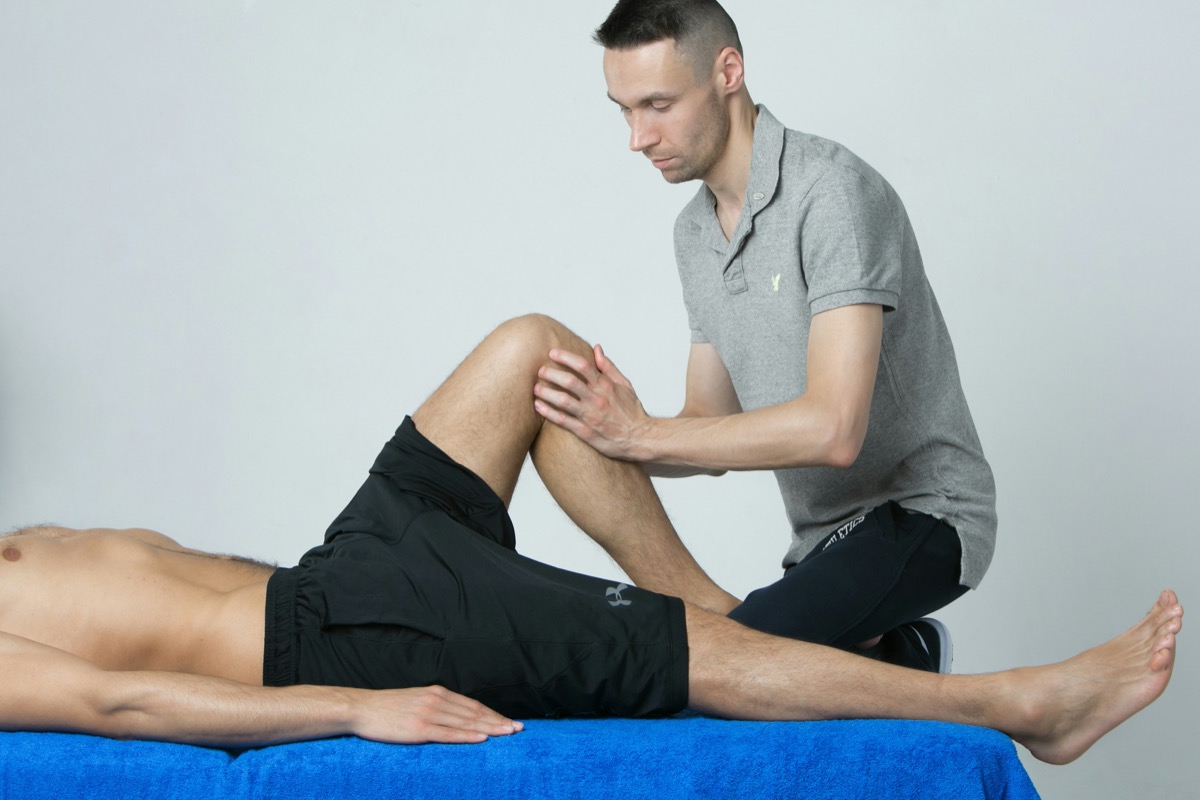
This is the role, in one frame.
The practitioner positions and supports; the client stays relaxed and keeps control of what happens next. Everything else on this page is a consequence of those two facts.
The definition
A Stretch Practitioner, in One Sentence.
A stretch practitioner is a professional trained to guide and support clients through assisted-stretching techniques while managing positioning, movement, range, communication, consent and professional boundaries.
Under ASA’s model, this is a non-medical professional role. It is a hands-on service delivered one to one, and the practitioner’s job is to guide the stretch rather than to assess, diagnose or treat the person receiving it. That distinction is not a technicality — it is what the whole role is built around, and it is why the professional half of the training matters as much as the physical half.
The practitioner guides the stretch.The client retains control of consent.
What that definition is not
- It is not a healthcare role, and the ASA credential does not make it one.
- It is not a description of what any individual is legally permitted to offer.
- It is not a claim that the title means the same thing everywhere in the marketplace.
The service
What Service Does a Stretch Practitioner Provide?
A stretch practitioner provides assisted stretching: a practitioner-guided service in which the client is positioned and physically supported while the practitioner moves them through controlled stretches, adjusting from what the client reports rather than from a fixed routine. It is delivered one to one, it is hands-on, and it is a service rather than a course of care.
- One-to-one practitioner-guided stretching.
- Client positioning.
- Practitioner support.
- Controlled movement.
- Leverage produced from position rather than from force.
- Client communication throughout.
- Range and intensity adjusted from what the client reports.
- A safe, controlled return to neutral.

That is a description of the shape of the service rather than instruction in how to perform it. Nothing on this page teaches a technique, and nothing here is a routine anybody should attempt from a written description. The canonical explanation of the service — what a session consists of, what it should feel like and what responsible practice depends on — lives on the assisted stretching guide.
The canonical explanation of the service itself — what assisted stretching is — covers the components of a session, what it should feel like, and what responsible practice depends on. This page is about the person delivering it.
The credential title
Why Is It Called a “Practitioner”?
“Practitioner” accurately identifies a person applying a learned professional skill without implying healthcare licensure. ASA uses the credential title ASA Certified Stretch Practitioner because the credential represents assessed competency in ASA-assisted stretching, and because a credential should describe what it actually verifies.
It describes what the credential verifies
The ASA Certified Stretch Practitioner verifies that somebody completed ASA’s education, was assessed on it, attended in-person hands-on training and demonstrated the physical skill in front of an evaluator. “Practitioner” says exactly that, and says nothing about a healthcare qualification the credential is not.
It creates no impression of licensure
Certification is education and assessment. The word ASA puts on it should not suggest something else — and a title that reads as clinical sets a client up to expect clinical care from a non-medical service.
It gives ASA one consistent name
One credential, one title, used the same way across ASA’s education, its assessments, its certificates and its public verification. A credential with two names is a credential nobody can check.
It is a choice about a credential, not a rule about a word
“Practitioner” does not carry one legally defined meaning in every place, and choosing it does not answer any scope or licensure question. What a person may call themselves, and what they may offer, is decided by the law where they work and by any body that regulates them — not by a credential title and not by ASA.
To be explicit about what this section does not claim: it does not claim that the word “practitioner” is protected, restricted or universally understood, and it does not claim that using it resolves anything about what an individual is permitted to do. It is ASA’s reasoning about the name of ASA’s own credential, and nothing more than that.
Terminology
Stretch Practitioner vs Stretch Therapist.
“Stretch therapist” is commonly used in the marketplace — by businesses, by clients and in search — and terminology in this field is not necessarily standardised. It is simply not ASA’s official credential title. ASA’s professional title is Stretch Practitioner, and the credential it awards is the ASA Certified Stretch Practitioner.
ASA’s reasons for its own credential title are these three, and they are reasons about a credential rather than rules about a word.
- It aligns with ASA’s non-medical professional model, which is what ASA teaches and assesses.
- It avoids implying physical therapy, or any other healthcare licence, that ASA certification does not create.
- It gives ASA one consistent credential name across its education, its certification and its public credential verification.
What this section does not say
- This does not say “stretch therapist” is illegal.
- This does not say nobody should use it.
- This does not say businesses using it are doing anything wrong.
- This does not claim ASA’s terminology is universal, or that any term in this field is.
Many people search for “stretch therapist” and mean exactly the service this page describes, and many businesses use the term in good faith. ASA has no interest in erasing a word the market already uses. What ASA can speak to is its own credential, and that credential has one name.
ASA uses “Stretch Practitioner” as its professional credential term.
The vocabulary of this field in full — what stretch therapy means — separates the six terms people use most, explains why the word “therapy” in a service name does not by itself indicate healthcare, and says plainly that no term here carries one universal definition.
The healthcare question
Is a Stretch Practitioner a Healthcare Provider?
Not by virtue of the ASA credential. ASA certification is education and assessment in a non-medical hands-on service, and it does not make anybody a healthcare provider.
Specifically, the ASA credential is none of the following.
- It is not physical therapy licensure.
- It is not chiropractic licensure.
- It is not medical licensure.
- It is not nursing licensure.
- It is not massage licensure.
- It is not any other healthcare licence.
If a practitioner separately holds another professional licence — as some ASA students do — that independent role remains governed by that profession, its regulator and its rules. Nothing about ASA certification narrows it, and nothing about ASA certification widens it. A person working under a separate licence is working under that licence rather than under this certification.
ASA certification does not create healthcare licensure.
The work
What Does a Stretch Practitioner Actually Do?
Briefly, and in the order it happens. The full account of the work — before, during and after a session, with the reasoning behind each part — is the subject of its own guide.
- Prepares the client and the session.
- Explains what the service is, and what it is not.
- Obtains consent, and respects it as it changes.
- Positions the client.
- Supports the body from a stable base.
- Guides the movement into and out of each stretch.
- Communicates throughout, rather than afterwards.
- Manages range and intensity.
- Adjusts from the client’s feedback.
- Modifies or stops when that is what the situation calls for.
- Returns the client to neutral, under control.
- Maintains professional boundaries for the whole session.
The technique is not finished until the client is safely back to neutral.
None of those twelve is optional, and none of them is the interesting half on its own. A practitioner who positions well and communicates badly is not doing this job, and neither is one who communicates well and cannot control an exit.
The role in full — what a stretch practitioner does — covers what happens before, during and after a session, the reasoning behind each part, the skills the work asks for and the environments it is delivered in.
Half the role
The Physical Skills of the Role.
The hands-on half of the role. Every one of these is developed through practice with real bodies rather than acquired by reading about it, which is why ASA’s pathway contains an in-person component that nothing else substitutes for.
Positioning
- Setting a client up so a technique is controlled before it starts.
Hand placement
- Contact that is purposeful, stable and comfortable to receive.
Support
- Carrying the weight the client should not be holding themselves.
Stability
- Keeping everything that should not move exactly where it is.
Leverage
- Producing movement from position rather than from effort.
Body mechanics
- Working from a base that is sustainable across a full day of sessions.
Controlled movement
- Direction, speed and range as deliberate decisions rather than as momentum.
Range management
- Knowing where the range is, and being able to reduce it instantly.
Return to neutral
- Ending a position under support and under control rather than releasing it.
Support before movement.Control before depth.Know the exit before the entry.
Those three are ASA teaching principles rather than universal law, and they are stated as ASA’s own standard. This page teaches no stretch, describes no technique and is not a substitute for supervised hands-on training.
The other half
The Professional Skills of the Role.
The other half, and it is not the smaller half. Roughly half of what makes somebody good at this work has nothing to do with their hands.
Communication
- Asking clearly, listening properly and narrating what is happening.
Consent
- Treating permission as continuous rather than as a signature.
Listening to feedback
- Hearing what a client reports and acting on it immediately.
Scope awareness
- Knowing what belongs to this role and what does not.
Professional boundaries
- Staying inside the role under pressure, including social pressure.
Explaining the service
- Describing accurately what the session is, before it starts.
Professionalism
- Conduct, presentation and timekeeping, every session.
Modification
- Changing the plan for the person actually in front of you.
Knowing when to stop
- Ending a technique or a session cleanly, without drama.
Knowing when to refer
- Recognising what belongs with somebody else.
Documentation
- Recording what the workplace or the business requires, consistently.
Physical technique is only part of professional competency.
The two halves fail differently. Weakness on the physical side produces sessions that are uncomfortable or ineffective; weakness on the professional side produces sessions that are a problem. Which is why ASA assesses both, and why the credential is not issued on technique alone. Documentation here means whatever a workplace or a business requires — it is not a clinical record, and this page states no jurisdiction’s requirements about it.
Inside the technique
Communication is part of the technique.
Communication in an assisted stretch is not customer service. It is the instrument the practitioner uses to know what is happening inside a body they cannot feel from the outside. These are the sentences ASA teaches, and what each one is for.
“Tell me when you first feel the stretch.”
Establishes the beginning of the range from the client’s report rather than from the practitioner’s guess, before anything is committed to.
“Where do you feel that?”
Locates the sensation. A stretch felt somewhere other than where it was intended is information that changes what happens next.
“Is that an appropriate intensity?”
Asks the only question that matters about depth, and asks it in a form the client can answer honestly instead of a scale they feel graded on.
“I’m reducing the range.”
Narrates the adjustment as it happens, so a change the client can feel is never a change they have to interpret.
“I’m bringing you back to neutral.”
Announces the exit. The client knows the position is ending and can stay relaxed through the part of the movement where control matters most.
“Would you like less range?”
Offers the reduction instead of waiting to be asked for it. A client who has to request less has to overcome the feeling that they are interrupting, and some of them will not.
Notice what none of those sentences does. None of them asks the client to endure anything, none of them interprets what the client reports, and none of them offers an explanation for a sensation. Communication here is used to guide rather than to diagnose. What a client feels is information about the session — it is not evidence about anatomy, and it is not a finding about a condition. A client who wants to know what a sensation means should ask a qualified healthcare professional.
The client’s half
Consent Is Ongoing.
A signature at the front desk records that somebody agreed to receive a service. It does not record that they agree to this position, at this depth, right now — and that is the consent a hands-on session actually runs on.
- A client may decline a stretch.
- A client may ask for less range.
- A client may ask to be repositioned.
- A client may ask to stop, at any point and for any reason.
- A client may change their mind during a session, including about something they already agreed to.
Consent is ongoing, not a one-time form.
None of that is a description of any jurisdiction’s legal requirements about consent or documentation, and it is not legal advice. It is the professional standard ASA teaches. What paperwork is required, and what it must contain, is set by the law where a practitioner works and by their employer.
Consent, boundaries and what decides where the professional line falls are the subject of ASA’s stretch practitioner scope of practice guide, which is where this page defers on every boundary question it raises.
The boundary
What a Stretch Practitioner Does Not Do.
This is a statement about the ASA credential rather than about any individual. Under the ASA credential, a practitioner does not use that credential to do any of the following:
- Diagnosing an injury.
- Diagnosing a medical condition.
- Diagnosing dysfunction, or naming a cause for what a client feels.
- Prescribing medical treatment of any kind.
- Prescribing a rehabilitation program.
- Representing themselves as a physical therapist, or as any licensed healthcare professional.
- Representing assisted stretching as physical therapy, or as a substitute for it.
- Performing any procedure reserved to a licensed healthcare profession.
- Promising to cure pain.
- Promising to heal an injury.
- Claiming to treat a medical condition.
- Provide physical therapy, or represent assisted stretching as physical therapy.
- Provide chiropractic adjustments, or represent an assisted stretch as one.
- Represent themselves as a massage therapist solely by holding ASA certification.
- Provide services outside applicable professional or legal scope.
Some ASA students already hold another licence or credential of their own, and that separate profession carries its own scope, governed by its own board and its own rules. Nothing here narrows it. What the ASA credential cannot do is widen it.
What the role includes, what sits outside it, and what actually decides where the line falls are the subject of ASA’s stretch practitioner scope of practice guide. This page states the boundary; that one settles it.
Judgment
Knowing When to Modify or Stop.
A practitioner reduces range, repositions, returns the client to neutral or stops when a client reports any of the following. The response is the same whatever the cause, which is the point: the practitioner acts on the report rather than on an interpretation of it.
- Sharp pain.
- Shooting or electrical sensations.
- Numbness.
- Tingling.
- Pain in a joint.
- Dizziness or light-headedness.
- A feeling of instability or of not being supported.
- Unusual distress, or a change in how they are breathing or speaking.
- Anything that feels unsafe to the client.
- Anything that feels unsafe to the practitioner.
Stopping is a professional skill.
Stopping well is technique. It means coming out of a position under control and under support rather than releasing it, saying what is happening while it happens, settling the client, and handling the moment without turning it into an event that frightens them.
This page does not explain what any of those sensations means, and a practitioner should not explain it to a client either. That list is a list of responses, not a list of conditions. It is not a screening tool, it does not sort anything by urgency, and it does not decide whether stretching is appropriate for any individual — that is a healthcare question. A client who wants to know what a sensation means should ask a qualified healthcare professional.
The edge of the role
Knowing When to Refer.
Referral is a professional response to a question that has left the role. These are situations rather than symptoms, and none of them requires the practitioner to work out what is wrong with anybody.
- A client asks for a diagnosis.
- A client wants medical treatment.
- A client needs rehabilitation.
- A concern moves outside the practitioner’s role.
- The practitioner is uncertain whether the service is appropriate for this person.
- Employer or facility policy requires clearance first.
- A client’s healthcare restrictions need clarification from the professional who set them.
Referral is not failure.It is knowing the edge of your role.
Referring means handing a question to somebody qualified to answer it. It does not mean diagnosing what the question is about, it does not mean naming a profession as the correct one for a stranger, and it does not mean assessing urgency. This page is not a triage tool and does not sort anything by severity.
The distinction
Stretch Practitioner vs Personal Trainer
They are different professional roles, and a person may hold both. A personal-training credential does not by itself demonstrate assisted-stretching competency, and ASA certification is not a personal-training credential.
Stretch practitioner
- Practitioner-guided stretching.
- Hands-on positioning and support.
- Range management.
- Stretch-specific communication.
Personal trainer
- Generally exercise instruction.
- Programming.
- Coaching.
- Fitness-related services within the trainer role.
ASA does not define, regulate or set standards for the personal-training profession, and does not require any trainer to hold an ASA credential.
The full comparison — assisted stretching vs personal training — argues the distinction properly, and assisted stretching for personal trainers answers it for somebody already working in that profession.
The distinction
Stretch Practitioner vs Massage Therapist
Assisted stretching is guided positioning and controlled movement. Massage is generally hands-on soft-tissue work, and exact practice varies. A person may hold both roles, and ASA certification does not create massage licensure.
Stretch practitioner
- Guided positioning.
- Controlled stretching movement.
- Support and leverage.
- Range managed from client report.
Massage therapist
- Generally hands-on soft-tissue work.
- Practice varies by training and by place.
- Licensed in many places.
- Governed by its own professional requirements.
ASA does not define, regulate or set standards for massage therapy, and holding ASA certification does not permit anybody to represent themselves as a massage therapist.
The full comparison — assisted stretching vs massage — argues the distinction properly, and assisted stretching for massage therapists answers it for somebody already working in that profession.
The distinction
Stretch Practitioner vs Physical Therapist
A physical therapist is a licensed healthcare professional. An ASA Stretch Practitioner is a non-medical assisted-stretching practitioner under the ASA model. There is no equivalence between the two, in either direction.
Stretch practitioner
- A non-medical professional role under ASA’s model.
- Provides a stretching service.
- Does not diagnose or treat under the ASA credential.
- Certified rather than licensed by ASA.
Physical therapist
- A licensed healthcare professional.
- Education, permitted services and authority set by systems outside ASA.
- Governed by its own regulator.
- ASA neither defines nor regulates it.
ASA certification is not physical therapy licensure and does not authorize anybody to provide physical therapy or to describe assisted stretching as physical therapy.
The full comparison — assisted stretching vs physical therapy — argues the distinction properly rather than in four lines.
The distinction
Stretch Practitioner vs Chiropractor
A chiropractor is a licensed healthcare professional. An ASA practitioner does not perform chiropractic adjustments under the ASA credential, and an assisted stretch must never be presented as one. There is no equivalence between the two.
Stretch practitioner
- A non-medical professional role under ASA’s model.
- Positioning, support and controlled movement.
- No adjustment under the ASA credential.
- Certified rather than licensed by ASA.
Chiropractor
- A licensed healthcare professional.
- Permitted services set by applicable professional requirements.
- Governed by its own regulator.
- ASA neither defines nor regulates it.
ASA does not define, regulate or set standards for chiropractic care, and does not claim that a licensed chiropractor needs an ASA credential to use stretching within their own lawful practice.
The full comparison — assisted stretching vs chiropractic care — argues the distinction properly rather than in four lines.
The distinction
Stretch Practitioner vs Yoga Instructor
An assisted stretch practitioner physically supports and guides one client at a time. A yoga instructor teaches within a yoga context, which varies widely. The credentials are separate, and one does not create the other.
Stretch practitioner
- Physically supports and guides the client.
- The client is moved rather than instructed.
- One to one.
- ASA-certified in a specific hands-on service.
Yoga instructor
- Teaches within a yoga context.
- Practice and tradition vary widely.
- Credentialing varies.
- ASA neither defines nor regulates it.
ASA teaches assisted stretching rather than defining, regulating or setting standards for yoga, and a yoga credential is not an assisted-stretching credential.
The full comparison — assisted stretching vs yoga — argues the distinction properly rather than in four lines.
Five roles, not a ranking
None of Those Five Is a Ranking.
None of those five is a ranking, and none of them says one role is better than another. They are five different professional roles, each with its own training, its own requirements and its own regulator or lack of one. Each of the five has a full comparison guide of its own, and each of those guides argues the distinction properly rather than in four lines.
One credential does not create another.
Settings
Where Can Stretch Practitioners Work?
Assisted stretching is delivered in a range of environments, and the setting changes the job around it — the policies, the documentation, the pace and the way the service is presented.
Assisted-stretching studios
- Businesses built around the service itself, where it is the whole offering.
Gyms and fitness facilities
- Clubs offering it as its own appointment type alongside training.
Wellness studios
- Multi-service environments where it sits beside other one-to-one offerings.
Sports and performance facilities
- Settings working with athletic populations, where the service is one part of a wider setup.
Massage and wellness businesses
- Businesses whose staff often already hold hands-on credentials of their own.
Chiropractic and wellness facilities
- Where the services are appropriately separated and each professional works within their own role.
Independent practice, where permitted
- Working for oneself — which depends on considerably more than skill.
Multidisciplinary wellness environments
- Settings where several professions work in one building, each within its own scope.
That is a description of where the work happens, and it is not a claim about permission or about employment. It does not say the role is permitted in every jurisdiction or in every one of those settings, because that is decided by applicable law, licensing requirements, insurance and each business’s own policy rather than by any certification. And it is not a statement that positions are available: ASA does not place practitioners, does not guarantee employment and makes no claim about the job market anywhere.
For the facility’s side of that question — assisted stretching for gyms and fitness facilities — covers practitioner education, verified competency, scope, insurance and what a facility should settle before the first appointment.
Backgrounds
Who Can Become a Stretch Practitioner?
People enter this field from a range of professional backgrounds, and from none. What a background changes is the starting point rather than the standard.
- Personal trainers.
- Massage therapists.
- Coaches.
- Yoga instructors.
- Fitness professionals.
- Wellness professionals.
- Sports and performance professionals.
- Other separately licensed professionals.
- Newcomers and career changers, where ASA’s eligibility requirements permit.
Prior experience may support learning.It does not replace assisted-stretching-specific competency.
What transfers from an existing background is mostly the professional half: working one to one, explaining an unfamiliar service, holding a boundary. What is genuinely new is the hands-on half — supporting and positioning another person, calibrating leverage, and reading feedback through contact rather than through observation. That is as true of an experienced trainer as it is of a licensed massage professional. A credential somebody already holds may also change what they are permitted to offer, in either direction, and that is answered by the body that regulates them rather than by ASA.
Prerequisites
Do You Have to Be a Personal Trainer First?
ASA’s education is written to be entered by people new to the field as well as by professionals adding a skill, and assisted stretching can be a first professional skill rather than an addition to one. ASA’s current eligibility requirements are published on the certification page. Personal-training experience can support learning, but it is not what defines assisted-stretching competency.
What does not change with a background is the standard. Whoever somebody was before they enrolled, the requirements are the same ones.
- The same education.
- The same knowledge assessments.
- The same in-person hands-on training.
- The same demonstrated practical competency.
- The same signed ASA Safety Commitment.
- The same responsibility to confirm what applies where they intend to work.
Beginner does not mean lower standard.
ASA’s current eligibility and enrolment requirements are published on the certification guide, and anybody weighing this should read them there rather than infer them from this page.
Prerequisites
Do You Need a College Degree?
A college degree is not what establishes hands-on assisted-stretching competency. What establishes it is education, in-person hands-on training and demonstrated practical competency, assessed. Prospective students should review ASA’s current eligibility requirements on the certification page rather than infer them from this one.
That is a statement about what competency in this work consists of, and it is not a legal statement, an admissions policy or a claim about what any employer or facility requires. Employers, facilities and insurers set their own requirements, and those are theirs rather than ASA’s.
The legal question
Do You Need a License?
There is no single universal licensing answer. Whether a particular person may provide assisted stretching, and under what conditions, is not something a certification decides and is not something this page can determine for any reader.
What it depends on, instead:
- The jurisdiction where the work happens.
- The exact service being offered, and how it is described.
- Any other professional credentials the person already holds.
- Employer and facility policies.
- Insurance requirements.
- Applicable professional rules and title restrictions.
Certification and legal permissionare not the same thing.
Certification and legal scope
Certification does not determine a practitioner’s legal scope of practice. Laws, professional licensing requirements, title restrictions, insurance conditions and facility policies vary by state, by country and by employer, and they apply to a certified practitioner exactly as they applied before. Anyone entering this field is responsible for confirming what they are permitted to do where they intend to work, and for consulting the appropriate licensing authority or their own professional adviser where that is unclear.
This page does not say a licence is required and does not say one is not. It says the question is decided by the factors above, that they vary, and that anybody entering this field is responsible for confirming what applies where they intend to work — with the appropriate licensing authority or their own professional adviser, rather than with a course provider.
The full treatment — stretch practitioner scope of practice — covers what the role includes, what sits outside it, what actually decides where the line falls, and who to ask.
The credential
What Credential Does ASA Award?
ASA awards one practitioner credential and it has one name: the ASA Certified Stretch Practitioner. It documents completion of the requirements below, all of them, assessed rather than assumed.
- Education.
- Assessment.
- In-person hands-on training.
- Demonstrated practical competency.
- Professional and safety requirements.
What the credential is not
- It is not licensure.
- It is not a healthcare certification.
- It is not a government authorization.
- It is not a determination of what any individual may legally offer.
The credential is issued on review once every requirement is satisfied, rather than automatically on a passing score, and it can be checked by anybody through ASA’s public credential verification. A credential nobody can verify is a claim rather than a credential.
Any ASA credential can be checked by anybody through ASA’s public credential verification, which is the difference between a credential and a claim about one.
The word itself
What Does “Certified” Mean at ASA?
“Certified” means the student satisfied ASA’s certification requirements — the education, the assessments, the hands-on training, the practical competency review and the professional commitments that go with them. That is a specific, checkable claim about a specific person.
What it does not mean
- It does not mean licensed in every jurisdiction.
- It does not mean the holder is a healthcare provider.
- It does not mean the holder is a government-approved professional.
- It does not mean the holder is universally authorized to perform every hands-on service.
- It does not mean employment is guaranteed.
Certified by ASA means the practitioner met ASA’s standard.It does not mean ASA writes the law.
Every certification in every field works this way, and saying so out loud is the difference between a credential and a marketing claim. What ASA can state is what ASA assessed. What somebody is permitted to do with it, where they live and where they work, is decided somewhere else.
The pathway
How Does Someone Become ASA Certified?
Briefly, and only because a reader who has got this far may want to know what stands behind the title. The pathway runs:
- Fast Track preparation: six short online modules.
- Knowledge assessment, online, before class.
- One-Day ASA Hands-On Certification Training.
- Practical competency, demonstrated in person.
- The ASA Safety Commitment.
- The ASA Certified Stretch Practitioner credential.
Competency before credential.
The credential is the last stage rather than the first, and none of the stages before it is optional. The hands-on training is one day; the short online preparation comes before it, and the credential is issued only after the practical review. Nothing in that sequence is healthcare education, and completing it does not make anybody a healthcare provider.
The path from interest to credential, step by step, is how to become a stretch practitioner; how certification itself works, and what a serious program contains, is the ASA certification guide. What it costs, and what drives the difference between programs, is answered in full in the certification cost guide.
Competency
Why Hands-On Competency Matters.
Assisted stretching is applied physically to another person. Reading about positioning, support and leverage builds the understanding that makes the hands-on training useful — and it is not the same thing as having done it, been corrected, and done it again.
The competencies that only exist once somebody has done the work on a real person:
- Position.
- Support.
- Leverage.
- Body mechanics.
- Movement control.
- Communication under the load of actually working.
- Range adjustment in response to a real person.
- Return to neutral.

Attendance is not the same as competency.
Which is why ASA’s practical competency is demonstrated in front of an evaluator rather than completed on a screen, and why it is assessed alongside communication and judgement rather than separately from them. This is a statement about what this particular skill requires. It is not a criticism of online education, which is most of how ASA teaches the rest.
Three different things
Training vs Certification vs Licensure.
Three words that get used as though they were one, and the confusion between them is behind most of the wrong answers about this profession.
Training
The education and practice used to learn a skill. Training is how somebody becomes able to do the work.
Certification
A credential issued by an organization once its defined requirements are satisfied. Certification is a record of what that organization assessed.
Licensure
Government or regulatory authorization associated with regulated professional practice, where it applies. Licensure is granted by an authority rather than by an educator.
These words are related.They are not interchangeable.
Those are high-level descriptions rather than legal definitions, and what falls under each one varies by place and by profession. The distinction worth carrying away is the direction of authority: an organization certifies, an authority licenses, and no amount of the first produces the second.
Conduct
What Makes a Professional Stretch Practitioner?
What separates a professional from somebody who knows some stretches is conduct rather than vocabulary. These are the indicators ASA teaches towards.
- Describing the service accurately, including what it is not.
- Maintaining professional boundaries.
- Treating consent as ongoing.
- Communicating throughout a session rather than after it.
- Working with controlled technique rather than force.
- Staying within what they were actually trained to do.
- Respecting client feedback immediately.
- Being willing to stop.
- Being willing to refer.
- Holding appropriate insurance and meeting workplace requirements.
- Representing credentials honestly, including what they do not cover.
- Continuing to learn after the credential is issued.
ASA sets standards for its own education and its own credential. It does not police the wider marketplace, does not regulate assisted stretching, and cannot vouch for anybody it has not assessed. That list is what ASA teaches towards rather than a test anybody is entitled to apply to a stranger.
From the client’s side
What Should a Client Expect?
From a professional assisted-stretching session, at a high level, a client can reasonably expect the following. This is a description of professional practice rather than a promise about any particular business.
- An explanation of what the service is.
- A clear statement of the practitioner’s professional identity.
- Consent asked for, and respected as it changes.
- Positioning.
- Support.
- Communication throughout.
- Controlled movement.
- Their feedback acted on.
- The ability to ask for less range.
- The ability to stop.
- Professional boundaries, maintained.
If the question is the appointment rather than the professional — what to expect during an assisted stretching session — covers what to wear, whether you stay clothed, who moves you, how consent works during a session, and what happens from arrival to the end of the appointment.
Service clarity
What Should a Client Not Expect?
And from the ASA credential alone, a client should not expect the following — not because anything is being withheld, but because they belong to other professions and other roles.
- A medical diagnosis.
- A chiropractic adjustment.
- Physical therapy.
- Massage, unless the practitioner is separately qualified.
- Medical treatment.
- A rehabilitation prescription.
- A guaranteed health outcome.
A client who wants any of those is looking for a different professional, and a practitioner saying so plainly is doing the job correctly. Knowing what a service is not is part of knowing what it is.
Independent practice
Can a Stretch Practitioner Work for Themselves?
Potentially, and it depends on considerably more than skill. Whether any individual can work independently, and on what terms, is decided by the factors below rather than by a certification.
- Professional scope, and what applies where they intend to work.
- Insurance.
- Local business requirements.
- How the service is defined and described.
- A facility or space appropriate to hands-on work.
- Client documentation.
- Scheduling.
- Their own policies — cancellation, conduct, boundaries, records.
ASA publishes no earnings figures, makes no claim about rates, demand or the job market, and guarantees no clients, no employment and no income. Certification is education and assessment; a practice is a business, and the second one is not created by the first.
Partner Studio Pathway — In Development
ASA is separately developing a studio pathway for practitioners interested in their own assisted-stretching environment. Program structure, availability, requirements and terms are still being developed, and certification and business participation are separate. There are no fees, no royalties, no territory and no franchise arrangement attached to it. Read what is being developed.
Facilities
Can Stretch Practitioners Work in Gyms?
Potentially, and a facility adding the service has its own set of questions to answer first. A service menu is not a program, and the considerations below are the facility’s rather than the practitioner’s.
- Practitioner education.
- Verified hands-on competency.
- Scope, and what applies to the facility and its staff.
- Insurance.
- Consent, and how it is handled.
- How the service is described to members.
- Operating standards, and who is responsible for them.
That is not a claim that every gym permits the service, that any facility recognises ASA certification, or that positions exist. Facilities set their own requirements, and those are theirs to set.
The full version of that checklist — assisted stretching for gyms and fitness facilities — is written for the people deciding on behalf of an organization rather than for themselves.
More than one
Can Someone Hold Multiple Professional Roles?
Yes. A person may independently hold several credentials at once, and each one keeps its own meaning, its own requirements and its own regulator or lack of one.
- ASA certification.
- A personal-training credential.
- A massage licence.
- A physical therapy licence.
- A chiropractic licence.
- A yoga teaching credential.
- A coaching credential.
- Any other credential, held on its own terms.
One professional can hold multiple credentials.One credential does not become the others.
What that means in practice is that a person working under a separate licence is working under that licence, and a person working under ASA certification is working under this one. The credentials do not merge, they do not extend each other, and which role somebody is in at a given moment is a question they should be able to answer plainly.
ASA’s reasoning
Why ASA Created the Stretch Practitioner Credential.
ASA’s model is intended to create a defined professional education and competency standard around practitioner-guided assisted stretching — one set of expectations, one credential name, and one way to check whether somebody holds it.
Clear terminology
- One credential name, used consistently, so a client knows what they are being told.
Education
- A structured professional foundation rather than a collection of techniques.
Hands-on skill
- An in-person component, because this work is applied to another person.
Practical competency
- Demonstrated in front of an evaluator rather than assumed from a score.
Professional boundaries
- Taught explicitly, and assessed alongside the technique.
Safety
- When to modify, when to stop and when a question belongs to somebody else.
Consent
- Treated as ongoing, and as the client’s rather than the practitioner’s.
Credential verification
- Public, so a credential can be checked rather than taken on trust.
ASA did not invent assisted stretching, does not regulate it, is not a government body, and is not the licensing authority for anybody. What ASA does is define its own standard, teach it, assess it and stand behind the credential it issues. Other organizations set their own standards and use their own terminology, and nothing here is a judgment about them.
How ASA teaches
ASA’s Professional Philosophy.
Eight principles the education is built on. They are how ASA trains and how ASA assesses, and every one of them is a statement about ASA’s own standard rather than about the field.
- Support before movement.
- Control before depth.
- Communication is part of the technique.
- Consent is ongoing.
- Know the exit before the entry.
- Stopping is a professional skill.
- Stay within your role.
- Competency before credential.
Those are ASA’s teaching principles. They are how ASA trains and how ASA assesses, and they are not a statement of universal professional law, an industry standard nobody agreed to, or a rule about what anybody else must teach.
Questions
Stretch Practitioners: FAQ.
What is a stretch practitioner?
A stretch practitioner is a professional who provides practitioner-guided assisted stretching using positioning, physical support, controlled movement, communication and range management. Under the ASA model, a Stretch Practitioner works within a non-medical professional role and does not use the ASA credential to diagnose injuries, provide medical treatment or prescribe rehabilitation.
What is an assisted stretch practitioner?
The same role. “Assisted stretch practitioner” and “stretch practitioner” describe the same professional: somebody trained to guide and support a client through assisted-stretching techniques while managing positioning, movement, range, communication, consent and professional boundaries. ASA’s credential title is the ASA Certified Stretch Practitioner.
What does a stretch practitioner do?
They prepare the client and the session, explain the service, obtain and respect ongoing consent, position and support the client, guide controlled movement, communicate throughout, manage range and intensity, adjust from the client’s feedback, modify or stop when that is appropriate, and return the client safely to neutral — maintaining professional boundaries throughout. ASA publishes a full guide to the role itself.
What is a stretch practitioner called?
ASA’s professional title is Stretch Practitioner, and the credential ASA awards is the ASA Certified Stretch Practitioner. Other terms circulate in the marketplace — “stretch therapist”, “stretch specialist”, “assisted stretching professional” — and terminology in this field is not necessarily standardised. ASA can speak only to the name of its own credential.
What is the difference between a stretch practitioner and a stretch therapist?
“Stretch therapist” is a term commonly used in the marketplace and in search, and it is often used to mean the same kind of session. It is not ASA’s official credential title. ASA uses Stretch Practitioner because it aligns with ASA’s non-medical professional model, avoids implying a healthcare licence that ASA certification does not create, and gives ASA one consistent credential name. This is not a statement that the other term is illegal or that anybody using it is doing something wrong.
Is a stretch practitioner a therapist?
Not by virtue of the ASA credential. ASA certification is education and assessment in a non-medical hands-on service, and it does not make anybody a therapist of any kind or create any healthcare licence. If somebody separately holds another professional licence, that role remains governed by that profession rather than by ASA.
Why does ASA use the word practitioner?
Because “practitioner” describes a person applying a learned professional skill without implying healthcare licensure, and because a credential should describe what it actually verifies. The ASA Certified Stretch Practitioner verifies completed education, passed assessments, attended hands-on training and demonstrated practical competency. It does not claim that the word “practitioner” carries one legally defined meaning everywhere, and choosing it does not settle any scope or licensure question.
What is an ASA Certified Stretch Practitioner?
An ASA Certified Stretch Practitioner is somebody who has completed ASA’s required education, assessments, in-person hands-on training, practical competency review and professional and safety requirements, and whose credential was issued on review rather than automatically. It is a certification rather than a licence, and it does not determine legal scope of practice.
Is a stretch practitioner a healthcare provider?
Not by virtue of the ASA credential. ASA certification is not physical therapy licensure, chiropractic licensure, medical licensure, nursing licensure, massage licensure or any other healthcare licence, and holding it does not make anybody a healthcare provider. A practitioner who separately holds a healthcare licence holds it independently of ASA.
Is a stretch practitioner a physical therapist?
No. A physical therapist is a licensed healthcare professional whose education, permitted services and professional authority are set by systems that have nothing to do with ASA. An ASA Stretch Practitioner works within a non-medical professional role under the ASA model. ASA certification is not physical therapy licensure, and a person may hold both independently.
Is a stretch practitioner a chiropractor?
No. A chiropractor is a licensed healthcare professional. An ASA practitioner does not perform chiropractic adjustments under the ASA credential, and an assisted stretch must never be described as one. ASA does not define or regulate chiropractic care, and a person may hold both credentials independently.
Is a stretch practitioner a massage therapist?
No. Massage is generally hands-on soft-tissue work and is licensed in many places; assisted stretching is guided positioning and controlled movement. Holding ASA certification does not create massage licensure and does not permit anybody to represent themselves as a massage therapist. Many ASA students do separately hold a massage licence, and that licence is theirs rather than ASA’s.
Is a stretch practitioner a personal trainer?
No. Personal training is generally exercise instruction, programming and coaching within the trainer role; assisted stretching is practitioner-guided stretching with hands-on positioning, support and range management. A person may hold both, but neither credential creates the other, and ASA does not define or regulate the personal-training profession.
Is a stretch practitioner a yoga instructor?
No. A yoga instructor teaches within a yoga context, which varies widely; an assisted stretch practitioner physically supports and guides one client at a time. The credentials are separate, one does not create the other, and ASA teaches assisted stretching rather than defining or setting standards for yoga.
Can someone hold more than one of those roles?
Yes. A person may independently hold ASA certification alongside a personal-training credential, a massage licence, a physical therapy licence, a chiropractic licence, a yoga teaching credential or any other credential. Each keeps its own meaning and its own requirements. One credential does not become the others, and a person working under a separate licence is working under that licence rather than under ASA certification.
Is a stretch practitioner licensed?
ASA certification is not a licence, and ASA does not license anybody. Whether a particular person is separately licensed in another profession is a question about that person rather than about the ASA credential. There is no single universal answer to what licensing applies to assisted stretching, because it depends on jurisdiction, the exact service, other credentials held, employer policy and insurance.
Do stretch practitioners need a license?
There is no single universal licensing answer, and this page does not say a licence is required and does not say one is not. Whether somebody may provide assisted stretching depends on the jurisdiction, the exact service and how it is described, any other professional credentials they hold, employer and facility policies, insurance and applicable professional rules. Anybody entering this field is responsible for confirming what applies where they intend to work.
Is ASA certification a professional license?
No. Certification is a credential issued by an organization once its defined requirements are satisfied. Licensure is government or regulatory authorization associated with regulated professional practice, where it applies. The two are related words and they are not interchangeable — an organization certifies, an authority licenses, and no amount of the first produces the second.
Does ASA certification determine legal scope?
Certification does not determine a practitioner’s legal scope of practice. Laws, professional licensing requirements, title restrictions, insurance conditions and facility policies vary by state, by country and by employer, and they apply to a certified practitioner exactly as they applied before. Anyone entering this field is responsible for confirming what they are permitted to do where they intend to work, and for consulting the appropriate licensing authority or their own professional adviser where that is unclear.
Can stretch practitioners diagnose injuries?
No. Diagnosing an injury, a medical condition or a cause for what a client feels sits outside the ASA credential entirely. A practitioner who is asked for a diagnosis refers the question to a qualified healthcare professional rather than answering it, and does not interpret what a client reports during a session.
Can stretch practitioners treat pain?
No. ASA does not claim that assisted stretching treats, relieves, manages or resolves pain, and the ASA credential does not authorize anybody to treat pain or any condition. A client whose question is about pain is asking a healthcare question, and it belongs with a qualified healthcare professional.
Can stretch practitioners provide rehabilitation?
No. Prescribing or providing a rehabilitation program sits outside the ASA credential. Rehabilitation is provided within licensed healthcare professions, governed by their own requirements, and ASA certification neither includes it nor authorizes it.
Can stretch practitioners perform chiropractic adjustments?
No. The ASA credential does not authorize a chiropractic adjustment or any other procedure reserved to a licensed healthcare profession, and an assisted stretch must never be presented as one. This page describes no such procedure.
Can stretch practitioners give massage?
Not by virtue of ASA certification. Massage is licensed in many places and is governed by its own requirements, and ASA certification does not create massage licensure or permit anybody to represent themselves as a massage therapist. Somebody who separately holds a massage licence works under that licence when they are providing massage.
Can stretch practitioners work in gyms?
Potentially, and a facility adding the service has its own questions to answer first — practitioner education, verified hands-on competency, scope, insurance, consent, how the service is described to members and who owns the operating standards. Whether a particular gym offers it, and who it lets deliver it, is decided by that facility’s own policy alongside applicable law, licensing requirements and insurance. That is not a claim that every gym permits the service, that any facility recognises ASA certification, or that positions are available.
Can stretch practitioners work in wellness centers?
Potentially. Multi-service wellness environments are one of the settings the work exists in. Whether a particular person may deliver the service in a particular place is decided by applicable law, licensing requirements, insurance and that business’s own policy rather than by any certification.
Can stretch practitioners work in chiropractic offices?
Potentially, where the roles are appropriately separated and each professional works within their own. Working inside a healthcare office does not turn a non-medical credential into a healthcare licence, does not expand what the ASA credential authorizes, and does not make an assisted stretch a clinical service. The facility’s own requirements and applicable professional rules decide the rest.
Can stretch practitioners work for themselves?
Potentially, and it depends on considerably more than skill — professional scope, insurance, local business requirements, how the service is defined, an appropriate space, client documentation, scheduling and their own policies. ASA publishes no earnings figures, guarantees no clients and makes no claim about demand anywhere.
Where do stretch practitioners work?
Assisted-stretching studios, gyms and fitness facilities, wellness studios, sports and performance facilities, massage and wellness businesses, chiropractic and wellness facilities where roles are appropriately separated, multidisciplinary wellness environments, and independent practice where permitted. That describes where the work happens rather than where anybody is permitted to do it or where jobs exist.
Who can become a stretch practitioner?
People enter this field from a range of backgrounds — personal trainers, massage therapists, coaches, yoga instructors, fitness and wellness professionals, sports and performance professionals, other separately licensed professionals, and newcomers and career changers where ASA’s eligibility requirements permit. Prior experience may support learning, but it does not replace assisted-stretching-specific competency.
Do I need to be a personal trainer first?
ASA’s education is written to be entered by people new to the field as well as by professionals adding a skill. ASA’s current eligibility requirements are published on the certification page and should be read there rather than inferred here. Personal-training experience can support learning, but it is not what defines assisted-stretching competency.
Do I need massage experience?
A massage background can help with the professional half of the work — working one to one, explaining a hands-on service, holding a boundary — and it does not by itself demonstrate assisted-stretching competency, which is assessed separately. ASA’s current eligibility requirements are published on the certification page.
Do I need yoga experience?
A yoga background may support learning, and it is not a substitute for assisted-stretching-specific competency: guiding somebody through their own movement and physically supporting somebody through yours are different skills. ASA’s current eligibility requirements are published on the certification page.
Do I need a college degree?
A college degree is not what establishes hands-on assisted-stretching competency. What establishes it is education, in-person hands-on training and demonstrated practical competency, assessed. Prospective students should review ASA’s current eligibility requirements on the certification page. This is not a legal statement and not a claim about what any employer or facility requires.
Can a beginner become a stretch practitioner?
ASA’s education is written to be entered by people new to the field, and assisted stretching can be a first professional skill rather than an addition to one. What does not change is the standard: a newcomer completes the same education, sits the same assessments, attends the same hands-on training and demonstrates the same practical competency as everybody else.
What skills does a stretch practitioner need?
Both halves of the role. The physical half: positioning, hand placement, support, stability, leverage, body mechanics, controlled movement, range management and a controlled return to neutral. The professional half: communication, consent, listening to feedback, scope awareness, boundaries, explaining the service, professionalism, modification, knowing when to stop, knowing when to refer, and documentation according to workplace policy. Physical technique is only part of professional competency.
Is assisted stretching hands-on?
Yes. Assisted stretching is delivered hands-on and one to one: the practitioner positions and physically supports the client and guides the movement, rather than instructing the client to move themselves. That is why professional conduct, consent and communication sit at the centre of the role rather than at the edge of it.
How is consent handled?
As something ongoing rather than as a one-time form. A signature records that somebody agreed to receive a service; it does not record that they agree to this position, at this depth, right now. A client may decline a stretch, ask for less range, ask to be repositioned, ask to stop, or change their mind mid-session. None of that is a statement of any jurisdiction’s legal requirements about consent or documentation.
What should happen if something feels wrong?
The client says so, and the practitioner responds immediately — reducing range, repositioning, returning the client to neutral or stopping. The practitioner does not interpret what the sensation means, and does not explain it to the client. A client who wants to know what a sensation means should ask a qualified healthcare professional.
When should a stretch practitioner stop?
When a client reports sharp pain, shooting or electrical sensations, numbness, tingling, joint pain, dizziness, instability, unusual distress or anything that feels unsafe — and whenever the practitioner is uncertain. The response is the same whatever the cause, because the practitioner acts on the report rather than on an interpretation of it. That list is a list of responses rather than a list of conditions, and it is not a screening tool.
When should a stretch practitioner refer?
When a client asks for a diagnosis, wants medical treatment or needs rehabilitation; when a concern moves outside the practitioner’s role; when the practitioner is uncertain whether the service is appropriate; when employer or facility policy requires clearance; or when healthcare restrictions need clarification from the professional who set them. Referral is not failure — it is knowing the edge of your role.
What credential does ASA award?
ASA awards the ASA Certified Stretch Practitioner. It documents completion of ASA’s required education, assessments, in-person hands-on training, demonstrated practical competency and professional and safety requirements. It is not licensure, not a healthcare certification, and not a determination of what any individual may legally offer.
What does ASA certification mean?
“Certified” means the student satisfied ASA’s certification requirements. It does not mean licensed in every jurisdiction, does not mean the holder is a healthcare provider or a government-approved professional, does not mean the holder is universally authorized to perform every hands-on service, and does not guarantee employment. Certified by ASA means the practitioner met ASA’s standard; it does not mean ASA writes the law.
What is the difference between training and certification?
Training is the education and practice used to learn a skill — it is how somebody becomes able to do the work. Certification is a credential issued by an organization once its defined requirements are satisfied — it is a record of what that organization assessed. Completing training is not the same as holding a certification, and holding a certification is not the same as having been assessed by anybody else.
What is the difference between certification and licensure?
Certification is issued by an organization once its defined requirements are satisfied. Licensure is government or regulatory authorization associated with regulated professional practice, where it applies. Those are high-level descriptions rather than legal definitions, and what falls under each varies by place and by profession. Certification and legal permission are not the same thing.
Does ASA require hands-on training?
Yes. The pathway includes One-Day ASA Hands-On Certification Training, in person, and it is not optional. Assisted stretching is applied physically to another person, and reading about positioning, support and leverage is not the same thing as having done it, been corrected, and done it again. Attendance is not the same as competency, which is why the practical review is separate.
Does ASA assess practical competency?
Yes. Practical competency is demonstrated in front of an evaluator rather than completed on a screen, and technique, communication and judgement are assessed together rather than separately. The credential is issued on review once every requirement is satisfied, rather than automatically on a passing score.
What is the ASA Safety Commitment?
The ASA Safety Commitment is a signed professional commitment covering the safety and boundary standards ASA’s education teaches. It is a condition of the credential rather than a formality attached to it, and it is one of the requirements that must be satisfied before the credential is issued.
How do I become an ASA Certified Stretch Practitioner?
The pathway runs: Fast Track preparation (six short online modules), an online knowledge assessment, One-Day ASA Hands-On Certification Training, practical competency demonstrated in person, the ASA Safety Commitment, and then the ASA Certified Stretch Practitioner credential. Competency comes before the credential, and ASA publishes a step-by-step guide to the whole path.
How much does ASA certification cost?
ASA publishes two program prices — one for online education and one for the full certification pathway — and the difference between them is the difference between education and certification rather than a difference in how much of the same thing you get. ASA publishes a full cost guide that states both figures and explains what separates them, and no price appears on this page.
How long does it take?
There is no single answer. The online preparation is short and the in-person hands-on training is one day, but the credential is issued only after the practical review. How long it takes depends on when a student completes the preparation, which hands-on training date they choose, and when practical competency is reviewed.
Does ASA guarantee a job?
No. ASA does not place practitioners, does not guarantee employment, and makes no claim about the job market anywhere. Certification is education and assessment; what an employer requires and whether a position exists are decided by employers rather than by ASA.
Does ASA guarantee clients?
No. ASA guarantees no clients and makes no claim about demand for the service in any place. A credential documents competency; a practice is a business, and the second one is not created by the first.
Does ASA guarantee income?
No. ASA publishes no earnings figures, no salary figures and no rate guidance, guarantees no income, and makes no claim that this work pays any particular amount anywhere.
Where can I learn what a practitioner actually does?
ASA publishes a full guide to the role — what a practitioner does before, during and after a session, the physical and professional skills the work asks for, the boundaries it runs on, and the environments it is delivered in. This page defines who the practitioner is; that one explains the work.
Where can I learn how to become one?
ASA publishes a step-by-step guide to becoming a stretch practitioner, covering the education, the in-person hands-on training, the assessments, the practical competency review and the credential itself, in order. Certification documents education and competency; it does not determine legal scope of practice.
Where can I learn about scope of practice?
ASA publishes a full guide to stretch practitioner scope of practice covering what the role includes, what sits outside it, when to modify, stop or refer, and what actually decides where the line falls. Certification documents education and competency; it does not determine legal scope of practice.
Where this goes next
Understand the Role. Then Learn the Skill.
A Stretch Practitioner is more than someone who knows stretches. The role combines hands-on technique, communication, consent, professional judgment and clearly defined boundaries — and the professional half is what makes the physical half safe to deliver.
- Understand the role.
- Learn the skill.
- Prove the competency.
- Then carry the title.
What Does a Stretch Practitioner Do? · How to Become a Stretch Practitioner
Ready to look at the program itself? Explore ASA certification.
More ASA guides: what assisted stretching is, how certification works, what it costs.